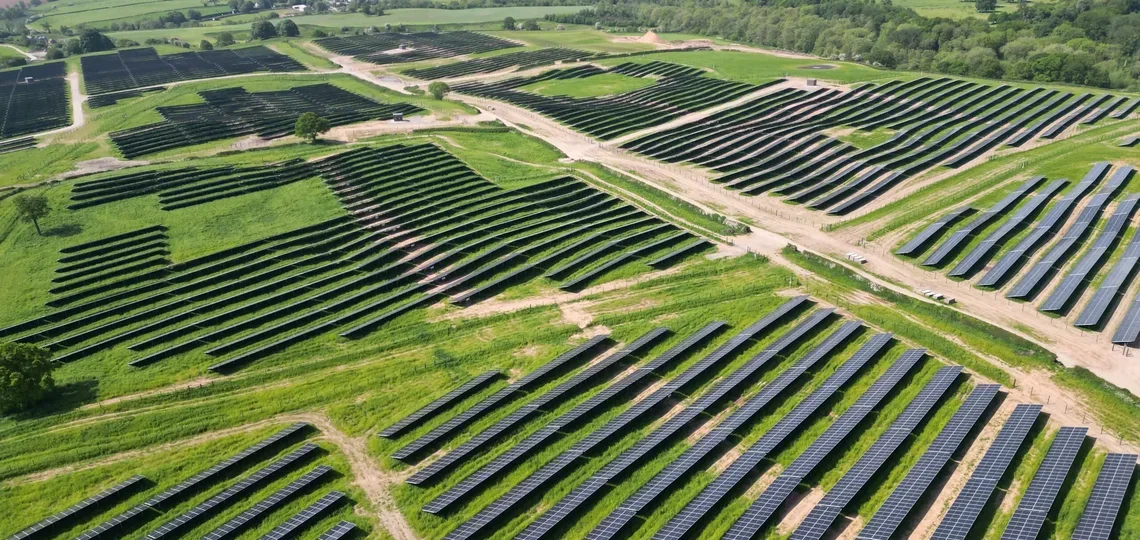
Saint Louis Energy has bought two ready-to-build agrivoltaic projects in Italy from Ibernordic. One is 20 MW in Basilicata, the other 7.4 MW in Lazio, 27.4 MW together. Neither side said what was paid. In Italian solar that is the ordinary outcome, and what makes the silence interesting has little to do with these two projects.
Key takeaways
- Saint Louis Energy has acquired a 27.4 MW ready-to-build agrivoltaic solar portfolio in Italy from Ibernordic. The consideration was not disclosed. Green Horse Legal Advisory acted as legal advisor to Saint Louis Energy.
- The portfolio comprises the 20 MW Piano Coperchio project in Genzano di Lucania, Basilicata, and the 7.4 MW Montello project in Latina, Lazio, which will connect to an adjacent E-Distribuzione distribution network station.
- Enerdatics records 103 Italian solar M&A transactions since the start of 2024. Thirty-three carry a disclosed value, and 21 of those 33 have the same buyer, Zenith Energy.
- The seven priced Italian agrivoltaic transactions in that period run from $0.091 million to $0.173 million per MW, with a median of about $0.136 million per MW. Zenith Energy is the buyer in all seven.
- Saint Louis Energy already holds an Italian photovoltaic and agrivoltaic portfolio of about 62 MW, and acquired the 7.5 MW Zeme solar project from Calligrammes Energies on 24 September 2026. The transaction takes the number of ready-to-build projects Ibernordic has sold in recent years to four.
What does ready-to-build actually buy?
It buys the end of the part of a solar project that fails. Ready-to-build means every permit is in hand, the land is secured, the grid connection is settled and construction can start on a date the owner chooses. Everything before that point is a sequence of approvals any one of which can refuse, delay or reshape the project, and in Italy the agricultural land question makes that sequence slower than most.
Agrivoltaics is the design answer to it. The term covers solar installations built so the land underneath and between the rows stays in agricultural use, usually by raising the panels and widening the spacing. Output per hectare is lower than a conventional ground-mounted plant delivers and the planning argument is considerably stronger, which in a country that guards farmland closely is often the trade that gets a project consented at all.
That is the reason these two assets changed hands at this moment rather than two years ago. Saint Louis Energy is taking over construction and operation, and what it is paying for is the absence of permitting risk rather than megawatts. Italian buyers have been converging on exactly this point: when L&B Capital bought the company holding a permitted 90 MWp agrivoltaic project in Foggia, it entered at the project-company level precisely to avoid land, permitting and title risk.
Why does almost nobody disclose an Italian solar price?
Because almost nobody has to. The market is dominated by private developers, family offices, fund vehicles and unlisted platforms, none of which face a disclosure obligation when a project company changes hands. Prices surface when one side is listed and the deal crosses a reporting threshold, and otherwise they do not.
The result shows up clearly in the record. Of the 103 Italian solar transactions logged since the start of 2024, 33 carry a disclosed value, so roughly two thirds of the market prices in private. What makes benchmarking harder still is who the 33 are. Twenty-one have Zenith Energy as the buyer, a listed company making a long run of small development-stage acquisitions and announcing each one. Strip Zenith out and Italy's entire disclosed solar price history over almost three years comes down to twelve transactions.
So the benchmark exists, but it is a benchmark of one buyer's behaviour as much as of the market. A median drawn from a single acquirer buying a single type of asset describes that acquirer's discipline, not a clearing price.
What do the comparables imply this cost?
Something in the low single-digit millions of dollars. The seven priced agrivoltaic transactions in Italy since the start of 2024 sit between $0.091 million and $0.173 million per MW, clustering around a median of about $0.136 million. Apply that band to 27.4 MW and the implied consideration is roughly $2.5 million to $4.7 million. The nearest comparable by size is Zenith Energy's $3.6 million purchase of a 30 MW agrivoltaic portfolio in Piedmont, which priced at about $0.120 million per MW.
Hold that against what a finished Italian plant costs and the gap is the whole story of the asset class. The three priced operational Italian solar transactions in the same period, covering 15 MW, 16.75 MW and 265 MW, run from $1.19 million to $1.33 million per MW. Development-stage agrivoltaics therefore changes hands at roughly a tenth of the price of the same megawatts once built and generating. The nine tenths in between is construction capital, construction risk and time.
One caveat belongs on the implied range rather than under it. Every priced agrivoltaic comparable in the set has the same buyer, so the band describes what Zenith Energy pays for projects it sources directly, not what Ibernordic achieved selling permitted assets to a buyer already active in the market.
Enerdatics records 103 Italian solar M&A transactions since the start of 2024, of which only 33 disclose a value and 21 of those share a single buyer. Price discovery in the second-largest solar M&A market in Europe rests on twelve independent data points in almost three years, which is why the development premium has to be inferred from behaviour rather than read off a tape.
What does the deal signal for Italian solar?
It signals that the Italian development market has settled into a division of labour, and that the handover point is now ready-to-build rather than anywhere earlier. Ibernordic develops, permits and sells, and this is its fourth ready-to-build project moved on in recent years. Saint Louis Energy builds, owns and operates, and has added two portfolios in three weeks on top of an existing 62 MW. The clean break between them is what lets both price the risk they are actually taking.
The open question is revenue. Enerdatics believes the projects are expected to participate in Italy's FER X Contracts-for-Difference scheme, based on Saint Louis Energy's stated commitment to FER X compliance, which is an inference from the buyer's positioning rather than a confirmed award. FER X pays renewable generators the difference between a reference price and the market price, removing merchant exposure on the contracted volume. Where it is secured it changes the asset materially, as in the 117 MWp Sicilian agrivoltaic portfolio Verdian bought with FER X awards already in place. Until these projects hold one, the buyer carries the route-to-market question itself, and no comparable prices that for you.
Frequently asked questions
How much did Saint Louis Energy pay for the Italian agrivoltaic portfolio?The consideration was not disclosed, the normal outcome in Italian solar. Priced Italian agrivoltaic comparables since the start of 2024 run from $0.091 million to $0.173 million per MW, placing 27.4 MW at roughly $2.5 million to $4.7 million.
What is in the portfolio?Two ready-to-build agrivoltaic projects totalling 27.4 MW. The 20 MW Piano Coperchio project is in Genzano di Lucania in Basilicata and the 7.4 MW Montello project is in Latina in Lazio, connecting to an adjacent E-Distribuzione distribution network station.
Do the projects have a FER X contract?Not on the record. Enerdatics believes the projects are expected to participate in Italy's FER X Contracts-for-Difference scheme based on the buyer's stated commitment to FER X compliance, but no award has been confirmed for either project.
Ready to get deal-ready answers in seconds? Try Enerdatics Leap AI and access verified intelligence across M&A, financings, PPAs, projects, and energy market developments through natural language.