L&B Capital’s 90-MWp Puglia Agrivoltaic Deal Signals Rising Investor Demand for Permitted Italian Solar Assets
.png)
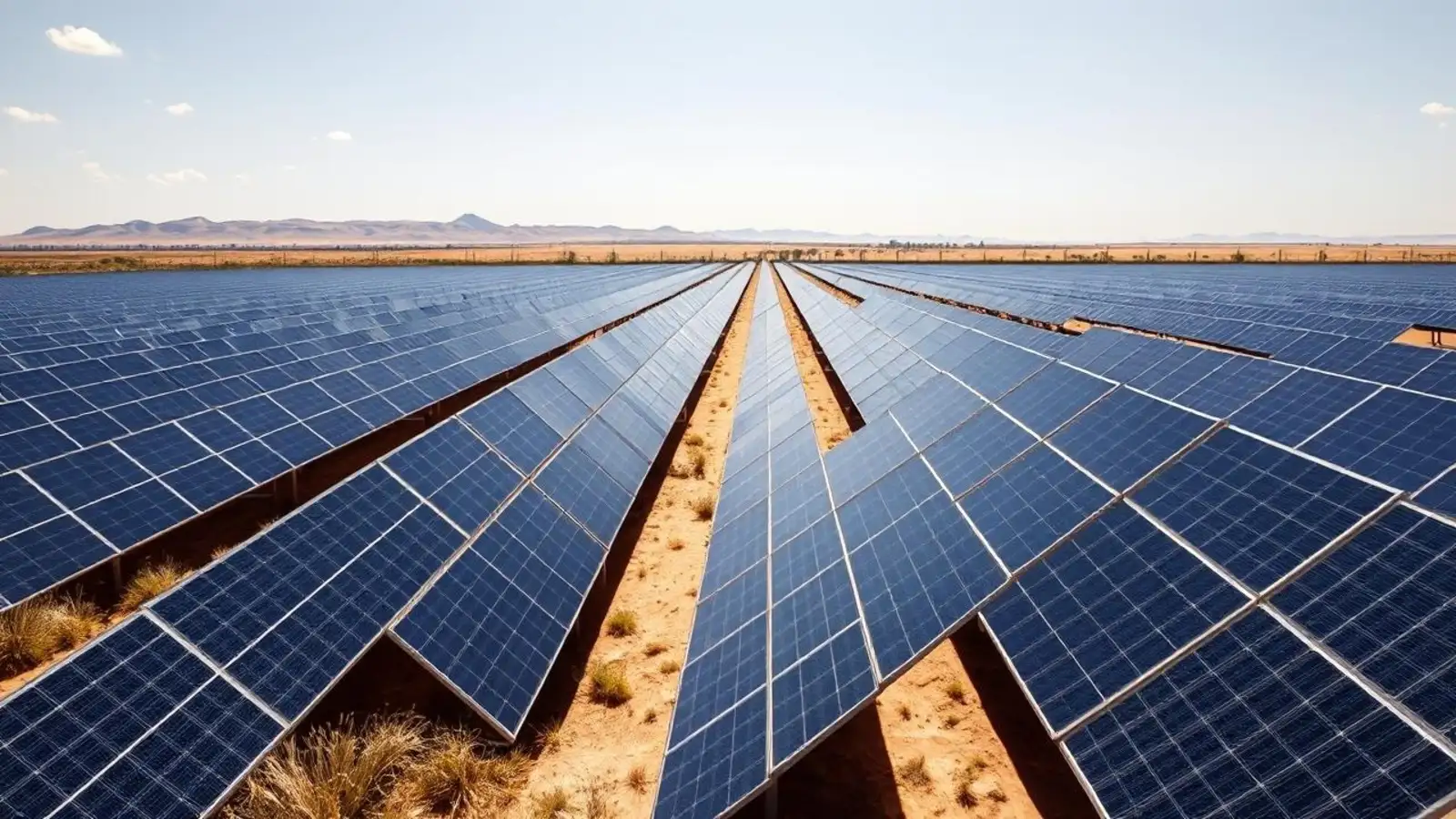
Italy’s agrivoltaic M&A market is shifting toward permitted, execution-ready solar projects as domestic capital providers prioritize assets that can move from development ownership into construction planning without taking early permitting risk. L&B Capital SGR’s acquisition of the company holding rights to a 90-MWp agrivoltaic project in Foggia, Puglia, shows this shift clearly: buyers are no longer simply backing Italian solar pipeline volume; they are backing projects with land-use approval, regional solar resource strength, and a defined route into fund-level deployment.
The transaction was executed through Italian Renewable Resources, L&B Capital’s energy-transition fund, which acquired the full share capital of Societa Agricola TEP Foggia 4 Srl from TEP Renewables PV SpA. The asset is a permitted 90-MWp agrivoltaic project in the municipality of Foggia, one of southern Italy’s most active solar development zones. Financial terms were not disclosed, but the commercial signal is visible in the structure: L&B Capital is acquiring a project company rather than entering at the earliest development stage, reducing exposure to land, permitting, and title-risk uncertainty.
This matters because Italy has become one of Europe’s most competitive solar acquisition markets, particularly for projects that combine grid progress, permitting clarity, and agricultural land compatibility. Enerdatics’ Q3 2025 M&A analysis noted that Italy and Spain led European solar activity during the quarter, with investors targeting assets across different stages of development, while around 70% of European solar deals targeted early-to-advanced development assets. The L&B Capital transaction fits that pattern, but with an important nuance: the asset is already permitted, which places it closer to the segment where investors are willing to pay for execution visibility rather than speculative pipeline optionality.
The buyer profile is also important. L&B Capital is not acting as a utility-scale IPP buying operating cash flow; it is deploying private investor and family-office capital through a dedicated energy-transition fund. Italian Renewable Resources has raised more than EUR 255 million across four fundraising rounds, giving it a capital base designed for domestic energy-transition exposure rather than one-off project trading. That capital structure supports acquisitions where the return is created through development completion, construction readiness, and eventual operating yield rather than immediate contracted revenue.
For TEP Renewables PV, the sale reflects a different but equally important commercial logic. The company is developing a broader agrivoltaic pipeline and sold the Foggia 4 project under a strategic agreement with L&B Capital. That suggests the transaction is not merely an asset exit; it is a repeatable monetization channel. Developers with multiple agrivoltaic projects can use permitted-asset sales to recycle development capital, validate project quality, and retain a route to future partnership across the pipeline.
The valuation signal sits in the absence of disclosed pricing. In a market where permitted Italian solar projects are scarce, the premium is increasingly embedded in development milestones rather than headline enterprise value. Enerdatics’ Europe developer-premium analysis indicates that utility-scale solar projects in Europe typically attract developer premiums of roughly $20,000–$35,000/MW for early-stage assets, rising sharply for ready-to-build projects, especially where grid access, permitting, EPC visibility, or co-located storage improve bankability. A permitted 90-MWp agrivoltaic project in Puglia therefore sits in the zone where valuation is likely to be shaped by how close the asset is to grid connection, construction start, offtake strategy, and financing readiness.
The deal also highlights the growing commercial role of agrivoltaics in Italy’s solar M&A market. Agrivoltaic projects can offer developers and buyers a stronger land-use argument than conventional ground-mounted PV, particularly in regions where agricultural land protection and permitting scrutiny remain material constraints. For buyers, this can reduce planning friction and improve political acceptability. For sellers, it can create differentiation in a crowded development pipeline where not every solar project can secure a credible path to construction.
Buyer behavior is becoming more disciplined. Capital providers are prioritizing assets that have already cleared one or more difficult development gates, especially in markets where grid queues, permitting timelines, and land-use approvals can materially delay project value creation. In Italy, this favors developers that can originate agrivoltaic projects, secure permits, and package them into clean project-company sales. It also pressures smaller developers with less advanced portfolios, because buyers are more likely to wait for permitting milestones before assigning meaningful value.
For L&B Capital, the Foggia project provides scale without platform acquisition risk. A 90-MWp single project is large enough to improve fund deployment efficiency but still specific enough to underwrite through asset-level diligence. For TEP Renewables PV, the sale creates liquidity while preserving the possibility of additional collaboration with L&B Capital across its agrivoltaic pipeline. That is the key market shift: Italian solar M&A is moving from opportunistic pipeline accumulation toward repeatable buyer-developer partnerships built around permitted, land-compatible assets.
The forward signal is that permitted agrivoltaic projects in southern Italy are likely to command stronger buyer attention over the next 12–18 months, particularly from private capital vehicles, infrastructure funds, and domestic energy-transition investors looking for de-risked entry points before construction. Developers that can move projects to permit-ready or ready-to-build status will have more leverage in negotiations. Those selling earlier-stage land or concept-stage projects will face tougher pricing, deferred payments, or milestone-based structures as buyers continue to pay for certainty rather than capacity alone.
Want to track the latest M&A, financings, PPAs, and key developments across the industry? Explore the Enerdatics Insights page.