Why Heelstone's Cypress Pointe Deal Lands in the 5 Percent of Texas Solar Outside ERCOT
.png)
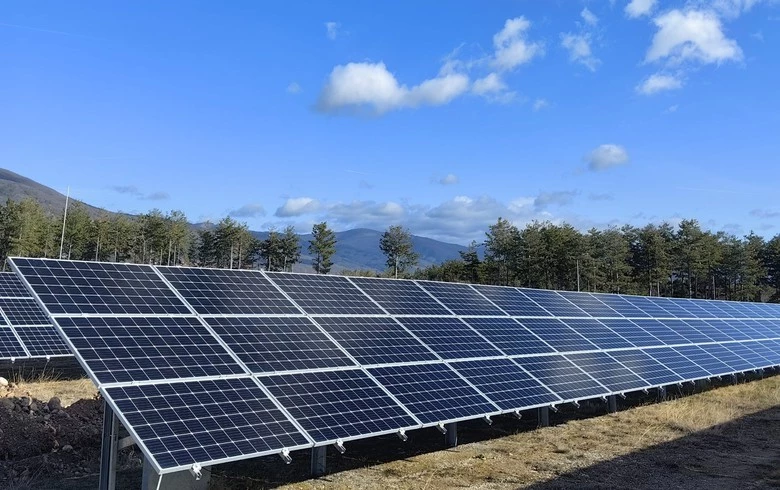
Heelstone Renewable Energy, the US platform owned by Qualitas Energy, has acquired Cypress Pointe Solar, a development-stage photovoltaic project of approximately 188 MWp in Sabine County, Texas, from Azimuth Renewables. The project has full site control, and commercial operation is targeted for 2029. Terms were not disclosed. Azimuth, a St. Louis developer founded in 2019, took the project through its early and mid-stage phases. Heelstone places the asset in the Southwest Power Pool market and points to a broad range of potential offtake routes. Sabine County sits on the Louisiana border, which puts this project in a very small minority of Texas solar.
What did Heelstone acquire from Azimuth Renewables?
Heelstone acquired Cypress Pointe Solar, a single development-stage project with planned installed capacity of roughly 188 MWp in Sabine County, in the far east of Texas. Site control is secured and the company reports strong local community support, with commercial operation targeted for 2029. The consideration was not disclosed. Azimuth developed the project through early and mid-stage work before handing it on, a model it has run at scale: the company reports having developed and sold more than 3.5 GW of development assets since 2019, of which over 400 MW has reached commercial operation. The transaction follows Heelstone's July 2026 financial closings on three solar projects totalling 86 MWp.
Why does it matter that a Texas solar project is not in ERCOT?
Most of Texas runs on its own grid, ERCOT, which is electrically islanded from the rest of the United States and operates without a capacity market, so revenue comes from energy and ancillary prices that swing sharply. A narrow band of eastern and northern Texas sits outside it, connected instead to the Eastern Interconnection through MISO or the Southwest Power Pool. Those markets are federally regulated, have different interconnection queues, and reach load across many states rather than one. For a developer the practical difference is the range of counterparties: a project outside ERCOT can contract with utilities and corporate buyers whose footprints span multiple states, and it competes with a different and generally smaller pipeline of local solar for the same offtake.
Why is a Qualitas platform buying at development stage?
Because the platform is built to carry projects the rest of the way. Heelstone was founded in 2012, is based in Durham, North Carolina, and has developed or brought into operation more than 80 solar projects totalling over 1.2 GW. Qualitas acquired it in 2024 and has been assembling it into a fully integrated independent power producer able to originate, finance, construct and operate. Buying at development stage from a specialist originator, then supplying the balance sheet and construction capability, is the natural division of labour once that platform exists. Enerdatics records Qualitas acquiring a further 192 MW of US development-stage solar from Bechtel in June 2026, so this is a repeat pattern rather than a one-off, and the firm has been running the same playbook in German onshore wind with 12 acquisitions since the start of 2024 covering 898.2 MW.
Enerdatics' data shows just how unusual the location is. Of the 1,174 Texas solar projects Enerdatics records, 1,113 sit in ERCOT, carrying 259,610 MW between them. Only 58 are in MISO, at 10,194 MW, and just three are recorded in the Southwest Power Pool, at 945 MW. Non-ERCOT Texas therefore accounts for roughly 5 percent of the state's solar projects and about 4 percent of its capacity. That scarcity is the commercial argument. A project competing against 1,113 others for ERCOT offtake faces a very different market from one competing against a few dozen for load in the Eastern Interconnection, and it is the reason a 188 MWp asset in Sabine County can credibly claim a broad range of offtake routes despite its modest size.
What does the deal signal for Texas solar?
The deal signals that the crowding in ERCOT is pushing developers to look at the edges of the state, where the queue is shorter and the buyer set is different. Data centre and industrial demand growth in the Gulf and mid-South has made non-ERCOT Texas load worth serving, and a project that can sell into a multi-state market rather than an islanded one has optionality that ERCOT assets do not. Expect more development-stage acquisitions in the eastern counties, and expect the small non-ERCOT pipeline to attract disproportionate attention relative to its size.
The wider pattern is the separation of origination from delivery. Azimuth originates and sells, having moved 3.5 GW that way since 2019 while taking only around 400 MW to operation itself. Heelstone finances, builds and operates, backed by a €14 billion sponsor with 11 GW across seven countries. Neither is attempting the other's job. That handoff at mid-stage development, before permitting and interconnection are complete, is where most US solar pipeline now changes hands.
Key takeaways
- Heelstone Renewable Energy, a Qualitas Energy company, acquired the development-stage Cypress Pointe Solar project of approximately 188 MWp in Sabine County, Texas from Azimuth Renewables. Terms were not disclosed, with commercial operation targeted for 2029.
- Enerdatics records 1,174 Texas solar projects, of which 1,113 sit in ERCOT carrying 259,610 MW, against 58 in MISO at 10,194 MW and three in the Southwest Power Pool at 945 MW.
- Non-ERCOT Texas accounts for roughly 5 percent of the state's recorded solar projects and about 4 percent of its capacity, which is the scarcity underpinning the offtake argument.
- Azimuth Renewables reports developing and selling more than 3.5 GW of development assets since 2019, of which over 400 MW has reached commercial operation.
- Enerdatics records Qualitas acquiring 192 MW of US development-stage solar from Bechtel in June 2026, alongside 12 German wind acquisitions covering 898.2 MW since the start of 2024.
Frequently asked questions
How much did Heelstone pay for Cypress Pointe Solar?The consideration was not disclosed. Development-stage US solar rarely carries a published price, because value depends on permitting and interconnection outcomes that have not yet been determined. Commercial operation is targeted for 2029.
Why is part of Texas outside the ERCOT grid?ERCOT covers most of Texas and is electrically islanded from the rest of the country, which keeps it outside federal interstate regulation. A narrow band of eastern and northern Texas is connected instead to the Eastern Interconnection through MISO or the Southwest Power Pool, giving those projects access to load and counterparties across multiple states.
How much Texas solar sits outside ERCOT?Enerdatics records 1,174 Texas solar projects in total. Of those, 1,113 are in ERCOT with 259,610 MW, 58 are in MISO with 10,194 MW, and three are recorded in the Southwest Power Pool with 945 MW, so non-ERCOT accounts for roughly 5 percent of projects.
Ready to get deal-ready answers in seconds? Try Enerdatics Leap AI and access verified intelligence across M&A, financings, PPAs, projects, and energy market developments through natural language.
.jpeg)