
Why a Fund That Usually Buys Batteries Lent the Money for These Two Instead
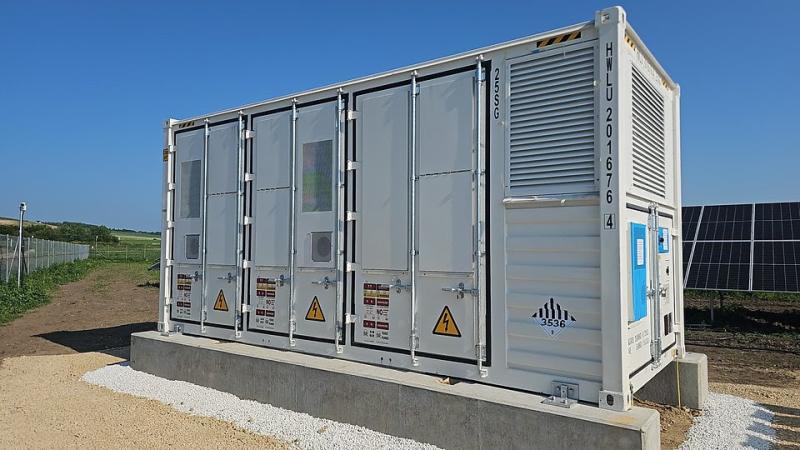
Constantine Energy Storage has secured $135.39 million to build two battery projects in the United Kingdom totalling 157 MW. The money came from Copenhagen Infrastructure Partners, a name that normally appears on British storage deals as an owner rather than a lender. Here it is the one providing the debt. The instrument it used explains most of the rest.
Key takeaways
- Constantine Energy Storage secured a $135.39 million unitranche debt facility from Copenhagen Infrastructure Partners' Green Credit Fund II in September 2026 to fund construction of two UK battery projects.
- The financed portfolio has a combined power capacity of 157 MW and an energy storage capacity of 461 MWh, giving a storage duration of 2.94 hours.
- The facility equates to $0.86 million per MW of power capacity and $0.29 million per MWh of energy capacity.
- Enerdatics records 34 battery storage financings in the United Kingdom since the start of 2024, of which 29 disclose an amount, at a median of $187 million.
- Santander is named as a lender on 11 of those 34 UK battery storage financings, more than any other institution, while Copenhagen Infrastructure Partners is named on one.
What does a unitranche facility change for a battery developer?
It collapses the capital stack into a single loan. A unitranche facility replaces the usual split between senior debt and subordinated debt with one instrument, priced at one blended rate and documented with one lender or a very small group. The borrower negotiates once. There is no intercreditor agreement to settle between a senior bank club and a mezzanine provider, and no waiting for the slowest credit committee in a syndicate of six.
That matters for a construction-stage battery more than it would for an operating asset. Equipment slots, grid connection dates and contractor mobilisation all sit on fixed calendars, and a financing that closes two months late can push energisation into the following year. The trade is cost. A unitranche loan prices above pure senior bank debt, because the single lender is absorbing the whole risk profile rather than the safest slice of it. Set against the 157 MW being built, the facility works out at $0.86 million per MW. That is the price of certainty on timing rather than a bargain on rate.
Why does the duration of these two projects matter here?
Duration is how long a battery can sustain output at full power, calculated as energy capacity divided by power capacity. These two projects hold 461 MWh behind 157 MW, which puts them at 2.94 hours. That is a deliberate position rather than a rounding artefact. It sits above the two-hour configuration that dominated the first wave of British batteries and below the four-hour systems now common in southern Europe.
A lender cares because duration sets how many revenue streams the asset can reach. A two-hour battery is built for frequency response and short balancing actions. Close to three hours, the same asset can also capture the wider daily spread between cheap and expensive periods, and it earns a better derating factor in the capacity market, which pays according to how long a unit can be relied on to deliver. More contracted and quasi-contracted revenue supports more debt. Constantine has been near this configuration before. When it raised development finance in March 2025, its UK portfolio ran to nine projects, 612 MW and 1.65 GWh, an average of 2.7 hours. Enerdatics does not state whether the two projects now in construction are drawn from that group.
How does this compare with the way UK batteries are usually funded?
Almost every large British battery build of the past two years has been paid for by a bank club. Gresham House raised senior debt covering up to 70 percent of project costs on a repayment profile of at least 15 years for 397 MW of storage, in a deal that marked the wider shift from equity-led development exposure toward structured project debt. Statera assembled a term loan, a VAT facility and a liquidity facility for the 680 MW Carrington project through a consortium led by Lloyds with NatWest, Santander, Siemens Financial Services, SEB and Mizuho. At the top of the market, Fidra Energy combined a bank debt facility with sponsor equity in a package worth more than $1.4 billion for the largest battery project in the country.
Constantine itself followed that route in March 2025, when a group led by Norddeutsche Landesbank alongside Societe Generale, Virgin Money and Export Development Canada provided $233.33 million of development finance. The change in September 2026 is not that Constantine found cheaper money. It is that a single fund was willing to write the whole construction ticket, and that the fund in question raised its capital to buy infrastructure, not to lend against it.
Enerdatics records 34 battery storage financings in the United Kingdom since the start of 2024. Twenty-nine of them disclose an amount, at a median of $187 million, which places this facility below the midpoint of the market by size. The concentration on the lending side is sharper than the headline numbers suggest. Santander appears as a lender on 11 of the 34, NatWest on seven, and ABN AMRO, Rabobank, Norddeutsche Landesbank and Goldman Sachs on four each. Copenhagen Infrastructure Partners appears on one, this one.
What does the deal signal for UK battery storage?
Credit funds are starting to compete for construction risk that banks have had largely to themselves. Copenhagen Infrastructure Partners set up Green Credit Fund II to lend into the same assets its equity funds buy, and it has been deploying that strategy elsewhere. In August 2026 the same manager provided a $150 million debt facility to Solar Landscape in the United States. A manager that underwrites batteries as an owner knows what the construction risk actually looks like, which is a real advantage when the question is how much debt an unbuilt merchant asset can carry.
For developers the practical effect is a second door. Bank clubs remain the cheapest source of senior debt for a British battery, and for a project with a capacity market agreement and a clean grid position they will stay the default. For a portfolio that wants one counterparty, a single set of documents and a close date it can hold contractors to, a unitranche facility from a fund is now a live alternative rather than a fallback. Aurora Energy Research acted as market advisor to Copenhagen Infrastructure Partners on this financing, which is a reminder that the merchant revenue case still has to be underwritten by someone whichever door the borrower walks through.
Frequently asked questions
How large is the Constantine Energy Storage financing and who provided it?Constantine Energy Storage secured $135.39 million from Copenhagen Infrastructure Partners, structured as a unitranche debt facility from the manager's Green Credit Fund II, to fund construction of two UK battery projects totalling 157 MW and 461 MWh.
What is a unitranche debt facility?A unitranche facility is a single loan that replaces the conventional split between senior and subordinated debt. It carries one blended interest rate and one set of documents, which removes intercreditor negotiation and usually shortens the time to close, at a higher cost than senior bank debt alone.
How does 2.94 hours of duration compare with other UK batteries?It sits above the two-hour systems that dominated the first wave of British storage. Constantine's own UK portfolio averaged 2.7 hours across 612 MW and 1.65 GWh when it raised development finance in March 2025.
Enerdatics tracks battery storage financings, acquisitions and offtake agreements across the United Kingdom and Europe as they are announced. Explore the full picture on the Enerdatics Insights page.

.jpeg)


