
Why $260 Million for 85 MW of Community Solar Is Not What It Looks Like
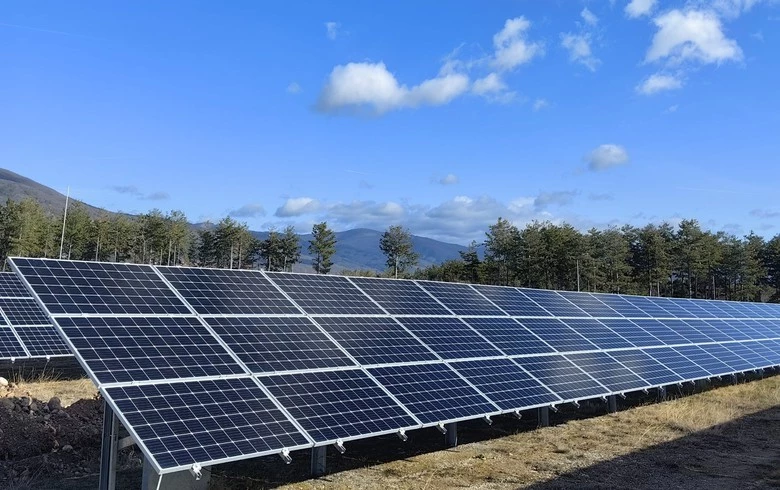
38 Degrees North has closed a $260 million credit facility to build community solar. The proceeds are earmarked for roughly 85 MW across New York and Illinois. That works out at more than $3 million for every megawatt, which is around double what it costs to build community solar. The number is real. What it measures is not what it appears to measure.
Key takeaways
- 38 Degrees North secured a $260 million credit facility in September 2026 from a seven-member lender group, with proceeds allocated to the construction of approximately 85 MW of community solar in New York and Illinois.
- Apterra Infrastructure Capital acted as joint lead arranger, administrative agent and sole bookrunner, with BankUnited as collateral agent, alongside Stifel, National Bank of Canada, Amalgamated Bank, Siemens Financial Services and Farmer Mac.
- Generate Capital announced a $117 million term debt facility from MUFG Bank on the same day, funding 18 community solar projects totalling 114 MWdc in the same two states.
- Enerdatics records 149 distributed solar financings in the United States since the start of 2024, of which 126 disclose an amount, at a median of $96.5 million.
- 33 of those 126 disclosed US distributed solar financings are $250 million or larger, placing the 38 Degrees North facility in the upper quarter of the market by size.
Why does $260 million buy only 85 MW of community solar?
It does not. A credit facility is a borrowing limit, not a cheque. The 85 MW figure describes the near-term construction pipeline the facility has been sized around, and community solar projects are short-dated things. A 5 MW array in Illinois takes months to build, not years. As each project energises it is taken out by long-term debt and tax credit monetisation, the drawn balance is repaid, and the same headroom funds the next batch.
So the meaningful comparison is not the facility against one tranche of megawatts. It is the facility against the rate at which a developer can put steel in the ground. Read that way, $260 million against 85 MW of immediate build says the lenders have underwritten several cycles rather than one. Enerdatics notes that the facility was oversubscribed, which points the same way. Seven institutions competing to fund a construction programme are pricing repeat business, not a single portfolio.
What does the Generate Capital deal the same day tell you?
It sets the floor. Generate Capital announced $117 million of term debt from MUFG Bank on 15 September 2026 for Community Solar Fund 11, a defined portfolio of 18 projects totalling 114 MWdc in Illinois and New York. Same asset class, same two states, same week, and $1.03 million per MW against 38 Degrees North's $3.06 million per MW.
Two things separate them. The first is what the money does. Generate's facility is term debt against an identified fund of assets, sized to what those assets will earn once built. 38 Degrees North's is construction capital against a rolling programme. The second is a measurement trap. Generate's capacity is stated in MWdc, the rating of the panels themselves, while the 85 MW attached to the 38 Degrees North facility is not labelled that way. US community solar is typically built with meaningfully more panel capacity than its grid connection allows it to export, so a DC figure and an AC figure are not the same unit. The gap between the two deals is real, but it is narrower than a straight division suggests, and anyone lifting either per-MW number into a comparison table should carry that caveat with it.
Is this facility unusual for the US community solar market?
By size, yes, but not by shape. Portfolio-scale facilities carrying large headline totals against modest near-term megawatts have become the standard way this asset class is funded. Dimension Energy assembled $650 million of debt and tax equity for a 132 MW community solar portfolio across four states, a deal that marked the move from fragmented project-level funding to institutional, portfolio-scale structures. Solar Landscape combined preferred tax equity with tax credit transfer proceeds for a 145 MW multi-state portfolio, an example of how capital providers now back execution-ready portfolios with cleaner monetisation paths. On that measure the 38 Degrees North ratio is not an outlier at all. Dimension's package was $4.92 million per MW of the portfolio it named.
The lender group is the more interesting detail. Apterra Infrastructure Capital ran the book and BankUnited holds the collateral, alongside a broker-dealer, a Canadian bank, a commercial bank, an equipment finance arm and Farmer Mac, the federally chartered secondary market lender for agricultural and rural infrastructure. Seven names on $260 million means average tickets in the tens of millions. That is a club facility, assembled relationship by relationship, rather than a syndicated loan sold down after the fact. It is slower to build and more durable if one lender pulls back.
Enerdatics records 149 distributed solar financings in the United States since the start of 2024. Of those, 126 disclose an amount, together accounting for $19.1 billion once a single $7 billion federal grant programme is set aside, at a median of $96.5 million. The 38 Degrees North facility is nearly three times that median, and it is one of 33 disclosed raises at $250 million or above. The scale is no longer remarkable in itself. What has changed is that a developer can now raise it against a pipeline rather than against completed assets.
What does the deal signal for US community solar?
New York and Illinois remain where the capital wants to be. Both states run structured community solar programmes with defined incentive awards, and both give lenders something closer to a contracted revenue profile than a merchant one. Enerdatics has tracked the same pull on the acquisition side, where buyers have concentrated on incentive-backed assets with visible development milestones and lower interconnection risk. A construction facility and an acquisition both come down to the same question of whether the revenue shows up on schedule, and these two states answer it more clearly than most.
The other signal is about balance sheet layering. This facility follows a HoldCo facility 38 Degrees North agreed with EIG Global Energy Partners in August 2026, and the company reports having raised more than $1.7 billion to date. Holding company debt and project construction debt sit at different levels of the structure and are repaid from different cash flows, so a developer running both is financing growth at two speeds at once. That is a platform funding model, and it is what separates the few community solar developers operating at national scale from the many still raising money one array at a time.
Frequently asked questions
How much did 38 Degrees North raise and what will it fund?38 Degrees North secured a $260 million credit facility from a seven-member lender group in September 2026. The proceeds are allocated to the construction of approximately 85 MW of community solar projects in New York and Illinois, described as the company's near-term pipeline.
Why is the cost per MW so much higher than for Generate Capital's portfolio?The two facilities do different jobs. 38 Degrees North's is construction capital sized around a rolling build programme, so the same headroom funds successive batches of projects. Generate Capital's $117 million is term debt against an identified 18-project fund. The capacity figures are also quoted on different bases, one in MWdc and one not.
Who arranged the 38 Degrees North facility?Apterra Infrastructure Capital acted as joint lead arranger, administrative agent and sole bookrunner, with BankUnited as collateral agent. Stifel, National Bank of Canada, Amalgamated Bank, Siemens Financial Services and Farmer Mac completed the group. Stoel Rives advised 38 Degrees North and Norton Rose Fulbright advised the lenders.
Enerdatics tracks distributed solar financings, acquisitions and offtake agreements across the United States as they are announced. Explore the full picture on the Enerdatics Insights page.

.jpeg)


