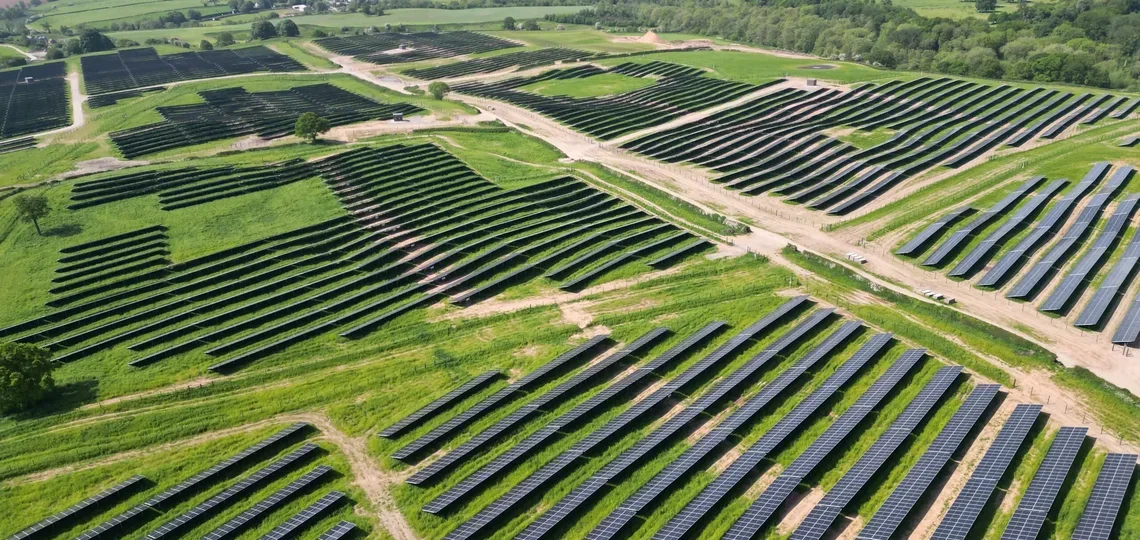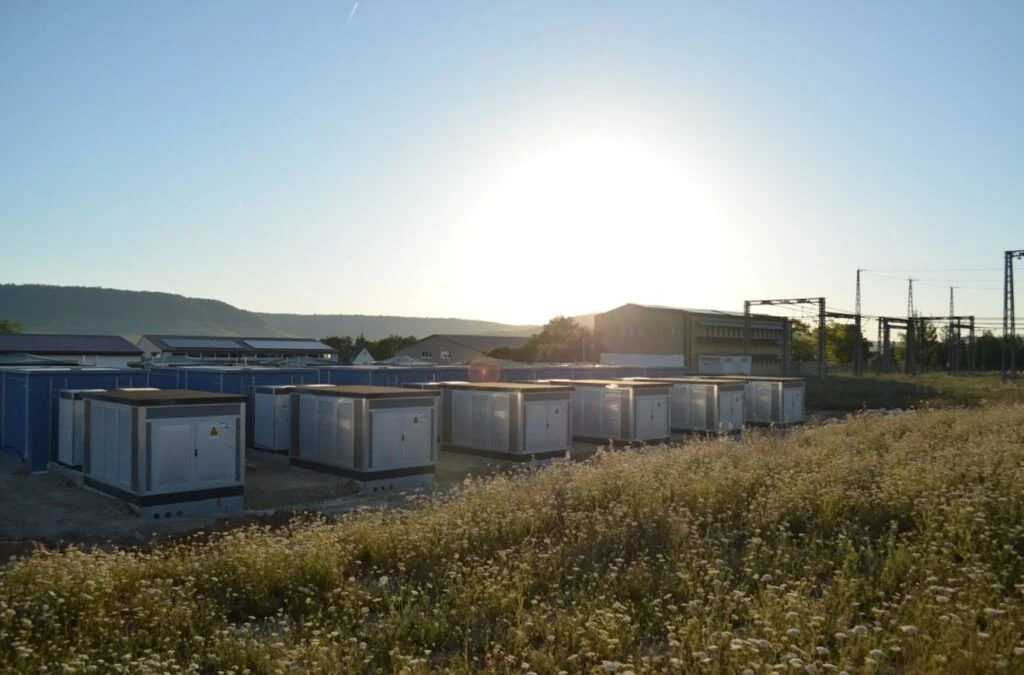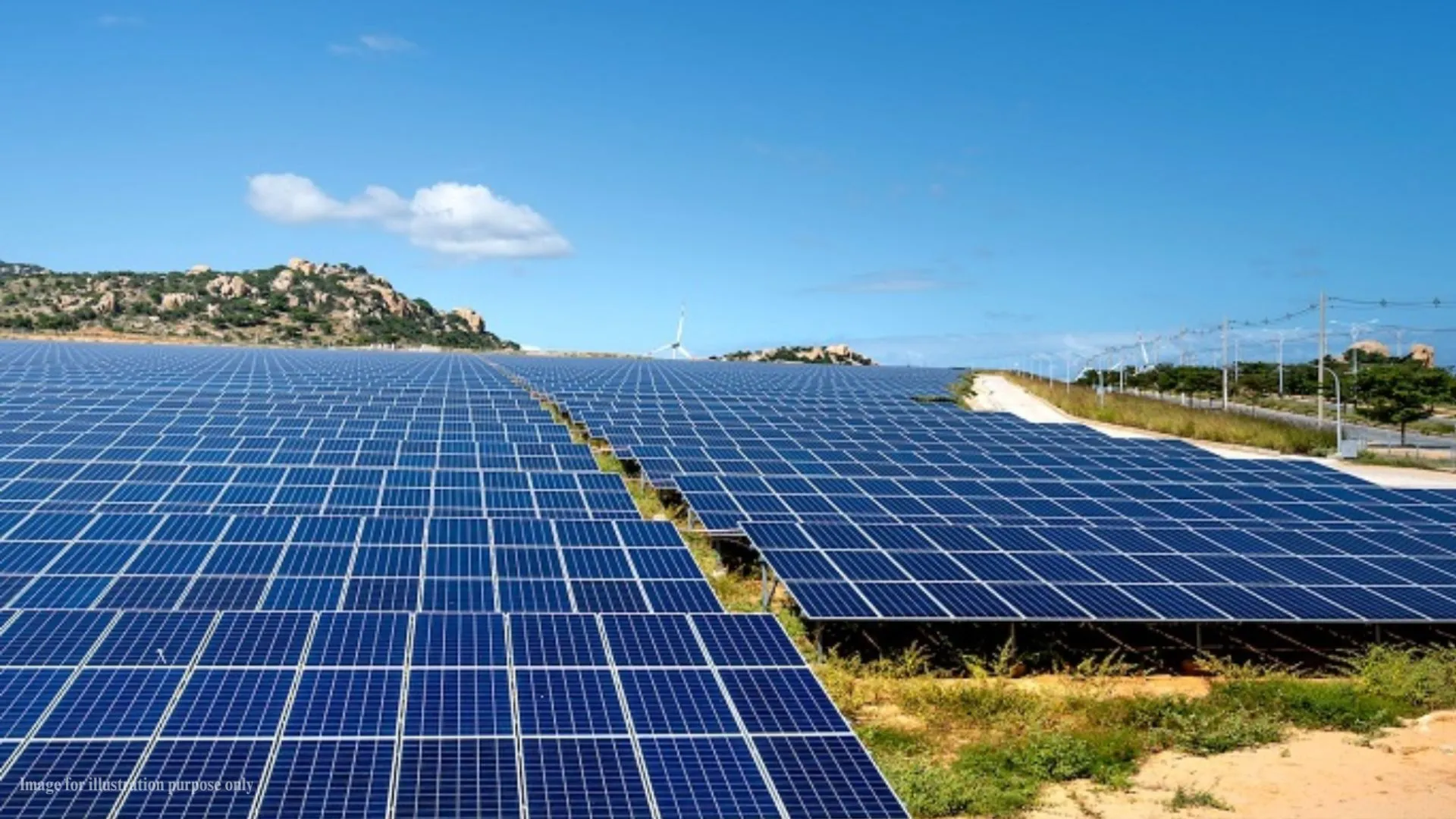
Revalue Energies has borrowed $179.19 million from three banks to build 26 solar projects across Italy. The portfolio totals 162 MW. Divide one figure by the other and the debt comes to $1.11 million per megawatt, which is more than an Italian solar plant of that size usually costs to build. The arithmetic is correct. The reading is not.
Key takeaways
- Revalue Energies has secured $179.19 million from Bayerische Landesbank, UniCredit and ING Group for the construction of 26 solar photovoltaic projects totalling 162 MW across six regions of Central and Northern Italy.
- The money is not a single construction loan. The package comprises a Senior Facility, a Debt Service Reserve Facility and a GSE Guarantee Facility, and carries an accordion mechanism allowing the arrangement to be expanded later.
- ING Group acts as facility agent, account bank and issuing bank under the agreement, with Bayerische Landesbank and UniCredit alongside it as lenders.
- The 26 projects average 6.23 MW each and are scheduled to reach commercial operation in phases between 2026 and 2028.
- Enerdatics records 56 solar financings in Italy since the start of 2024, of which 54 disclose an amount, and UniCredit appears as a lender on 16 of the 56.
Why does one solar portfolio need three separate facilities?
Because the three facilities are doing three unrelated jobs, and only one of them puts cash into construction.
The Senior Facility is the construction money. It is drawn down as the projects are built and repaid out of the electricity revenue once they run. That is the part a reader is picturing when they see $179.19 million.
The Debt Service Reserve Facility is a standing cushion. Lenders to a project with no operating history usually require that several months of interest and principal be available at all times, and a reserve facility is the cheap way to provide it. It is a commitment the banks make, not a cheque the borrower spends. If the projects perform, it is never drawn.
The GSE Guarantee Facility is the one worth defining. GSE is Gestore dei Servizi Energetici, the Italian state-owned company that administers the country's renewable incentive and offtake arrangements and takes in the guarantees that plant operators have to post against them. A guarantee facility does not lend money. It allows a bank to issue letters of credit and bank guarantees in favour of a counterparty such as GSE, and the borrower pays a fee for the service. That is why ING is named as issuing bank rather than only as lender.
So a meaningful share of the $179.19 million is contingent rather than drawn. Dividing the whole package by 162 MW counts money that was never going to be spent on panels.
What does a 6 MW average project size tell you about this portfolio?
It tells you the administrative load is the hard part, not the engineering.
Twenty-six projects averaging 6.23 MW each, spread across six regions, means 26 sets of permits, 26 grid connections, 26 construction packages and 26 sets of obligations towards GSE. A single 162 MW plant would carry one of each. The work does not scale down with project size, which is why small-plant portfolios carry a heavier guarantee and administration burden per megawatt than one large site does.
That shape also explains the accordion. An accordion mechanism lets a borrower increase the size of an agreed facility later without renegotiating it from scratch, on terms already settled with the lenders. A sponsor that builds in six-megawatt increments is going to keep adding projects, and the cost of documenting a new facility each time would be out of proportion to the capacity being added. Revalue has bought itself the right to grow the loan instead.
Where does $1.11 million per megawatt actually sit?
Higher than most Italian solar debt, but the comparison is less clean than it looks.
Enerdatics records seven solar financings in Italy since the start of 2024 where the assets were in construction and both an amount and a capacity are stated. Ranked by debt per megawatt, Enfinity Global's $368.11 million against 276 MW sits top at $1.33 million per MW, followed by Futura Group's $53.67 million against a 45 MW agrivoltaic project at $1.19 million per MW. Revalue is third at $1.11 million. Below it sit GreenGo at $0.85 million per MW on 41.8 MW, Ellomay Capital at $0.62 million on 198 MW and CCE Holding at $0.59 million on a single 42 MW plant.
The spread from $0.59 million to $1.33 million is too wide to be explained by construction cost. Some of those headline figures are single-purpose construction loans and some, like Revalue's, are multi-facility packages. The ranking is therefore partly a ranking of structure rather than of capital intensity, and any benchmark built from headline amounts in this market inherits that problem.
Enerdatics records 56 solar financings in Italy since the start of 2024, and 54 of them disclose an amount. That 96 percent disclosure rate is the opposite of what the same database shows for Italian solar M&A, where consideration is routinely withheld. Debt gets announced because the lenders want the credit. Within those 56 transactions, UniCredit appears on 16 and Bayerische Landesbank on nine, and four transactions carry both, which is what makes the Revalue consortium a familiar combination rather than a new one.
What does the deal signal for Italian solar?
That the lender market for Italian solar construction has settled into a routine, and the routine now includes guarantee capacity as standard rather than as an extra.
A sponsor assembling two dozen small plants used to have to solve the GSE guarantee problem separately from the debt problem, often with a different bank and on worse terms. Packaging the senior loan, the reserve and the guarantee line into one agreement, with one facility agent, is a sign that the banks have done enough of these to standardise them. The accordion points the same way. Lenders do not pre-agree expansion terms for a borrower they expect to see once.
The practical consequence is for anyone benchmarking. A headline debt figure in this market is increasingly a package rather than a loan, and the gap between the two grows with the number of projects inside it. Comparing $179.19 million against 162 MW without reading the facility list will overstate Italian solar construction debt, and the error runs in the same direction every time.
Frequently asked questions
How much did Revalue Energies borrow for its Italian solar portfolio?Enerdatics records a total of $179.19 million from Bayerische Landesbank, UniCredit and ING Group. The amount covers a Senior Facility, a Debt Service Reserve Facility and a GSE Guarantee Facility rather than construction alone, and the split between them was not disclosed.
What is a GSE guarantee facility?GSE, or Gestore dei Servizi Energetici, is the Italian state-owned company that administers renewable incentive and offtake arrangements and receives the guarantees plant operators must post against them. A GSE guarantee facility lets a bank issue letters of credit and bank guarantees in GSE's favour for a fee, so it is contingent support rather than cash lent to the borrower.
Is $1.11 million per MW a fair benchmark for Italian solar construction debt?Treat it as an upper bound. Among the seven in-construction Italian solar financings Enerdatics records since the start of 2024 with both an amount and a capacity stated, debt per megawatt runs from $0.59 million to $1.33 million, and part of that range reflects how much non-cash facility sits inside each headline figure.
Ready to get deal-ready answers in seconds? Try Enerdatics Leap AI and access verified intelligence across M&A, financings, PPAs, projects, and energy market developments through natural language.