iAccess Energy has bought a ready-to-build project in Bavaria from BayWa re. The record carries 42 MW. The solar array is 22 MW. The other 20 megawatts are not panels, and working out what they are explains most of what the buyer acquired.
Key takeaways
- iAccess Energy has acquired the Gresselgrund solar and battery project in the municipality of Maroldsweisach, Hassberge district, Bavaria, Germany, from developer BayWa re. The transaction was announced on 1 October 2026.
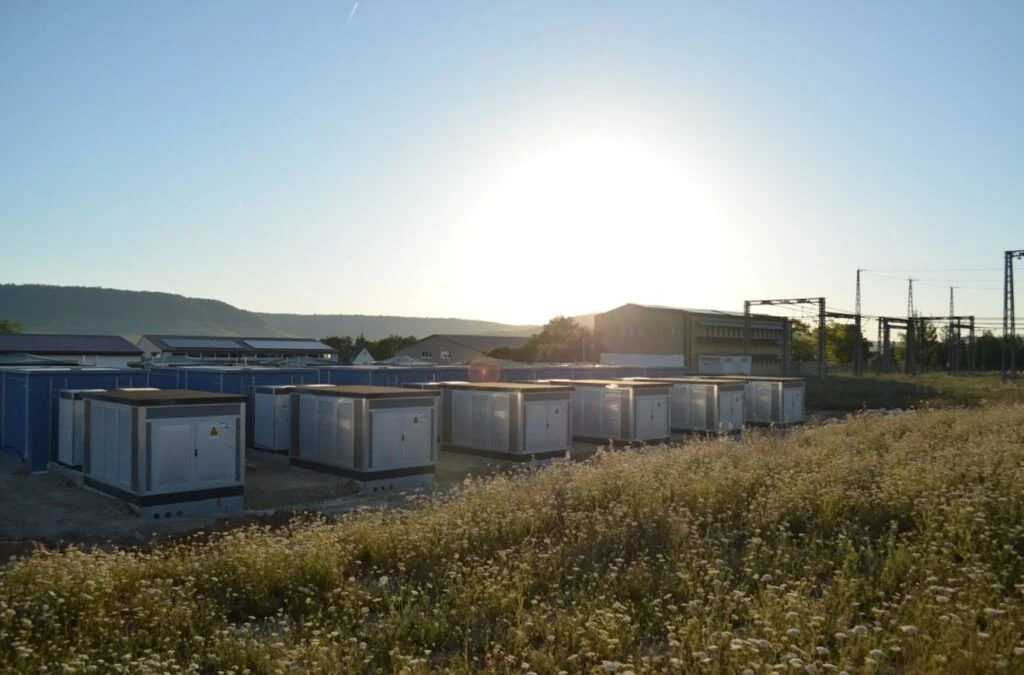
- The project pairs a 22 MWp solar array with a 60 MWh battery energy storage system across roughly 14.4 hectares, with the photovoltaic installation planned in a south-facing orientation. The consideration was not disclosed.
- Enerdatics believes the 60 MWh battery could be configured for around three hours given the 22 MWp of co-located solar, which would imply a power rating of about 20 MW and accounts for the 42 MW recorded against the transaction.
- Gresselgrund reached Ready-to-Build stage after securing a roughly 15 km cable route in spring 2026, followed by a final exemption under water law and a nature park permit at the end of April 2026, with construction expected to start in November 2026 and commissioning in 2027.
- Enerdatics records 15 German solar transactions with co-located storage since the start of 2024, covering 1,990.6 MW, and not one carries a disclosed asset-level price.
Why does a 22 MW solar project carry a 42 MW figure?
Because the number adds two machines rated on different things. A solar array's megawatts say how much power the panels push out at full output. A battery's megawatts say how fast it can charge or discharge, which is separate from how much energy it holds. That is the megawatt hours, and at Gresselgrund it is 60.
Battery duration is the energy divided by the power rating: how long the unit can sustain full output before it is empty. Enerdatics believes a 60 MWh system built alongside 22 MWp of solar would most plausibly be configured for around three hours, which puts its power rating near 20 MW. That is an assessment based on comparable German sites, not a disclosed specification.
Add the 22 to the estimated 20 and the 42 appears. The figure is therefore not 42 MW of generation. It is one grid connection shared by a generator and a store, and the store produces nothing. It only moves solar output into a different hour, which is a revenue function rather than a capacity one.
What did BayWa re actually sell here?
A permit stack, and the sequence shows where the effort went. The project secured a cable route of roughly 15 km in spring 2026. A final exemption under water law and a nature park permit followed at the end of April 2026. Only then did it reach Ready-to-Build, the stage at which every consent needed to start construction is in place. BayWa re calls the sale the conclusion of a long development process.
Nothing has been built. Construction is expected to begin in November 2026 and commissioning in 2027, so the buyer takes on the entire physical build. The land use is tight: 22 MWp across 14.4 hectares is roughly 1.5 MW a hectare, and a 15 km cable route for an array that size puts the connection point a long way from the panels. Both mark a site chosen for what it could be permitted to do rather than for convenience.
BayWa re runs this model across Europe, developing, selling and frequently staying attached to the asset afterwards, which Enerdatics has traced through its transfer of the 16.8 MWp Castets project in France, where it remained as contractor and long-term operations provider. Gresselgrund is the second project iAccess Energy has bought from BayWa re, after Aitrach, so this is a repeat relationship rather than an auction outcome.
How will a project like this earn money?
Through a subsidy on the solar side and market timing on the battery side, which is why the two sit together. Enerdatics believes Gresselgrund could benefit from a 20-year feed-in premium under Germany's Renewable Energy Sources Act, the EEG, based on the power sales arrangements reported for comparable German solar transactions. That is an assessment rather than a confirmed award. An EEG feed-in premium tops up the market price a generator receives for exported electricity to a set level for a fixed term, taking price risk out of the solar output.
The battery is not covered by that. Support of this kind pays for electricity delivered, and a battery delivers nothing it did not first take in. A store adds the ability to hold midday output and release it when the price is higher, plus whatever grid services the local network will pay for. A solar park with a two-decade price floor and a battery exposed to the spread is two revenue shapes on one connection. Enerdatics has recorded the pure version of the subsidised side in a 70.4 MWp Brandenburg solar park that sold with a 20-year EEG feed-in tariff attached.
Enerdatics' data shows how little of this is priced in public. Across 15 German solar transactions with co-located storage since the start of 2024, covering 1,990.6 MW, not one carries a disclosed asset-level price. Across German solar as a whole the record holds 67 transactions in the same period with six disclosed values, of which three are single-asset prices, all from one seller, Orron Energy, in a band of roughly $61,000 to $72,000 per MW. Gresselgrund going undisclosed is the rule, and the storage half of the market has never printed a number at all.
What does the deal signal for German solar?
It signals that German solar dealmaking is quietly becoming a storage trade, and that headline capacity figures are drifting away from what the assets generate. Fifteen co-located transactions in under three years is no niche. Each carries a megawatt total blending generation with discharge capability, so a pipeline view built from those totals overstates how much electricity is being bought. The useful question is what share of the connection is a generator, and at Gresselgrund the answer is about half.
The second signal is about where value sits in Germany. Years of permitting, a water law exemption, a nature park consent and a 15 km cable route produced a buyable asset, and the equipment was never the hard part. Enerdatics found the same in RP Global's purchase of a 22.2 MW project strung along a motorway corridor, where land eligibility rather than irradiation decided the deal. Expect German ready-to-build sales to keep clustering at this size, and the batteries bolted to them to keep inflating the capacity figures that describe them.
Frequently asked questions
How much did iAccess Energy pay for the Gresselgrund project?The consideration was not disclosed. Enerdatics records 15 German co-located solar and storage transactions since the start of 2024 with no disclosed asset-level price among them, and only three single-asset prices across all 67 German solar transactions in that period, all from Orron Energy at roughly $61,000 to $72,000 per MW.
Is Gresselgrund a 22 MW or a 42 MW project?The solar array is 22 MWp and the battery holds 60 MWh. Enerdatics believes that battery would be configured for about three hours, implying roughly 20 MW of power, which is how 42 MW arises. Only the 22 MWp generates electricity.
When will the Gresselgrund project be built?Construction is expected to begin in November 2026, with grid connection and commissioning scheduled for 2027. The project reached Ready-to-Build stage in 2026 after securing a roughly 15 km cable route, a water law exemption and a nature park permit.
Ready to get deal-ready answers in seconds? Try Enerdatics Leap AI and access verified intelligence across M&A, financings, PPAs, projects, and energy market developments through natural language.