BayWa r.e.’s Castets Solar Sale Signals Rising Demand for Locally Anchored RtB Assets in France

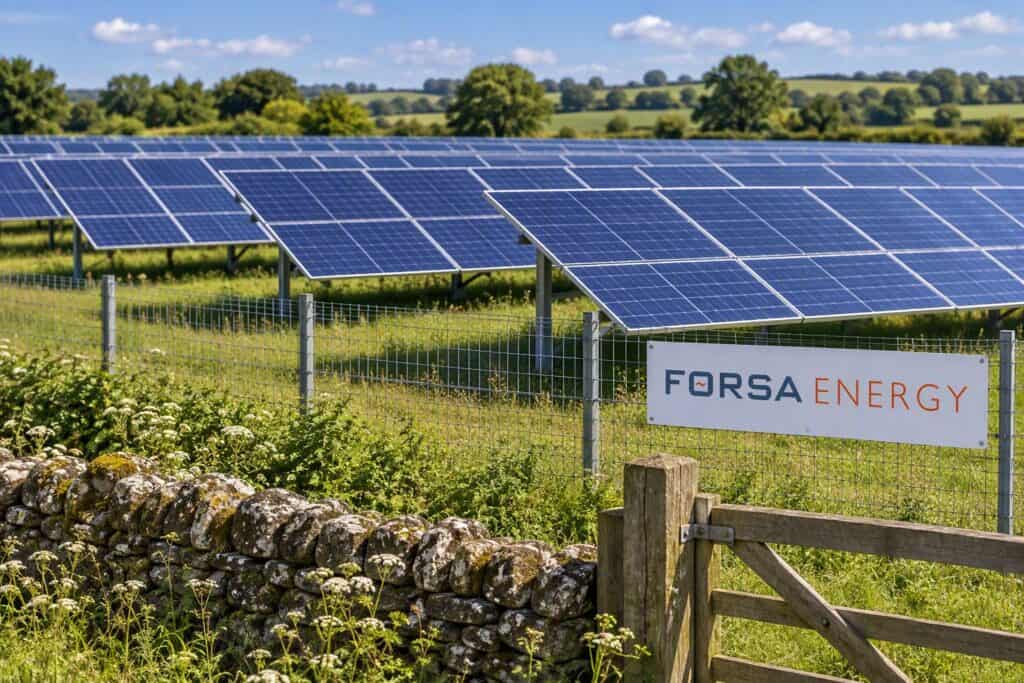
French solar M&A is shifting toward smaller, locally anchored ready-to-build projects where regional capital can secure construction-ready capacity without taking full development risk. BayWa r.e.’s agreement to transfer the 16.8 MWp Castets solar project in southwest France to a consortium of AVERGIES and Terra Energies shows how buyer appetite is moving beyond large merchant portfolios toward de-risked assets with municipal support, local participation, and continuity from the original developer.
The commercial relevance of the Castets transaction lies in the project’s stage and delivery structure. The asset has been under development since 2019 in cooperation with the municipality of Castets and the Côte Landes Nature community, and construction is scheduled to begin in September 2026. That gives the buyers a near-term construction pathway rather than a speculative land-and-grid position. For AVERGIES and Terra Energies, the acquisition offers access to a defined 16.8 MWp solar project that has already moved through years of local engagement and development work.
BayWa r.e. is not fully exiting the value chain. The company will remain involved as EPC contractor and long-term operations service provider, keeping delivery and asset management expertise attached to the project after ownership transfer. That is an important valuation signal. Enerdatics’ European M&A analysis shows that developers offering integrated EPC and O&M packages, including players such as BayWa r.e. and OX2, tend to attract stronger bids for solar and solar-plus-BESS assets because buyers price in lower post-acquisition execution risk.
This matters because France’s mid-scale solar market is not only about capacity aggregation. It is about converting difficult-to-replicate local project rights into bankable assets. The Castets project includes a community participation layer: in 2022, BayWa r.e. raised €65,000 from 67 local investors through Lendosphere. While modest relative to total project capex, that crowdfunding signal improves the project’s social license and reduces community opposition risk, which is increasingly valuable in European solar development.
For regional buyers, this type of transaction offers a different risk-return profile from buying early-stage pipelines. AVERGIES and Terra Energies are acquiring a project with established municipal cooperation, a defined construction timeline, and an experienced EPC/O&M counterparty remaining in place. That reduces three major buyer concerns: permitting friction, construction execution, and long-term operating performance. In a market where grid access, local approvals, and route-to-market certainty can determine whether a solar project reaches COD, those attributes carry commercial weight.
The Castets deal also reflects a broader European pricing pattern. Enerdatics data shows that utility-scale solar projects in Europe typically attract developer premiums of around $20,000–35,000/MW at early stage, rising materially as projects move toward ready-to-build status, with higher values linked to grid access, permits, EPC contracts, and PPA execution. In Germany, ready-to-build solar projects can trade at $90,000–170,000/MW where permits, grid access, and construction readiness are secured, with EPC contracts pushing assets toward the higher end of the range.
France is not Germany, and Castets is smaller than the large utility-scale portfolios that often dominate M&A headlines. But the same valuation logic applies. Buyers are paying for certainty, not only megawatts. The more a seller can prove that a project has local alignment, technical readiness, credible construction delivery, and long-term operating support, the more leverage it retains in a sale process.
For BayWa r.e., the transaction supports an asset-rotation model without surrendering downstream economics. By transferring ownership to regional partners while retaining EPC and O&M roles, BayWa r.e. can recycle development capital while preserving construction and operations revenue. That structure is becoming more relevant across Europe as developers look to monetize mature assets while keeping a role in project delivery.
For buyers, the implication is clear: regional investors can compete effectively when they target assets that match local priorities and rely on experienced developers for execution. AVERGIES and Terra Energies are not simply buying solar generation; they are securing a community-backed asset that is expected to supply roughly 3,800 households annually and avoid around 6,000 tonnes of CO₂ emissions per year once operational. Those local benefit metrics are commercially useful because they reinforce public-sector alignment and stakeholder acceptance.
For sellers, the pressure is also rising. Early-stage solar pipelines without clear permitting progress, grid visibility, or local acceptance will struggle to attract the same buyer confidence. Developers that can demonstrate project maturity, community participation, and delivery capability will remain better positioned to command stronger valuations or retain profitable EPC and O&M mandates after divestment.
The forward-looking signal from Castets is that French solar M&A will likely see more transactions where regional investors acquire ready-to-build or near-ready assets from experienced developers, while the original developer remains involved in construction and operations. Capital providers are not simply chasing installed capacity; they are backing projects that can move into construction on a defined timeline, carry local legitimacy, and reduce execution risk through integrated delivery.
Ready to get deal-ready answers in seconds? Try Enerdatics Leap AI and access verified intelligence across M&A, financings, PPAs, projects, and energy market developments through natural language.