Tauron Polska Energia has agreed to buy a 21 MW wind project in northwestern Poland from European Energy. Six turbines on arable fields, ready to build, no price disclosed. Tauron's previous Polish wind purchase was nine times the size and came with a figure of about $494 million attached. That figure now sits at the top of Poland's wind price data, and it is not a price.
Key takeaways
- Tauron Polska Energia has agreed to acquire the 21 MW Mysliborz onshore wind project in northwestern Poland from European Energy. The transaction was announced on 30 September 2026 and the consideration was not disclosed.
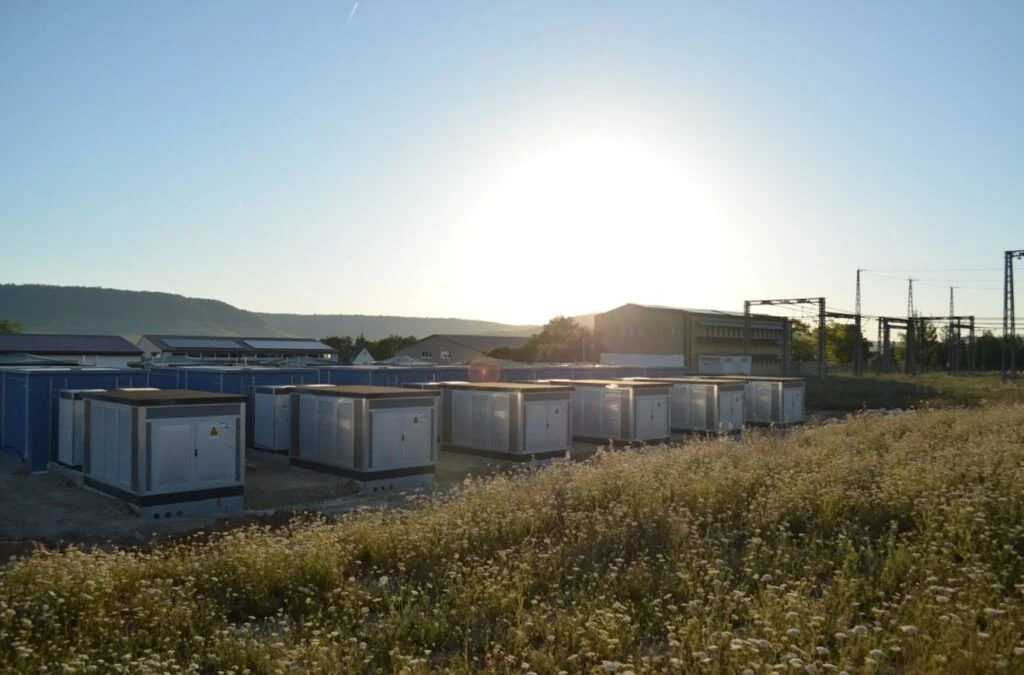
- Mysliborz will comprise six Vestas V126 turbines of 3.5 MW each and is at Ready-to-Build stage, having received an environmental conditions decision from the Regional Director for Environmental Protection in Szczecin on 27 February 2025.
- The project will be developed primarily on agricultural land, with the turbines sited on arable fields, and European Energy will use proceeds from asset sales to fund new projects across its markets.
- Enerdatics records 23 Polish wind transactions since the start of 2024, of which 11 carry a disclosed value, a disclosure rate close to one in two.
- The highest figure in that set, about $2.59 million per MW on Tauron's 190.8 MW Miejska Gorka acquisition from VSB Group in September 2024, reflects an expected total acquisition and construction cost of roughly $494.81 million rather than a purchase price for the project.
What is Tauron buying at Mysliborz?
A consented site with the turbine layout fixed and nothing built. Ready-to-Build is the stage at which a project holds the permits, grid rights and approvals construction requires, so the work left is physical rather than administrative. Mysliborz holds an environmental conditions decision issued in Szczecin in February 2025, and the sale follows about nineteen months later.
The capacity is unusually literal. Six Vestas V126 machines at 3.5 MW each give exactly 21 MW, with no inverter ratio, no co-located battery and no second rating to reconcile. Siting is on arable fields rather than forest or built-up land, which keeps the consent narrower and the civil works simpler, and it leaves the land in agricultural use between the turbine bases.
For the seller the logic is capital velocity. European Energy states it will put proceeds from asset sales into new projects across its markets, the same pattern Enerdatics has recorded in its sale of a 6 MW Dutch wind portfolio to a local buyer, where a mature asset funded development elsewhere. A developer running a pipeline across more than twenty countries has little reason to hold six turbines in Poland.
Why does the top of Poland's wind price range mislead?
Because the number at the top is not what anyone paid for a project. Tauron bought the 190.8 MW Miejska Gorka wind farm from VSB Group in September 2024, and the figure recorded against that transaction is about $494 million, which divides out at roughly $2.59 million per MW of nameplate. Read as a price, that would make an under-development Polish wind site the most expensive thing in the country.
The underlying record says something else. The roughly $494.81 million is the expected total cost of acquiring and constructing the wind farm, a project of up to 53 Nordex turbines that VSB continued to carry through construction and planning work after the sale. Most of that sum is steel, concrete and installation, not consideration to the seller. The $2.59 million per MW is closer to a delivered cost per megawatt than to what a consented Polish site changes hands for.
The genuine development-stage prints sit an order of magnitude below it. ZE PAK and Cyfrowy Polsat's purchase of the roughly 500 MW Opole wind farm in June 2024 works out near $0.24 million per MW. Energa's 37.4 MW Szybowice acquisition in March 2024 and Unimot's 34.2 MW Gostynin purchase in June 2026 both land near $0.39 million per MW. Enerdatics' analysis of PNE's sale of the 153 MW Karolew project sets out that ladder in full, and shows how much weight the single label "under development" is being asked to carry.
Why would a state-controlled utility buy six turbines?
Because buildable Polish onshore wind arrives in parcels shaped by consent, not by the buyer's appetite. Tauron's recorded acquisition history runs from 180 MW of operating wind parks bought from in.ventus in 2019, through a co-development arrangement with PGE and Enea in 2021, to Miejska Gorka in September 2024. Mysliborz is its smallest recorded wind purchase and its first in two years, at roughly one ninth the capacity of the last one.
That is not a change of strategy. A utility replacing thermal output needs volume, and it gets volume by taking whatever reaches Ready-to-Build, at whatever size. Twenty-one megawatts from an international developer is the shape this market offers at that stage, so a buyer who holds out for larger parcels mostly waits.
Enerdatics records 23 Polish wind transactions since the start of 2024, of which 12 involved assets still under development, nine were operational and two were in construction. Across the priced deals in that set the median disclosed development-stage figure is about $0.39 million per MW against about $2.00 million per MW for operational assets, so roughly four fifths of an operating Polish wind megawatt is earned after the site is consented. Mysliborz sits on the cheap side of that gap, and Tauron is buying the right to spend the rest.
What does the deal signal for Polish wind?
It signals that Poland discloses more than much of Europe and is no easier to benchmark for it. Eleven disclosed values out of 23 transactions is close to one in two. Against that, Enerdatics records six disclosed values across 67 German solar transactions over the same period. The reason is who is buying: Enea, Energa under ORLEN, ZE PAK, Unimot and Tauron are listed or state-controlled entities carrying reporting obligations that private funds do not. Disclosure here is a function of the buyer's legal form rather than of market maturity.
What that disclosure does not deliver is comparability. One of the published figures is a build cost, the rest span an almost elevenfold range inside a single lifecycle label, and Mysliborz arrives with no number at all. The same problem recurs in Polish contracting, where Enerdatics has shown a portfolio that reads as either 70 or 83 percent contracted depending on the unit counted. Expect more small ready-to-build Polish wind to move from international developers to domestic utilities, and expect the published prices around those deals to need reading rather than quoting.
Frequently asked questions
How much is Tauron paying for the Mysliborz wind project?The consideration was not disclosed. Among the priced development-stage Polish wind deals Enerdatics records since the start of 2024, figures run from roughly $0.24 million to roughly $0.39 million per MW once a combined acquisition and construction figure is set aside.
What does Ready-to-Build mean for a wind project?Ready-to-Build is the stage at which a project holds the permits, grid connection rights and approvals needed for construction to begin. Mysliborz reached it after an environmental conditions decision issued in Szczecin in February 2025, so the work left for Tauron is construction rather than consenting.
Is $2.59 million per MW a fair benchmark for Polish wind?No. That figure comes from Tauron's Miejska Gorka transaction, where the roughly $494.81 million recorded covers the expected cost of acquiring and constructing a 190.8 MW wind farm. It is a delivered cost rather than a site price, and the disclosed development-stage comparables sit nearer $0.24 million to $0.39 million per MW.
Ready to get deal-ready answers in seconds? Try Enerdatics Leap AI and access verified intelligence across M&A, financings, PPAs, projects, and energy market developments through natural language.