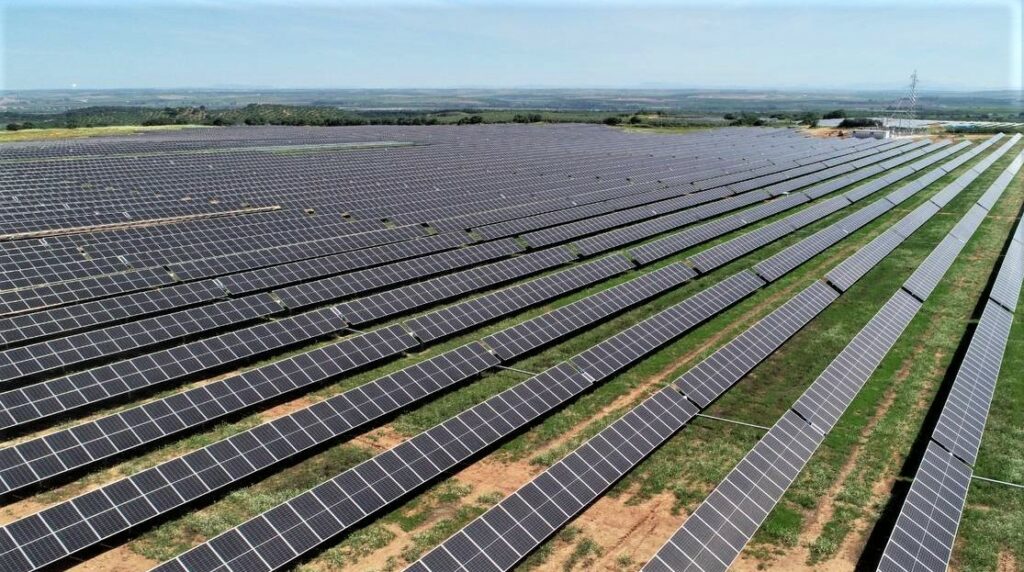
Sonnedix has bought two operating solar plants in Italy from a fund that is now roughly halfway through returning its investors' capital. The larger of the two sits on disused industrial land outside Cagliari and carries a twenty-year state-backed tariff. The tariff does not cover all of it. Around nine megawatts of a 46.5 MW plant sit outside the award, and the reason has nothing to do with how the plant performs.
Key takeaways
- Sonnedix has acquired the 46.5 MW Macchiareddu solar plant in Sardinia and the 7.4 MW Aprilia solar plant in Lazio from EOS ReNewable Infrastructure Fund II, managed by EOS Investment Management. The consideration was not disclosed.
- The Macchiareddu plant secured 37.412 MW of its 46.5 MW capacity in Italy's FER 1 auction at a 2.01 percent discount to the reference price of 77.594 euros per MWh, giving an indicative twenty-year incentive tariff of about 76.03 euros per MWh ($85.47 per MWh).
- Macchiareddu was first planned at 37 MWp and uprated to about 46 MW through repowering after final authorisation. Enerdatics believes the capacity outside the FER 1 award is sold in the merchant power market.
- Both plants reached commercial operation in 2025 and generate about 90 GWh a year between them, enough to supply more than 33,000 Italian households. The purchase takes Sonnedix past 1.3 GW of operational capacity in Italy.
- Enerdatics records 22 transactions involving operational Italian solar assets since the start of 2024, of which only three carry a disclosed value, between $1.19 million and $1.33 million per MW.
Why does a state-backed tariff cover only 37.412 MW of a 46.5 MW plant?
Because the award was made against the capacity the project entered, not against the plant that was eventually built. Italy's FER 1 auction allocated twenty-year incentive tariffs competitively rather than to all comers, with developers bidding a discount to a government reference price and winners receiving a fixed price on the capacity they had entered. Macchiareddu bid at a 2.01 percent discount to 77.594 euros per MWh and won support on 37.412 MW.
The plant that opened in 2025 is larger than that. It was first planned at 37 MWp and uprated to about 46 MW through repowering, the practice of upgrading a site's equipment to raise its output, once final authorisation came through. The Enerdatics record does not state that the two figures are connected. What it does show is an award of 37.412 MW against an installed 46.5 MW, which leaves roughly nine megawatts, a fifth of the plant, outside the tariff. Enerdatics believes that remainder is sold in the merchant power market, meaning the price it earns is whatever the Italian day-ahead market pays on the day.
What is the contracted fraction worth to a buyer?
More than a merchant plant and less than a fully contracted one. The indicative tariff of about 76.03 euros per MWh ($85.47 per MWh) runs for twenty years from commissioning, which places the revenue on four fifths of Macchiareddu beyond the reach of Italian price volatility for most of the plant's working life. The remaining fifth carries that volatility in full, and in a market where midday solar output has grown quickly, it is the harder part to underwrite.
The capital behind the asset is known. Construction began in 2024 at an estimated total cost of about 45 million euros ($50.58 million), which works out at roughly $1.09 million for each MW installed. The smaller asset is contracted differently again. The 7.4 MW Aprilia plant in the province of Latina reached commercial operation in 2025, and Enerdatics believes it is likely to sit under a corporate power purchase agreement rather than an auction tariff. A 54 MW portfolio therefore arrives with three revenue routes, not one.
Why is the seller exiting plants that only started operating last year?
Because the fund's work on them is finished. EOS ReNewable Infrastructure Fund II, managed by EOS Investment Management, develops and commissions Italian solar and then sells it, crystallising the value created between permitting and first power. Two divestments inside six months have returned close to half of the capital the fund has invested since inception, and the sale ran as a competitive process that drew both Italian and international interest.
The assets were also financed with an exit in mind. The portfolio is likely to have benefited from a 108 million euro ($125.52 million) cross-border green loan arranged with ING Bank in January 2025 against a portfolio of more than 250 MW, structured with VAT financing and guarantee support for power purchase agreements. For Sonnedix this is a second transaction with the same seller, following the 194 MW Akira portfolio in Lazio in March 2026, held in a joint venture with Capital Dynamics. L&B Partners advised EOS IM on the sale, with Green Horse Legal Advisory as legal adviser and Kiwa as technical adviser.
Enerdatics records 101 Italian solar transactions since the start of 2024, carrying $577.16 million of disclosed value between them, and that disclosure is heavily skewed by stage. Of the 22 deals involving operational assets, only three carry a price, in a narrow band from $1.19 million to $1.33 million per MW with a median of $1.32 million. Of the 68 deals involving assets still under development, 28 carry a price, at a median of $0.13 million per MW. Priced inside the operational band, 53.9 MW would imply something between $64 million and $72 million. This transaction instead joins the nineteen operational Italian solar deals since 2024 that disclose nothing at all.
What does the deal signal for Italian solar?
It signals that the unit of value in Italian solar is the contracted megawatt rather than the installed one. Macchiareddu is a strong operating asset, built on previously disused industrial land and commissioned in 2025. What a buyer underwrites, though, is the 37.412 MW with a twenty-year price attached and the nine or so megawatts without. Italy's auction regime has since moved on to FER X, and recent Italian solar transactions have clustered around FER X auction awards for the same reason, because the contract rather than the panel count is what a lender will price.
For Sonnedix the logic runs past generation. The company passed 1.3 GW of operational Italian capacity with this deal and bought a 260 MW battery portfolio in Tuscania in July 2026. An uncontracted fifth of a Sardinian solar plant is close to a textbook case for storage, which moves output away from the hours when Italian solar is worth least. Expect more Italian portfolios to be valued on the split between tariffed and merchant capacity.
Frequently asked questions
How much did Sonnedix pay for the Macchiareddu and Aprilia solar plants?The consideration was not disclosed. Enerdatics records only three disclosed prices across 22 operational Italian solar transactions since the start of 2024, in a band from $1.19 million to $1.33 million per MW.
What is Italy's FER 1 auction?FER 1 was Italy's competitive tender for renewable energy incentives, in which developers bid a discount to a government reference price and successful projects received a fixed tariff for twenty years on the capacity they had entered. Macchiareddu won support on 37.412 MW at a 2.01 percent discount to a reference price of 77.594 euros per MWh.
Why does part of the Macchiareddu plant have no tariff?The FER 1 award covers 37.412 MW, while the plant as built is 46.5 MW, having been uprated from an original 37 MWp design through repowering after final authorisation. Enerdatics believes the capacity outside the award is sold in the merchant power market.
Ready to get deal-ready answers in seconds? Try Enerdatics Leap AI and access verified intelligence across M&A, financings, PPAs, projects, and energy market developments through natural language.