Oracle Contracts '10 to 20 Percent' of Point Beach From We Energies
Oracle has contracted nuclear power for a new data centre in Wisconsin. The plant is Point Beach, on Lake Michigan. NextEra owns it, We Energies is selling the output, and the volume is a range rather than a number. None of those three facts is what the headline carries.
Key takeaways
- We Energies has signed a power purchase agreement with Oracle for output from the Point Beach nuclear project in Wisconsin. Enerdatics records Oracle contracting 125 to 250 MW, which it puts at 10 to 20 percent of the project's output, and carries the record as a preliminary analysis.
- We Energies does not own Point Beach. NextEra Energy Resources does, and We Energies buys the output under a separate 20-year agreement for 1,032 MW signed on 14 August 2026, so the Oracle contract is a resale of power already under contract.
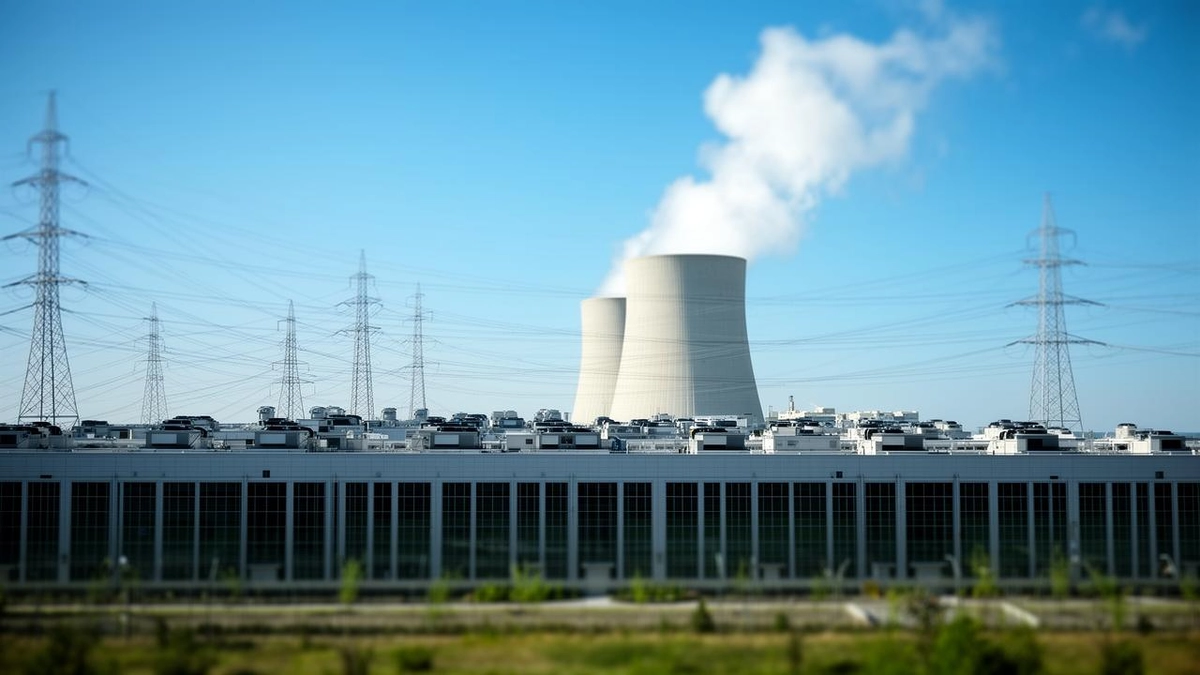
- Point Beach is a 1,200 MW pressurised water reactor plant on Lake Michigan. It was originally developed by We Energies and later sold to NextEra Energy Resources.
- The contracted electricity will support Oracle's new Port Washington data centre in Wisconsin, and the agreement is subject to approval by the Public Service Commission of Wisconsin.
- Enerdatics records 19 US nuclear power purchase agreements since the start of 2024. Fourteen have a technology company as off-taker, none discloses a tariff, and seven, including this one, disclose no contract duration either.
Who is actually selling Oracle this power?
A utility that buys it from the owner.
The chain runs three deep. NextEra Energy Resources owns and operates Point Beach. We Energies contracted 1,032 MW of its output for twenty years in August 2026. Two months later it has contracted a share of that to Oracle. So Oracle's counterparty is not the generator, and its credit and performance exposure sits with a regulated utility that stands between it and the reactors.
The proportions are worth holding onto. On the recorded upper bound of 250 MW, Oracle has taken about 24 percent of what We Energies holds and about 21 percent of the plant's 1,200 MW. There is also a long history folded into the arrangement: Point Beach was originally developed by We Energies and sold to NextEra, so the utility is now reselling output from a plant it used to own, bought back under a contract signed two months before it found a customer for part of it.
Why is the volume a range rather than a number?
Because the deal is not finished.
Enerdatics records 125 to 250 MW, describes it as 10 to 20 percent of the project's output, and marks the whole record as a preliminary analysis. The agreement is subject to approval by the Public Service Commission of Wisconsin, and until that review concludes both ends of the range are live. Reporting this as a 250 MW contract takes the top of a range and presents it as a fact.
The regulatory step is not a formality either. A regulated utility reselling contracted generation to one very large customer raises the question of what the arrangement does to every other customer served from the same supply, which is exactly the question a state commission exists to answer. And the uncertainty is not limited to volume: of the 19 US nuclear agreements Enerdatics records since the start of 2024, this is one of seven with no disclosed duration, so the term is unknown alongside the price.
Why would a hyperscaler buy nuclear power through a utility rather than from the plant?
Because the utility already holds the contract, and in a regulated state it is the party positioned to sell to a retail customer.
We Energies locked up 1,032 MW of Point Beach for twenty years in August 2026, before any Oracle contract existed, and it did so to serve its own system. A large new data centre arriving in its territory is load it is obliged to serve. Selling that customer a defined share of nuclear output it already controls is a good deal simpler than having the customer negotiate separately with NextEra and then arrange delivery, and it keeps the whole arrangement inside the regulatory perimeter, which is why the commission has to sign it off.
Location explains why the supply is an existing plant rather than new build. Enerdatics has recorded US data centre power demand above 150 GW, with PJM at 67 GW and ERCOT above 20 GW. Wisconsin sits in neither of those clusters, so there is no queue of merchant developers racing to serve it. What there is, is a 1,200 MW reactor pair already running on Lake Michigan and a utility holding most of its output.
Enerdatics records 19 US nuclear power purchase agreements since the start of 2024, and the Point Beach plant now accounts for two of them: We Energies buying 1,032 MW from NextEra Energy Resources in August 2026, and We Energies selling 125 to 250 MW of it to Oracle in October. Fourteen of the 19 have a technology company as the off-taker, four a utility or independent power producer and one a retailer. Not one of the 19 discloses a tariff, and seven of them, this one included, disclose no duration. On the recorded volumes Oracle's upper bound is roughly 24 percent of what We Energies holds and 21 percent of the plant.
What does the deal signal for US nuclear offtake?
It signals that resale has become a link in the chain. The pattern until now has been generator to hyperscaler directly, which is how Constellation, Vistra, Talen and NextEra have all contracted nuclear output to technology companies. Here a regulated utility sits in the middle, and both sides get something from that. Oracle gets a counterparty it already has a service relationship with and a contract that clears a state regulator. We Energies gets a reason to have contracted more nuclear capacity than its own system needed.
Expect the structure to repeat wherever a hyperscaler lands in a regulated state, because the utility, not the generator, is the party with the retail relationship and the route through the commission. The caution is that almost nothing here is settled. Enerdatics carries the record as preliminary, the volume as a range, the duration as undisclosed and the price, like every other nuclear agreement in the set, as entirely unobserved. The pricing opacity in particular is now total, something Enerdatics has traced across the full set of US nuclear agreements signed since 2024.
Frequently asked questions
How much Point Beach output has Oracle contracted?Enerdatics records 125 to 250 MW, or 10 to 20 percent of the project's output. The record is a preliminary analysis and the agreement is subject to approval by the Public Service Commission of Wisconsin, with no disclosed duration or tariff.
Does Oracle buy the power from NextEra?No. NextEra Energy Resources owns Point Beach, and We Energies buys 1,032 MW of its output under a separate 20-year agreement signed on 14 August 2026. Oracle's contract is with We Energies, which is reselling a share of that volume.
What will the power be used for?Oracle's new Port Washington data centre in Wisconsin.
Enerdatics records the owner, the intermediary and the approval status behind every US nuclear offtake agreement, which is how a 250 MW headline turns out to be a range. Browse more transaction analysis in the Enerdatics insights archive.