LS Power Raised $6bn and Pointed $1.7bn of It at Gas Plants
LS Power has closed its sixth fund at $6 billion, half again above target and more than twice the size of the fund before it. Around $1.7 billion of that money already has a destination. It is going to roughly 5 GW of gas-fired power plants.
Key takeaways
- LS Power has closed LS Power Equity Partners VI at $6 billion, 50 percent above its original $4 billion target and 122 percent larger than the $2.7 billion Fund V closed in 2024. The fund launched in January 2026 and reached its hard cap in roughly six months.
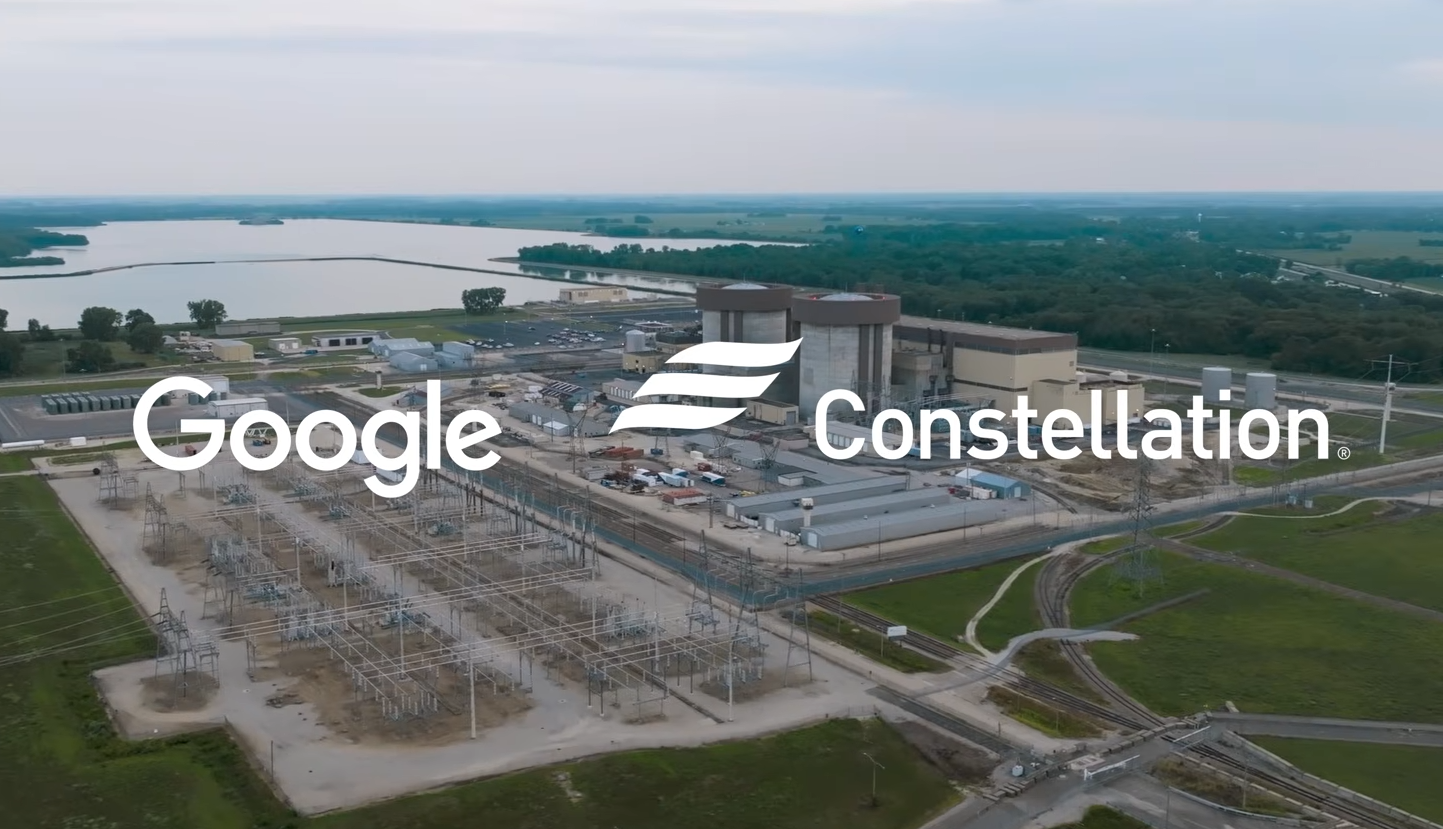
- Around $1.7 billion of Fund VI, or 28 percent of it, is earmarked for acquiring roughly 5 GW of gas-fired generation from Constellation across PJM and ERCOT, which works out at about $0.34 million per MW of earmarked capital.
- Fund VI targets a 15 percent net internal rate of return and 2.0 times net multiple on invested capital, which Enerdatics records as a value-add infrastructure strategy rather than a lower-return core one.
- Named limited partners are almost entirely US public pensions: $300 million each from the New Mexico State Investment Council and the Washington State Investment Board, $200 million each from the Virginia Retirement System, Pennsylvania PSERS and the Oregon Public Employees Retirement Fund, $75 million from the Teachers' Retirement System of Louisiana and $15 million from the Oregon Common School Fund.
- Fund V was deployed quickly, with around 70 percent of its capital invested within two years and the full $2.7 billion placed by October 2026.
What does a 15 percent net return target tell you about what this fund will buy?
That it cannot be filled with contracted renewables.
A net internal rate of return is the annualised return to investors after fees, and a net multiple on invested capital is how many times their money comes back. Fifteen percent and two times is a value-add target, materially above what core infrastructure strategies underwrite on long-contracted assets. Solar and wind projects with fifteen-year power purchase agreements are priced by buyers who want exactly that lower, steadier return, which means a fund promising more has to find it somewhere else.
There are three places to look: development risk, merchant price risk, or running finished assets better than their previous owner did. LS Power's stated approach is the third, with some of the second attached. Enerdatics records the fund targeting control-oriented investments in operating assets and platforms where active ownership and commercial optimisation can support stronger risk-adjusted returns, and notes it can invest across both contracted and merchant power. That flexibility is not incidental. It is the mechanism by which the return target becomes reachable.
Why is the first large allocation going to gas rather than renewables?
Because dispatchable capacity in PJM and ERCOT is where the scarcity currently sits.
Enerdatics records roughly $1.7 billion of Fund VI earmarked for about 5 GW of Constellation gas-fired generation in those two markets, which is about $0.34 million per MW of capital set aside. That figure is an allocation against a stated capacity rather than a disclosed purchase price for named plants, so it describes intent rather than a multiple. The direction is unambiguous either way: 28 percent of a newly raised power fund is pointed at thermal generation before the fund's first full year is out.
The demand case is not speculative. Enerdatics has recorded US data centre power demand passing 150 GW, with PJM at 67 GW and ERCOT above 20 GW, which are precisely the two markets this allocation targets. Against load growing on that scale, with interconnection queues slow and new build constrained, an existing gas plant that can run on command has a value that a merchant renewable project does not.
What does Fund V's deployment speed explain about Fund VI's size?
It is the evidence the raise was built on.
Fund V closed at $2.7 billion in 2024, had around 70 percent of its capital invested within two years and was fully placed by October 2026. A manager that can show it put its last fund to work at that pace has a straightforward argument for a larger successor, and the argument clearly landed: Fund VI launched in January 2026 at a $4 billion target and hit a $6 billion hard cap in about six months, with US state pension systems supplying most of the named commitments.
Part of what makes the pace credible is that LS Power is not only a fund manager. Founded in 1990, it has developed or acquired roughly 50 GW of generation and operates as developer, owner, operator and investor across gas, renewables, storage, transmission, demand response and EV charging. It acquired around 3 GW of operating renewables from Algonquin in 2025, and Enerdatics covered its purchase of 77.9 percent of BP's 1.66 GW US onshore wind portfolio into its Clearlight Energy platform. A fund attached to an operating company can underwrite improvements a financial sponsor would have to buy in.
Enerdatics records 15 US energy equity raises of $1 billion or more since the start of 2024. LS Power Equity Partners VI at $6 billion is the fourth largest of them, behind KKR's $19.2 billion Global Infrastructure Investors V, Energy Capital Partners' $8.1 billion ECP VI and the same manager's $6.7 billion ECP V, and the third largest to close during 2026. Measured against the $2.7 billion Fund V it follows, the step up is 122 percent, and the $1.7 billion earmarked for gas is on its own about 63 percent of the entire previous fund.
What does the raise signal for US power investment?
It signals that the money is moving toward dispatchable generation and toward managers who own an operating platform rather than only a balance sheet. The LP list sharpens the point: US public pension systems, named and sized, are funding the acquisition of gas plants in the two power markets carrying the most data centre load. That is a long way from how energy transition capital was described two years ago, and nobody involved is presenting it as a contradiction.
The other half of the trade is worth watching on the seller's side. Constellation is releasing roughly 5 GW of gas while signing long-dated nuclear offtake with hyperscalers, which is a portfolio being reshaped toward contracted nuclear rather than a company retreating. One caution on the headline: $6 billion is committed capital, not deployed capital. Fund V took two years to place 70 percent of a fund less than half this size, and the gas allocation aside, most of Fund VI has not yet chosen an asset.
Frequently asked questions
How large is LS Power Equity Partners VI?It closed at $6 billion, 50 percent above its original $4 billion target and 122 percent larger than the $2.7 billion Fund V closed in 2024. The fund launched in January 2026 and reached its hard cap in roughly six months.
What return is Fund VI targeting?A 15 percent net internal rate of return and 2.0 times net multiple on invested capital, which is a value-add infrastructure target rather than a core infrastructure one.
How much of the fund is already committed?Around $1.7 billion, about 28 percent, is earmarked for acquiring roughly 5 GW of gas-fired generation from Constellation across PJM and ERCOT.
Enerdatics records the size, the limited partners and the first allocation behind every US energy fund close. Browse more transaction analysis in the Enerdatics insights archive.