Why Two Irish Wind Deals Totalling 242 MW Add Up to a 200 MW Platform
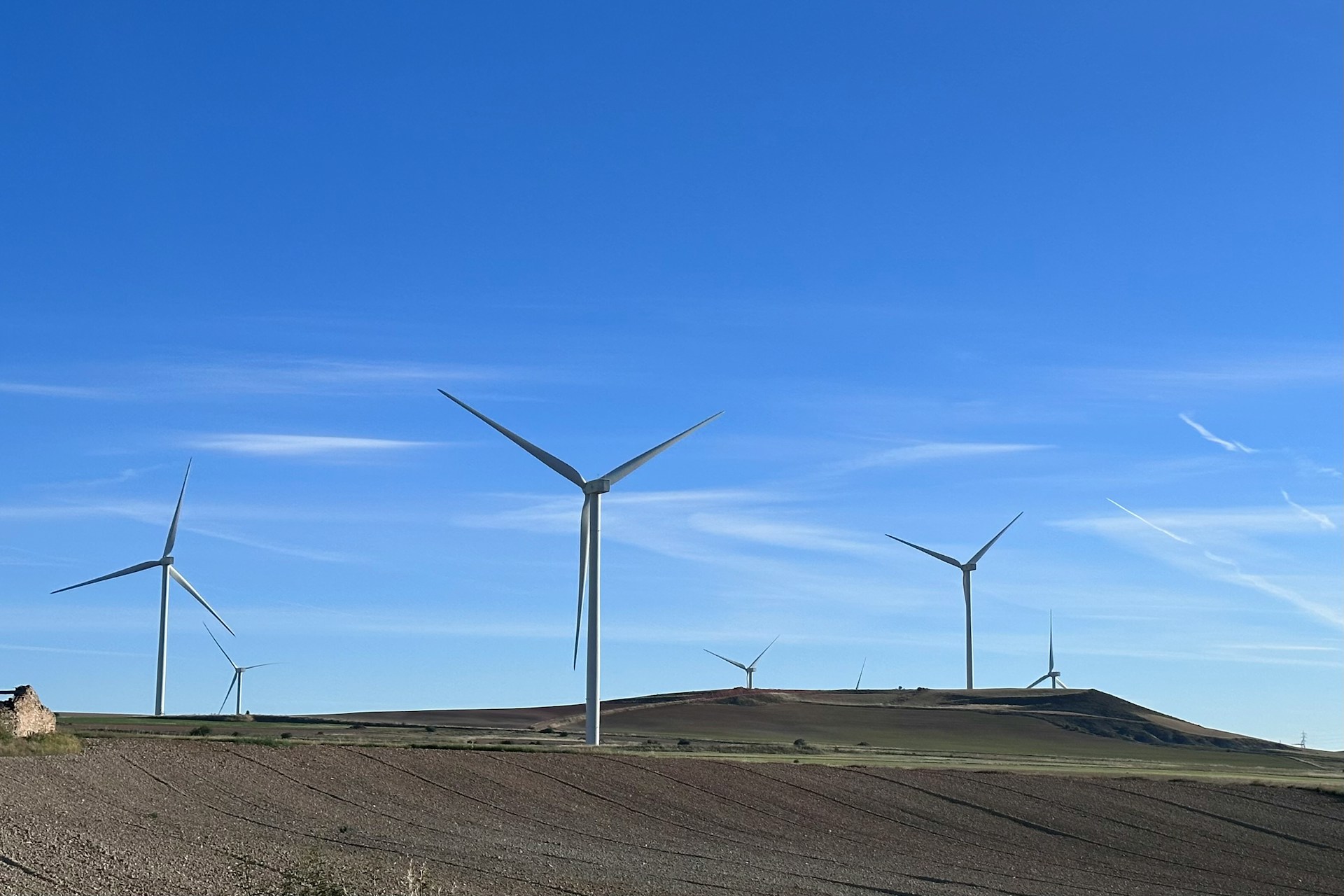
Lirion Power has bought five operating wind farms in Ireland from Global Infrastructure Partners, 76.6 MW in total. The buyer says the deal takes its platform to 200 MW. Add up the megawatts from its two Irish acquisitions and the figure is 242. The gap is not a rounding error, and it is the most useful number in the announcement.
Key takeaways
- Lirion Power has acquired a 76.6 MW portfolio of five operating Irish wind farms from Global Infrastructure Partners, part of BlackRock. Terms were not disclosed.
- The portfolio is Acres in Donegal at 17.1 MW, Barranafaddock in Waterford at 34.2 MW, Knockaneden in Kerry at 9.2 MW, Ballagh in Limerick at 4.6 MW and Raragh 2 in Meath at 11.5 MW, with commercial operation dates from January 2013 to December 2019.
- All five sites sell power under an Irish REFIT-backed arrangement, with Energia Customer Solutions, Bord Gais Energy and Flogas Enterprise Solutions as the designated offtakers.
- Lirion Power's earlier Irish purchase, a 69.82 percent stake in a 165.7 MW portfolio bought from Greencoat Renewables in May 2025 for $173.7 million, equates to 115.7 MW on an ownership-adjusted basis and $1.50 million per MW, against $1.05 million per MW if the size of the stake is ignored.
- Enerdatics records 11 Irish wind transactions since the start of 2024, seven of them carrying a disclosed value, with priced operating assets falling between $1.23 million and $2.20 million per MW.
What did Lirion Power actually buy?
Five separate wind farms in five counties, averaging just over 15 MW each, none of them adjacent to another. The turbines are GE and Enercon machines rated between 2.3 MW and 2.85 MW, which places the equipment in the middle of the last decade rather than at the current frontier.
All five are contracted under REFIT, the Irish Renewable Energy Feed-in Tariff, a closed legacy scheme under which a licensed electricity supplier holds the power purchase agreement and passes a supported price through to the project. That is why the offtakers here are three suppliers rather than the corporate buyers behind newer Irish wind contracts. One of them, Energia Customer Solutions, belongs to Energia Group, which Ardian agreed to acquire from I Squared Capital for about $2.93 billion in October 2025.
Why does the 200 MW platform figure not match the megawatts?
Because the first of the two deals bought a stake rather than a portfolio. In May 2025 Lirion Power acquired 69.82 percent of a 165.7 MW Irish onshore wind portfolio from Greencoat Renewables. On an ownership-adjusted basis, meaning capacity weighted by the share actually owned, that is 115.7 MW rather than 165.7 MW. Add the 76.6 MW bought outright from Global Infrastructure Partners and the platform comes to roughly 192 MW, which is what a 200 MW description fits. The gross figure is 242 MW.
The same arithmetic governs the price. The Greencoat transaction was $173.7 million. Divided by the 165.7 MW headline it reads as $1.05 million per MW, the cheap end of anything recorded in Ireland. Divided by the 115.7 MW actually acquired it is $1.50 million per MW, comfortably mid-market. The first figure understates what Lirion Power paid by about 30 percent. Any comparable set that mixes stake deals with whole-asset deals without adjusting for ownership bends its price curve downwards for no real reason.
Why buy subsidised wind in order to rebuild it?
Because the support and the asset run on different clocks, and the buyer is underwriting what happens after the support ends. REFIT is closed to new entrants and each project draws support for a fixed term, so a fleet built between 2013 and 2019 has a contracted phase that expires well before the sites reach the end of their useful life. A financial holder values that phase. An operator values what can be built on the same ground afterwards.
Lirion Power is explicit about the second view. It plans life extension, repowering and hybridisation, meaning the addition of a second technology, usually solar or battery storage, behind an existing grid connection so the same export capacity carries more output. It also expects to bring additional contracted capacity to the corporate power purchase agreement market, which is a route-to-market change as much as a construction programme. On that reading the five scattered sites are the point of the deal rather than an operational inconvenience, because five grid connections in five counties are five places to add capacity. Private funds have been repricing mature subsidised portfolios around repowering upside in UK solar for some time, and Irish wind is now producing the same trade. The storage half of it runs into a thin Irish battery market held by very few buyers.
Enerdatics records 11 Irish wind transactions since the start of 2024, seven with a disclosed value, leaving four priced operating comparables. The Renewables Infrastructure Group sold the 55 MW Pallas wind farm in March 2024 for about $67.7 million, or $1.23 million per MW. Commerz Real bought the 57.6 MW Moanvane wind farm from Statkraft in December 2024 for $117.06 million, or $2.03 million per MW. Lirion Power's own Greencoat purchase prices at $1.50 million per MW. Alerion Clean Power agreed to buy the 14.4 MW Milestone wind farm from SUSI Partners in September 2025 for $31.68 million, or $2.20 million per MW. Applied to 76.6 MW that range implies between $94 million and $169 million, with the median pointing at roughly $135 million. No price was disclosed here, so those are comparables rather than a figure attached to this deal.
What does the deal signal for Irish wind?
It signals that the largest financial owners will let go of small, scattered, subsidised Irish wind, and that the buyers stepping in are pricing the second life of the asset rather than the remainder of the first. Global Infrastructure Partners, now part of BlackRock, is about as large as infrastructure capital gets, and 76.6 MW across five counties is a small position to administer at that scale. For an owner-operator with a repowering programme, the same fragmentation is a set of options. That asymmetry is what moves assets like these.
Expect more REFIT-era portfolios to reach the market on the same logic. Ireland built a large fleet of sub-35 MW wind farms under the scheme, much of it now a decade old and held by funds that bought contracted cash flow rather than development optionality. As the remaining support term shortens, the gap widens between what a yield holder will pay and what an operator with a rebuild plan will pay. Lirion Power has done that trade twice in sixteen months.
Frequently asked questions
How much did Lirion Power pay for the Irish wind portfolio?Terms were not disclosed. Enerdatics records four priced operating Irish wind comparables since the start of 2024, ranging from $1.23 million to $2.20 million per MW, which on 76.6 MW would imply roughly $94 million to $169 million.
What is REFIT in Ireland?REFIT is the Irish Renewable Energy Feed-in Tariff, a legacy support scheme now closed to new entrants. A licensed electricity supplier holds the power purchase agreement and passes through a supported price, which is why suppliers rather than corporate buyers appear as offtakers.
What is hybridisation of a wind farm?Hybridisation means adding a second technology, usually solar or battery storage, behind a wind farm's existing grid connection so that the same export capacity carries more output. It avoids the cost and delay of a new connection, which is why connections are often the most valuable part of an ageing portfolio.
Ready to get deal-ready answers in seconds? Try Enerdatics Leap AI and access verified intelligence across M&A, financings, PPAs, projects, and energy market developments through natural language.