Why a Polish Battery Will Run for Two Years Before Its Contract Starts
Gore Street Capital's newest fund has agreed to buy a 40 MW battery project in Poland, its first asset there. The project is scheduled to start operating in the first quarter of 2028. Its capacity market contract does not begin until 2030. Both dates are in the announcement, and the two years between them are where this deal gets interesting.
Key takeaways
- GS EU Fund SCSp, an Article 9 fund managed by Gore Street Capital, has agreed to acquire a 40 MW and 160 MWh battery storage project in Poland, its first investment there and its second market after the Republic of Ireland. Terms and the seller were not disclosed.
- The project is at ready-to-build stage and is scheduled to begin commercial operations in the first quarter of 2028, while the 17-year Capacity Market contract it holds does not commence until 2030.
- On completion the fund's portfolio reaches 550 MWh: this 160 MWh project plus the 390 MWh of the Kilmannock and Mucklagh projects in Ireland, with about 147 million euros, or $167.68 million, committed across it.
- Enerdatics records 20 Polish battery transactions since the start of 2024 and only two carry a disclosed value, both with DTEK Renewables as buyer: 133 MW and 532 MWh at Trzebinia for $32.08 million in March 2024, and 112 MW and 448 MWh at Kozienice for $29.73 million in September 2025.
- Those two comparables price at $0.241 million and $0.265 million per MW, and both are four-hour systems like this one, which on 40 MW implies roughly $9.6 million to $10.6 million.
What is the fund actually buying?
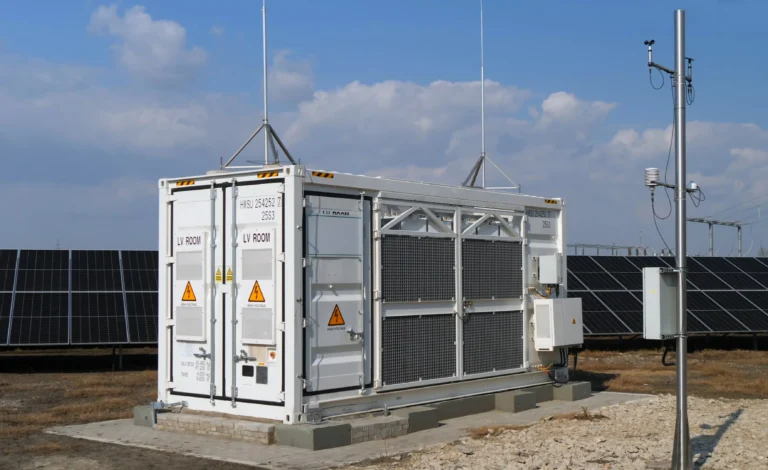
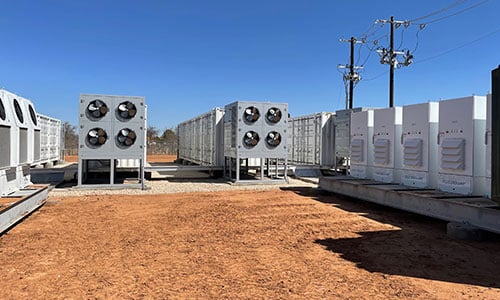
A four-hour battery at the last stage before construction. The 40 MW and 160 MWh configuration means the system can discharge at full rated power for four hours before it is empty. Ready-to-build means permits, grid connection and design are settled and only procurement and construction remain. Neither price nor seller was disclosed, and completion is expected within weeks subject to development milestones, so this is an agreed transaction rather than a closed one.
The portfolio arithmetic is easy to follow. The fund says the deal takes it to 550 MWh, and its two Irish projects, Kilmannock at 240 MWh and Mucklagh at 150 MWh, account for 390 MWh. This project supplies the remaining 160 MWh exactly. The fund has committed about 147 million euros, with a further 43 million euros under diligence and a pipeline above 2.3 GWh across six countries. Enerdatics believes the purchase could be funded from capital raised at the fund's first close in January 2026 together with proceeds from a further close targeted for October 2026.
Why does a 2030 contract sit on a project finished in 2028?
Because the two dates are set by different things. A capacity market agreement is a contract to be available to the power system during a named delivery year, paid per kilowatt of derated capacity rather than per unit of electricity generated. Poland runs its main auctions five years ahead, so an agreement for delivery year 2030 was won in 2025, and that year is fixed at the moment of award. Finishing construction early does not move it forward. A developer who completes in the first quarter of 2028 therefore owns a working battery with no contracted revenue for roughly two years.
That is not obviously a mistake. The commitment is dated and cannot be renegotiated, so a project that must be available throughout 2030 has every reason to finish well before it, and schedule slack is cheap insurance against construction running into the delivery year. Meanwhile a four-hour battery in Poland has somewhere to earn. The fund expects the asset to retain exposure to ancillary services and wholesale trading alongside the capacity contract, and in 2028 and 2029 that exposure is the whole of the revenue. The deal is underwritten in two phases, and only the second is contracted.
How much of the 40 MW does the capacity contract cover?
The announcement does not say, and in Poland that omission matters. Capacity agreements are awarded on derated capacity, which discounts rated power according to how reliably a unit can sustain output, so the contracted figure is routinely a fraction of the nameplate number in the headline. That fraction can be dramatic. ENGIE's 438 MW Trebaczew project, bought earlier this month, holds a 17-year agreement covering 28.523 MW, which is 6.5 percent of its nameplate capacity, at a clearing price of 465.02 zloty per kW per year, or $124.82 per kW per year, for the same 2030 delivery year.
Trebaczew is a two-hour system and this one is four-hour, and duration is what derating rewards, so a four-hour battery should secure a materially higher share of its nameplate. But the direction of the adjustment is known and its size is not, so a reader who takes a 17-year Capacity Market contract to mean that 40 MW is underwritten is reading more into the sentence than it contains.
Enerdatics records 20 Polish battery transactions since the start of 2024, and exactly two carry a disclosed value. Both have the same buyer, DTEK Renewables, which bought the 133 MW and 532 MWh Trzebinia project from Columbus Energy in March 2024 for $32.08 million, or $0.241 million per MW, and the 112 MW and 448 MWh Kozienice project from Greenvolt Group in September 2025 for $29.73 million, or $0.265 million per MW. Both are four-hour systems like this one, which makes them unusually clean comparables, and on 40 MW they imply roughly $9.6 million to $10.6 million. The wider point is that the visible price record of a 20-transaction market rests on the disclosure practice of one company.
What does the deal signal for Polish storage?
It signals that Poland is where European storage funds are going for contracted revenue, and that the contract is further away than the announcements make it sound. The capacity market is the draw, offering something close to a 17-year annuity in a market with few other long-dated storage contracts. But the annuity starts in a named year awarded five years earlier, and the gap before it is merchant risk the buyer carries alone.
There is a second caution in the numbers. The 147 million euros committed spans 235 MW across Ireland and Poland, or roughly $0.71 million per MW. That is nearly three times the DTEK acquisition prices, and the difference is not a valuation signal: committed capital covers acquisition and construction together, an acquisition price only the first. Reading fund commitments as transaction prices would overstate what Polish batteries change hands for by several times. The fund has said it is looking at Spain and Romania next, and the Irish battery market it started in has the same problem in more acute form.
Frequently asked questions
How much did Gore Street Capital's fund pay for the Polish battery project?Terms were not disclosed. Enerdatics records only two priced Polish battery transactions since the start of 2024, at $0.241 million and $0.265 million per MW, implying roughly $9.6 million to $10.6 million on 40 MW.
What is a capacity market agreement?It is a contract to be available to the power system during a named delivery year, paid per kilowatt of derated capacity rather than per megawatt hour generated. Poland awards them about five years ahead, and the delivery year is fixed on award.
When does this project start earning its contracted revenue?Commercial operations are scheduled for the first quarter of 2028 and the 17-year Capacity Market contract commences in 2030, so the project is expected to run for roughly two years on ancillary services and wholesale trading revenue first.
Ready to get deal-ready answers in seconds? Try Enerdatics Leap AI and access verified intelligence across M&A, financings, PPAs, projects, and energy market developments through natural language.