ENGIE has bought a 438 MW battery project in Poland. Only 28.5 MW of it carries a contracted revenue stream. That gap, between what the headline capacity says and what is actually underwritten, is the most interesting thing about the transaction.
Key takeaways
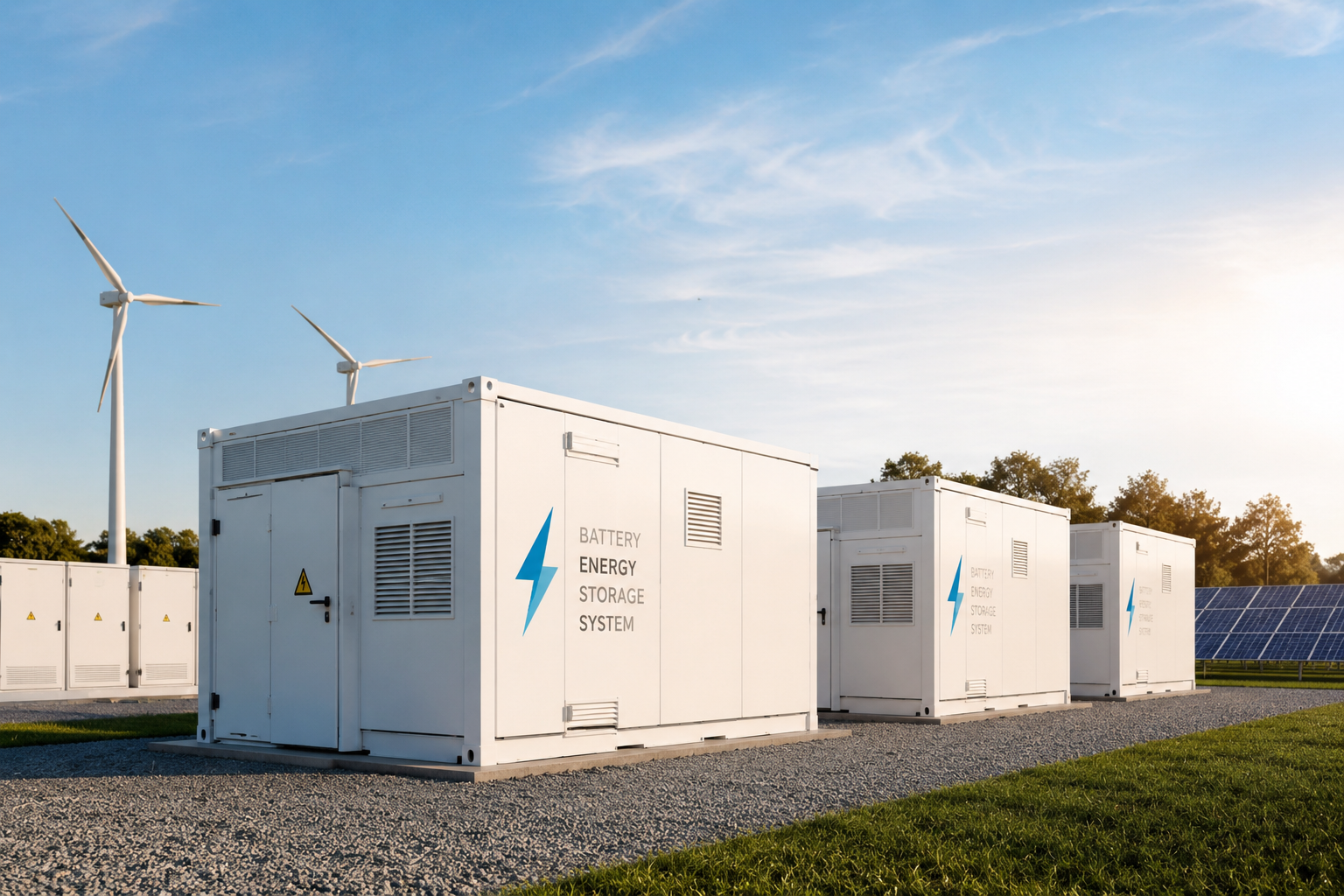
- ENGIE, through its Polish subsidiary ENGIE Zielona Energia, acquired the SPV holding the 438 MW/876 MWh Trebaczew BESS project at Dzialoszyn in Lodz Voivodeship, Poland, from Mithra Energy and Futureal Investment Partners. Terms were not disclosed.
- The project holds a 17-year Capacity Market agreement for 28.523 MW at PLN 465.02 per kW per year for delivery year 2030, covering 6.5 percent of nameplate capacity, with the balance expected to earn merchant revenue from optimisation, flexibility and balancing.
- It has secured an environmental decision, zoning decision, grid connection conditions and a July 2026 building permit, with ready-to-build expected in Q4 2026 and commissioning in Q1 2029.
- The asset came from a Futureal and Mithra joint venture portfolio of seven standalone Polish BESS projects totalling around 3.0 GW/6.0 GWh.
- Enerdatics records 19 Polish battery transactions since the start of 2024, all at development stage and only one with a disclosed value, DTEK Renewables paying $0.24 million per MW for 133 MW in March 2024.
What is actually contracted?
In the T-5 Capacity Market auction the project secured a 17-year capacity agreement for 28.523 MW at a clearing price of PLN 465.02 per kW per year, roughly $124.82 per kW per year, for delivery year 2030. That agreement covers 6.5 percent of the project's 438 MW nameplate. The remaining 409 MW carries no contracted revenue at all. ENGIE expects the balance to earn from energy optimisation, grid flexibility and system balancing, which are real revenue streams but merchant ones. So a project presented as a 438 MW acquisition is, in contracted terms, a 28.5 MW asset with a very large merchant tail attached.
Why is the capacity agreement so small relative to the battery?
Because Poland's capacity market derates storage according to how long it can sustain output, and it awards agreements through a competitive auction rather than to all comers. A four-hour battery does not receive capacity credit for its full power rating, since the mechanism values firm availability during system stress rather than instantaneous power. The 28.523 MW figure is what cleared for this asset at that price for that delivery year, not what the battery can physically deliver. Reading the capacity agreement as a proxy for project size, or the project size as a proxy for contracted revenue, gets the economics backwards in both directions.
What does ENGIE gain from buying at this stage?
Consents and a connection, without the construction risk having started. The site covers roughly seven hectares and sits about 800 metres from the Trebaczew substation it will connect to. It has cleared the environmental decision, the zoning decision, the grid connection conditions and the building permit, which are the four gates where Polish storage developments most often stall. What remains is procurement, construction and financing, and ENGIE will take over management, engineering and construction through to delivery. The seller keeps the development margin and recycles into the rest of its pipeline: Futureal and Mithra hold a joint venture portfolio of seven standalone Polish BESS projects totalling around 3.0 GW/6.0 GWh, of which this is one.
Enerdatics' data puts the Polish market in context. Since the start of 2024 Enerdatics records 19 Polish battery storage transactions, and every single one is classified as Under Development. Not one operational Polish battery has changed hands in that period. Only one of the 19 carries a disclosed value, DTEK Renewables acquiring 133 MW from Columbus Energy in March 2024 for $32.08 million, or $0.24 million per MW. That is the entire priced record for a market that has traded roughly 3.5 GW of storage in under three years. Buyers here are pricing against their own deal flow, because there is almost no public benchmark to price against.
What does the deal signal for Polish storage?
The deal signals that Poland's battery market is now a development-stage market operating at utility scale, and that the large European utilities are buying consents rather than earnings. ENGIE has moved twice in under nine months, adding the 250 MW/1,000 MWh Tursko Wielkie project from R.Power before this one, taking its Polish storage pipeline to roughly 688 MW/1,876 MWh. Expect more of these acquisitions from developers holding multi-project portfolios, and expect the sellers to keep the capital moving rather than build out themselves.
The contracted-versus-merchant split is the thing to watch as this pipeline reaches commissioning. Poland's storage support framework and capacity auctions have made these projects financeable, but a 6.5 percent capacity agreement means the returns depend overwhelmingly on how volatile Polish power prices are between 2029 and the mid-2030s. That is a defensible position for a utility with a trading operation and a balance sheet, and a much harder one for a pure-play developer or an infrastructure fund seeking contracted cash flow. It is one reason the buyers in this market have been utilities rather than yield vehicles.
Frequently asked questions
How much did ENGIE pay for the Trebaczew project?Terms were not disclosed. Enerdatics records only one priced Polish battery transaction since the start of 2024, DTEK Renewables acquiring 133 MW from Columbus Energy for $32.08 million in March 2024, so there is very little public benchmark for this market.
What is a capacity market agreement?It is a contract paying a generator or storage asset a fixed sum per kilowatt per year to be available during periods of system stress, awarded competitively at auction. Storage is derated according to duration, so a battery typically receives capacity credit well below its power rating.
How large is ENGIE's Polish storage pipeline?Roughly 688 MW/1,876 MWh across two acquisitions, combining this 438 MW/876 MWh project with the 250 MW/1,000 MWh Tursko Wielkie project bought from R.Power. This sits alongside a wider European build-out in which ENGIE passed 1 GW of battery storage in Europe.
Ready to get deal-ready answers in seconds? Try Enerdatics Leap AI and access verified intelligence across M&A, financings, PPAs, projects, and energy market developments through natural language.