.png)
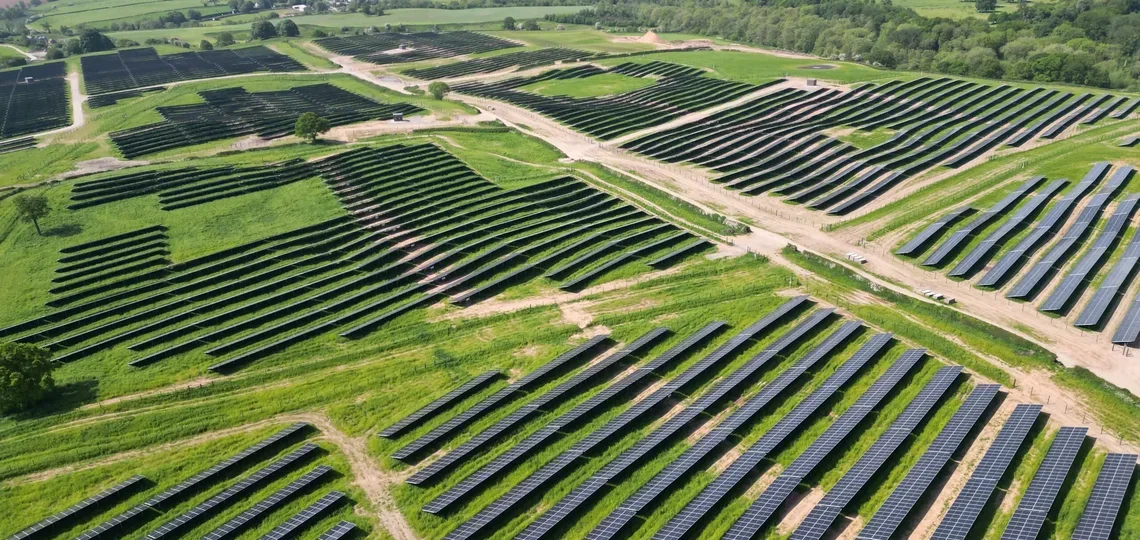
Nestlé India has signed a share subscription and shareholders' agreement to acquire 26 percent of Radiance KA Sunshine Seven, a Radiance Renewables subsidiary that owns and operates a 17.5 MWac, 26.25 MWp solar plant at Koppal in Karnataka. The company will subscribe for 7,612,500 equity shares of ₹10 face value at par, a total of ₹7.61 crore funded from internal accruals, with completion expected within 30 days. The stated purpose is to qualify as a captive user under Indian electricity law. The 26 percent is not a negotiated figure.
What is Nestlé India actually buying?
The subscription is 7,612,500 shares at ₹10 each, paid at par, giving ₹7.61 crore for 26 percent. Grossing that up implies an equity value of roughly ₹29.3 crore for the whole company, or about ₹1.67 crore per MWac, though subscribing at face value means the price reflects the nominal share capital rather than a valuation of the plant. The company reported turnover of ₹17.09 crore in FY2023-24, ₹15.76 crore in FY2024-25 and ₹15.80 crore in FY2025-26, so roughly ₹0.90 crore of revenue per MWac a year on a broadly flat trend. The transaction is not a related-party transaction and requires no prior regulatory or governmental approvals.
What is captive consumption, and why does it require 26 percent?
Indian electricity rules allow a consumer to take power from a generating plant as a captive user, avoiding the cross-subsidy surcharges and additional charges that apply to open-access supply, provided two conditions are met simultaneously. The consumer must hold at least 26 percent ownership of the generating company, and must consume at least 51 percent of the electricity generated, assessed annually. Both tests must be satisfied for the captive status to hold. That is why the stake is exactly 26 percent: it is the statutory floor, and any figure above it would tie up more capital without conferring further benefit. The equity is a condition of access to cheaper power, not an investment thesis in its own right.
Why buy equity when a power purchase agreement exists?
Because the two routes cost different amounts. A corporate buyer taking renewable power through open access pays the generator's tariff plus cross-subsidy surcharge, additional surcharge, wheeling and transmission charges, which in several Indian states add materially to the delivered cost. Captive status removes the cross-subsidy and additional surcharges, so the saving over a twenty-five year plant life can comfortably exceed a ₹7.61 crore equity commitment on a 17.5 MWac plant. The trade-off is that the consumer takes on shareholder obligations, must maintain the 26 percent holding and the 51 percent consumption throughout, and carries the risk of losing captive status if consumption falls below the threshold in any year. For a manufacturer with steady, predictable load, that is a manageable condition.
Enerdatics' data shows Indian corporate procurement running through structures like this rather than through simple contracts. The Indian commercial and industrial segment has been among the most active globally, with developers building portfolios specifically for captive and group captive arrangements, and Enerdatics recording 31 Indian operating solar transactions since the start of 2023 carrying $7.32 billion of disclosed value at a median implied enterprise value of $0.48 million per MW. Against that benchmark, a ₹1.67 crore per MWac implied equity value converts to roughly $0.19 million per MWac, well below the operating median, which is what one would expect when shares are subscribed at par rather than acquired at a negotiated price. The equity here is a mechanism, and reading it as a valuation would be a mistake.
What does the deal signal for Indian renewables?
The deal signals that corporate renewable procurement in India remains structured around regulatory thresholds rather than around commercial preference. A multinational food manufacturer becoming a minority shareholder in a Karnataka solar company is not a strategic move into power generation; it is the cheapest lawful route to renewable electricity for one factory. Expect more of these subscriptions as manufacturers pursue emissions targets, and expect developers to keep creating single-plant subsidiaries specifically so that 26 percent slices can be sold to individual offtakers.
The structure also explains something about how Indian developers build. Radiance Renewables holds this plant in a dedicated special purpose vehicle, Radiance KA Sunshine Seven, which allows a discrete 26 percent to be issued to one consumer without disturbing ownership of the rest of the portfolio. That is a deliberate corporate architecture, and it is why Indian C&I developers tend to run many small companies rather than one large one. For anyone tracking Indian renewable ownership, it also means headline equity stakes frequently indicate regulatory compliance rather than economic interest, which is worth remembering when reading Indian shareholding disclosures.
Key takeaways
- Nestlé India agreed to acquire 26 percent of Radiance KA Sunshine Seven, which owns a 17.5 MWac, 26.25 MWp solar plant at Koppal in Karnataka, subscribing for 7,612,500 shares of ₹10 face value at par for ₹7.61 crore.
- The purpose is to qualify as a captive user under Indian electricity law, which requires at least 26 percent ownership of the generating company and at least 51 percent consumption of its output, so the stake size is the statutory minimum.
- The investment is funded from internal accruals, completion is expected within 30 days, and the transaction is not a related-party transaction and needs no prior regulatory approvals.
- Radiance KA Sunshine Seven reported turnover of ₹17.09 crore, ₹15.76 crore and ₹15.80 crore across FY2023-24 to FY2025-26, roughly ₹0.90 crore per MWac a year on a broadly flat trend.
- Enerdatics records 31 Indian operating solar transactions since the start of 2023 at a median implied enterprise value of $0.48 million per MW, against which the par-value subscription implies roughly $0.19 million per MWac, reflecting a compliance mechanism rather than a market price.
Frequently asked questions
How much is Nestlé India paying for the solar stake?₹7.61 crore for 7,612,500 equity shares of ₹10 face value, subscribed at par, giving 26 percent of Radiance KA Sunshine Seven. The investment is funded from internal accruals and completion is expected within 30 days of the agreement executed on 27 August 2026.
What is captive consumption in India?Captive status allows a consumer to take power from a generating plant while avoiding cross-subsidy and additional surcharges that apply to open-access supply. It requires the consumer to hold at least 26 percent ownership of the generating company and to consume at least 51 percent of the electricity generated, with both conditions assessed annually.
What plant does Radiance KA Sunshine Seven own?It owns and operates a solar power plant of 17.5 MW AC and 26.25 MWp DC at Koppal in Karnataka, engaged in the generation and sale of solar renewable energy. The plant reported turnover of ₹15.80 crore in FY2025-26.
Ready to get deal-ready answers in seconds? Try Enerdatics Leap AI and access verified intelligence across M&A, financings, PPAs, projects, and energy market developments through natural language.