
Why Estonia's Largest Battery Deal Runs for Only Two Hours
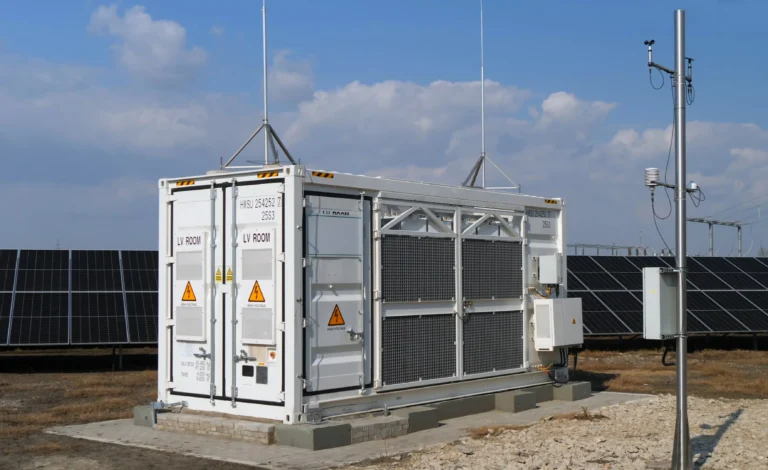
Taaleri Energia and KJK Capital have bought a 192 MW battery under construction in southern Estonia. It stores 420 MWh. Across the rest of Europe, buyers have spent the past year moving from two-hour batteries to four-hour ones. This one runs for just over two, and that is the deliberate part.
Key takeaways
- Taaleri Energia, a subsidiary of Taaleri Group, and KJK Capital have acquired the 192 MW/420 MWh Raudsepa battery storage project in southern Estonia, around 50 kilometres south of Tartu, from Evecon and Corsica Sole. Terms were not disclosed.
- The project stores 420 MWh at 192 MW of power, a duration of 2.19 hours, and is expected to reach commercial operations in November 2027.
- At 192 MW, Raudsepa is the largest battery transaction Enerdatics records in the Baltic states since the start of 2024, close to twice the next largest, NGEN Group's 100 MW/200 MWh Latvian purchase in February 2026 for $59.16 million, or $0.59 million per MW.
- Smartecon, an Estonian contractor, is building the project on a turnkey basis under a scope covering design, equipment supply, construction, commissioning, grid code compliance and a 330 kV substation. The batteries come from LG Energy Solution and the inverters from Power Electronics.
- The transaction was executed through Taaleri Energia's SolarWind III Fund and KJK Fund III. It is Taaleri Energia's first battery project in Estonia and its fifth Baltic investment, and it takes KJK Capital into energy for the first time.
Why does a 192 MW battery store only 420 MWh?
Because the money in this market is in being available, not in holding energy. Battery duration is the number of hours a system can sustain output at full power, found by dividing energy capacity in MWh by power capacity in MW. A system built to shift a midday solar peak into the evening needs four hours or more. A system built to respond within seconds when grid frequency moves needs very little energy, because it is paid for the power it can deliver on demand rather than the volume it delivers.
The Baltic states connected to the continental European grid in February 2025 and have had to source their own frequency reserves since, which created a reserve market where none existed in three small systems. The revenue plan here is described as multi market optimisation across electricity arbitrage and ancillary services, the honest description of an asset that earns most of its income from availability and tops it up by trading. Size such an asset for four hours and most of the extra cells sit unused most of the year. That is why the number lands at 2.19 hours.
It is also why the same figure would look like an error in a different market. Romania moved the other way this year, as Enerdatics covered when ENGIE bought a four-hour battery for one congested Romanian county, because the problem there is solar the network cannot accept at noon. Duration is not a measure of quality. It is a statement about which problem the asset has been built to solve.
What does a 330 kV substation in the contractor's scope tell you?
It tells you the asset is connecting to the transmission system rather than to a local network. A 330 kV connection is the backbone voltage of the Baltic grid, not a distribution-level link. A battery that plugs in at that level is visible to the transmission system operator as a unit it can call on, which is the precondition for selling reserve.
The second thing it tells you is where the risk sits. Smartecon's turnkey scope includes grid code compliance, the requirement that a generating or storage unit behaves in a specified way during faults and frequency events. It is often the last item signed off before a battery can trade, and the item most likely to delay revenue. Putting it inside one turnkey contract alongside the substation leaves a single counterparty responsible for the asset reaching the point where it can earn. For a fund buying at construction rather than at permit, that is the most valuable clause in the file.
Why buy at construction rather than at permit?
Because the buyers want something different from the asset than the developers did. Evecon builds, operates and sells projects at different stages, and it developed Raudsepa with Corsica Sole before selling after final investment decision. Selling at that point crystallises the development margin and hands over the construction spend, the standard trade for a developer recycling capital into the next site.
On the other side, Taaleri Energia runs SolarWind III as a fund that acquires, builds, contracts and operates rather than one that buys finished yield, a mandate Enerdatics examined when the fund reached final close. A construction-stage asset with its consents settled, its equipment ordered and a turnkey contractor in place is exactly what that mandate is built to absorb. KJK Capital, entering energy for the first time through KJK Fund III, gets Baltic exposure without development risk. EY Parthenon advised the sellers.
Enerdatics records nine battery transactions across Estonia, Latvia and Lithuania since the start of 2024. Eight of them were still under development when they changed hands. Raudsepa is the only one that had already reached construction, which is the clearest sign yet that the Baltic storage pipeline has begun producing assets that institutional funds can buy rather than only development positions that they cannot.
What does the deal signal for Baltic storage?
It signals that the region has moved from assembling a pipeline to financing one. Of those nine Baltic battery transactions, only two carry a disclosed value: NGEN Group's 100 MW Latvian purchase at $0.59 million per MW in February 2026, and a 15 MW Latvian project that changed hands for $0.87 million in March 2026, a figure that reflects early development rights rather than a built asset. Everything else is private. Anyone pricing Baltic storage today is working from two observations, one of which is barely comparable to the other.
The duration pattern is firmer than the pricing. Where energy capacity is disclosed, Baltic batteries cluster between two and 2.67 hours, and Raudsepa sits squarely inside that band despite being nearly twice the size of anything before it. Scale has grown without duration following, which is what a reserve-led market looks like from outside. Estonia is also becoming a repeat market for the same names, and Evecon has now appeared twice in Enerdatics' records, having earlier financed an Estonian solar and battery portfolio with Mirova. Expect the next Baltic storage trades to look like this one: larger, later stage, and still unpriced in public.
Frequently asked questions
How much did Taaleri and KJK Capital pay for the Raudsepa BESS project?Terms were not disclosed. Enerdatics records only two priced battery transactions in the Baltic states since the start of 2024, the closest comparable being NGEN Group's 100 MW/200 MWh Latvian project at $0.59 million per MW in February 2026.
What is battery duration and why does 2.19 hours matter?Duration is how long a battery can sustain output at full power, calculated by dividing energy capacity by power rating. Raudsepa stores 420 MWh at 192 MW, giving 2.19 hours. That is short by Western European standards but typical of the Baltic states, where storage earns primarily from frequency reserve availability rather than from shifting energy across the day.
When will the Raudsepa project start operating?Commercial operations are expected in November 2027. The project is already in construction, with Smartecon delivering it on a turnkey basis including a 330 kV substation, LG Energy Solution batteries and Power Electronics inverters.
Ready to get deal-ready answers in seconds? Try Enerdatics Leap AI and access verified intelligence across M&A, financings, PPAs, projects, and energy market developments through natural language.
.jpeg)


