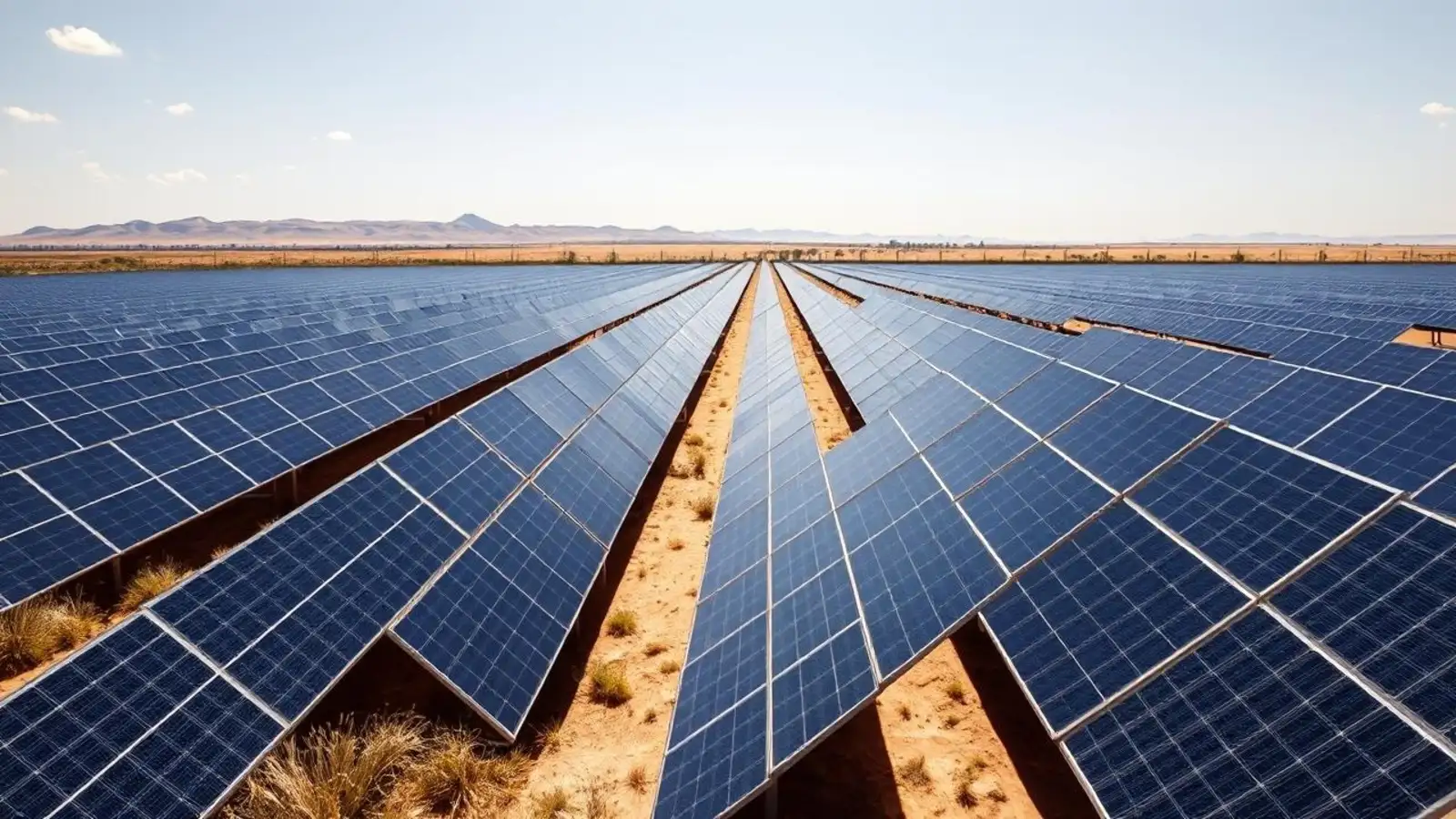
Why a Ready-to-Build Polish Solar Project Will Not Be Built Until Late 2027
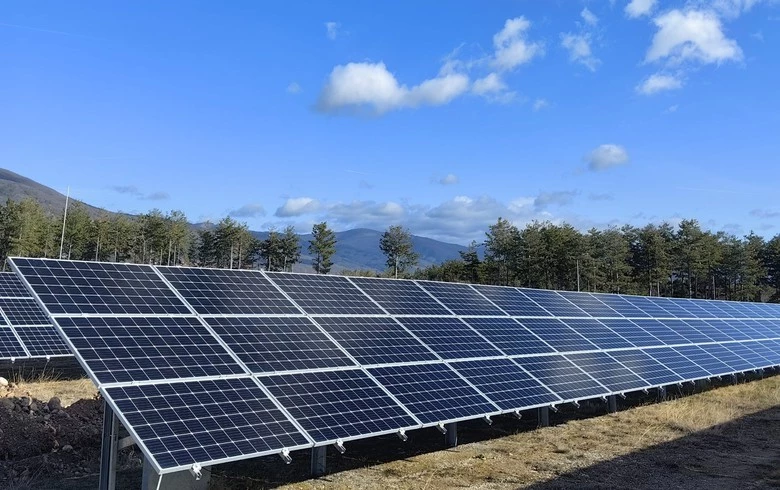
Gulermak Renewables has bought a 69 MW solar project in Poland that is ready to build. The permits are in place, the grid connection is secured, and nothing stands between the site and a construction crew. Construction is scheduled to start in the fourth quarter of 2027, and the plant will not generate power until 2029. The gap between those two facts is where the deal actually sits.
Key takeaways
- Gulermak Renewables has acquired the 69 MW Powidz 2 solar project in the Wielkopolska region of Poland from Krukowski Development, a subsidiary of Earth Energy. Terms were not disclosed.
- The project is grid-ready and at ready-to-build stage, yet construction is scheduled for the fourth quarter of 2027 with commercial operation expected in 2029.
- Powidz 2 sits immediately adjacent to Gulermak Renewables' existing 5 MW Powidz 1 solar scheme, which signed a power purchase agreement with Hekla Energy in July 2026.
- Enerdatics records four previously priced Gulermak Renewables acquisitions covering 417.3 MW of European solar and battery assets for a combined $31.0 million, a blended $0.074 million per MW.
- Enerdatics calculates the total investment needed to build Powidz 2 at $76 million, or $1.1 million per MW, a figure it describes as in line with reported costs for solar projects of this size in the region.
What does ready-to-build actually certify?
Ready-to-build is a statement about permissions, not about intentions. It means the environmental consent, the land rights, the planning approval and the grid connection have all been secured, so the only work left is procurement, financing and construction. It says nothing about when the owner plans to start. That distinction is easy to lose, because in most markets a project reaches ready-to-build and is sold precisely so that someone can begin building it. Here the buyer has acquired a fully consented asset and then set a start date more than a year out, with power flowing three years after the purchase. Nothing about that sequence is unusual once ready-to-build is read as a risk marker rather than a schedule. The development risk has been retired. The capital has not yet been committed.
Why buy a project a year before you intend to build it?
Because the price is set by the consent, and the consent is what runs out of supply. A permitted, grid-connected Polish site cannot be created on demand. Waiting to buy means bidding later against more buyers for a smaller pool, and the megawatts do not get cheaper while the queue lengthens. What the waiting costs is the carry on a modest entry price, and Gulermak Renewables' entry prices are modest. Across the four earlier acquisitions Enerdatics records with a disclosed value, spanning German and UK solar and one UK battery, the company paid between $0.070 million and $0.094 million per MW. Against a build cost Enerdatics puts at $1.1 million per MW, the acquisition is a small fraction of what the project will eventually absorb. Holding it for a year costs very little. Failing to secure it at all costs the pipeline.
What does the neighbouring project add?
Scale on a site the buyer already understands. Powidz 2 sits immediately next to Powidz 1, a 5 MW scheme Gulermak Renewables already owns, which means the local grid conditions, the land and the counterparties are all known quantities before diligence starts. The size difference is the striking part. The new project is roughly fourteen times the capacity of the one already there, so this is less an expansion than a replacement of a small position with a serious one. The smaller scheme also carries an offtake: Gulermak Renewables signed a power purchase agreement with Hekla Energy for Powidz 1 in July 2026. Enerdatics believes Powidz 2 may benefit from a similar arrangement with Hekla Energy, though that has not been confirmed. The same reasoning has appeared elsewhere in European renewables this year, notably where Vattenfall bought a German wind project specifically for its adjacency to one it already held.
Enerdatics records 35 Polish solar transactions since the start of 2024, of which 23 involved assets still under development. Seventeen of those 23 carry no disclosed value at all. Among the six that are priced, the median developer premium is $0.08 million per MW, and for the ready-to-build subset the range runs from $0.08 million to $0.10 million per MW across four transactions. The developer premium is the amount paid per MW for a development position, separate from the cost of building the plant. Ready-to-build assets account for 16 of the 23 development-stage Polish solar deals in that period, which makes this the standard shape of a Polish solar transaction rather than an exception. Gulermak Renewables' own blended entry price of $0.074 million per MW sits just under that market median.
What does the deal signal for Polish solar?
The deal signals that consented Polish solar is being bought as inventory rather than as an immediate build programme, and that the buyers doing it are mid-sized platforms assembling positions rather than utilities filling a target. Gulermak Renewables states the acquisition takes its European portfolio beyond 400 MW, with Poland a core market alongside the United Kingdom and Germany. Enerdatics separately records the company securing roughly $41 million of debt from mBank at the start of September 2026 for the construction of a Polish solar portfolio, two weeks before this acquisition was announced. Whether that facility relates to this specific site has not been disclosed. What it does show is a buyer arranging construction finance and consented land in the same fortnight. The pattern of paying for permissions ahead of earnings runs through the Polish market, and Enerdatics has traced it in storage too, where every Polish battery transaction recorded since the start of 2024 involved an asset still under development.
The pricing picture will stay murky. With 17 of 23 Polish development-stage solar deals unpriced since the start of 2024, anyone marking a ready-to-build Polish site is working from a handful of prints and their own deal flow. That opacity cuts both ways, and it is why the difference between a consented megawatt and an operating one matters so much in this market. Enerdatics has covered the same spread on the wind side, where an unbuilt Polish megawatt trades at a fifth to a sixth of an operating one. A project bought at ready-to-build in 2026 and commissioned in 2029 crosses that entire gap while sitting on one balance sheet, which is the return the buyer is underwriting.
Frequently asked questions
How much did Gulermak Renewables pay for Powidz 2?Terms were not disclosed. Enerdatics records 23 Polish development-stage solar transactions since the start of 2024, of which 17 carry no disclosed value, so the public benchmark is thin. The priced ready-to-build comparables in that set run from $0.08 million to $0.10 million per MW.
What does ready-to-build mean for a solar project?It means environmental consent, land rights, planning approval and grid connection have all been secured, and only procurement, financing and construction remain. It describes the risk that has been removed, not a commitment to start building at any particular date.
When will the Powidz 2 project generate power?Construction is scheduled to begin in the fourth quarter of 2027, with commercial operation expected in 2029. Enerdatics calculates the total investment required at $76 million, equivalent to $1.1 million per MW.
Ready to get deal-ready answers in seconds? Try Enerdatics Leap AI and access verified intelligence across M&A, financings, PPAs, projects, and energy market developments through natural language.