Vattenfall has bought a 43.2 MW wind project in Rhineland-Palatinate from a developer working through a restructuring. Six turbines, permitted, due to operate in 2028. The interesting part is not the project. It is what sits next to it.
Key takeaways
- Vattenfall acquired the Dittelsheim-Hessloch wind project extension from ABO Energy, 43.2 MW across the municipalities of Hessloch, Bechtheim and Alsheim in Rhineland-Palatinate, Germany. Terms were not disclosed.
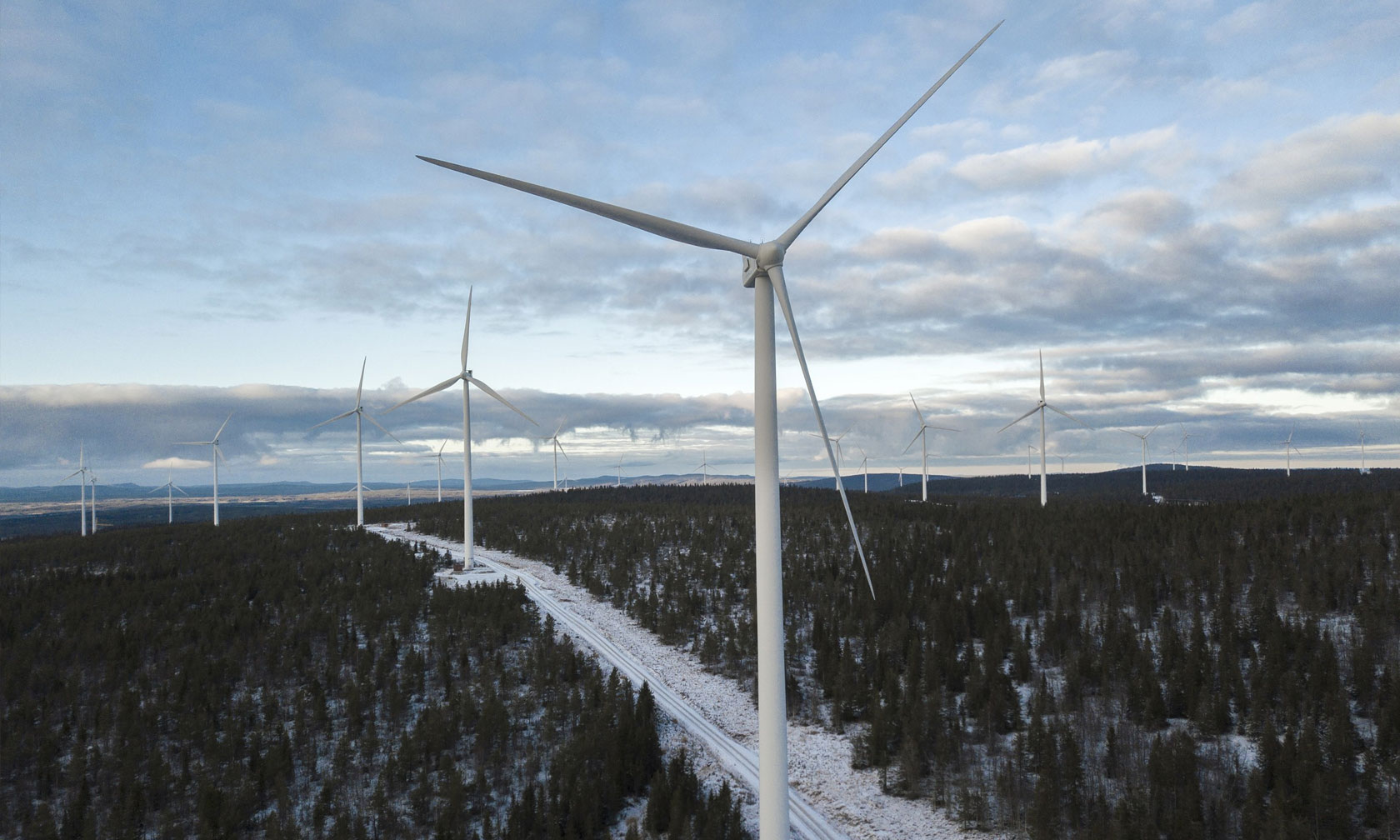
- The project comprises six Vestas V172 turbines of 7.2 MW each, with a hub height of 175 metres and a total height of 261.5 metres. It received its BImSchG permit for construction and operation in December 2025 and is expected to start operating in July 2028.
- Vattenfall intends to develop it jointly with its neighbouring Mettenheim project, sharing a common substation and grid connection. The two together comprise up to ten turbines and up to 70 MW.
- The sale forms part of ABO Energy's ongoing restructuring and its efforts to strengthen its financial position.
- Enerdatics records more than 50 German onshore wind transactions since the start of 2024, of which only one carries a disclosed value: Enel acquiring 51 MW of operating wind from Foresight Group and Korea Investment & Securities at $1.84 million per MW in December 2025.
What makes two adjacent wind farms worth more than two separate ones?
A wind farm needs a substation and a grid connection before it can export anything, and both are expensive, slow to permit and sized in steps rather than continuously. Two projects a few kilometres apart each need their own. Two projects adjacent to one another can share, which removes a duplicated substation, a duplicated connection agreement and a duplicated set of civil works from the combined budget. It also lets the shared export capacity be used more fully, because the connection is sized once for the pair rather than twice with headroom left idle at each. That is how six turbines bought here and four already held next door become a single ten-turbine, 70 MW development rather than two subscale ones, and it is the reason the acquisition is worth more to Vattenfall than to a buyer without the neighbouring site.
Why is ABO Energy selling a project it has already permitted?
Because permitted projects are the ones that can be sold quickly, and ABO Energy needs to sell. The company has been working through a restructuring with its lenders, and Enerdatics has tracked the resulting disposal programme through 2026, including the sale of its Polish and Hungarian subsidiaries to PPC. A development pipeline consumes cash while it matures and cannot be borrowed against, so it is the wrong thing to hold when lenders are watching. A project that has cleared BImSchG consent is the opposite: it has a defined buyer pool, a short diligence period and a price that can be agreed in weeks.
Enerdatics' data shows how little of this market is visible. Across more than 50 German onshore wind transactions since the start of 2024, exactly one carries a disclosed value, the Enel purchase of 51 MW of operating capacity at $1.84 million per MW. Every development-stage and in-construction deal in that set is undisclosed. ABO Energy alone appears as seller in eight of them, ranging from 4.5 MW to 450 MW, none priced publicly. Anyone valuing a German wind project is therefore working from private comparables or from nothing, which is a large part of why buyers with an adjacent asset have an advantage: they can price the synergy even when they cannot price the market.
What does the deal signal for German onshore wind?
The deal signals that German wind is consolidating around infrastructure rather than around megawatts, and that adjacency is becoming a pricing factor in its own right. The same logic has been visible in Poland, where ORLEN paid for a project that shares a single connection point across solar and wind. Expect buyers who already hold a site to outbid those who do not, and expect developers to market projects on their proximity to existing infrastructure rather than on capacity alone.
The revenue side is less certain than the engineering. Enerdatics believes the project will benefit from a 20-year feed-in premium under the German EEG, based on comparable projects in the region and on ABO Energy's other German developments, though that has not been confirmed for this asset. If it holds, the combined 70 MW development would pair contracted policy support with shared infrastructure, which is close to the most financeable structure available in German onshore wind. Vattenfall has been explicit that the case depends on reliable regulatory frameworks and timely grid expansion, which is a fair statement of where the residual risk sits once the consent is in hand.
Frequently asked questions
How much did Vattenfall pay for the Dittelsheim-Hessloch extension?Terms were not disclosed. Enerdatics records only one priced German onshore wind transaction since the start of 2024, Enel's acquisition of 51 MW of operating capacity at $1.84 million per MW in December 2025, so there is very little public benchmark for a development-stage German wind asset.
What is a BImSchG permit?It is the approval granted under Germany's Federal Immission Control Act, which governs construction and operation of installations with environmental effects, including wind turbines. For a German wind project it is the principal consent, covering noise, shadow flicker and environmental impact, and obtaining it is generally the point at which a project becomes readily saleable.
What will the combined project look like?Dittelsheim-Hessloch and the neighbouring Mettenheim project together comprise up to ten turbines with a combined capacity of up to 70 MW, sharing a common substation and grid connection. Dittelsheim-Hessloch contributes six Vestas V172 turbines of 7.2 MW each, with operations expected to begin in July 2028.
Ready to get deal-ready answers in seconds? Try Enerdatics Leap AI and access verified intelligence across M&A, financings, PPAs, projects, and energy market developments through natural language.