Pivot Energy has borrowed $500 million from Nuveen, its largest raise to date. The company has completed around 1,000 projects since 2009. Those 1,000 projects add up to a little over 200 MWdc of operating solar, and that ratio is the whole business model.
Key takeaways
- Pivot Energy secured $500 million from Nuveen Energy Infrastructure Capital on 15 October 2026, structured as a three-year bilateral corporate credit facility rather than project debt.
- Pivot Energy has completed roughly 1,000 projects and operates more than 200 MWdc of solar, which puts the average completed project at about 0.2 MW, with a further 900 projects in its development pipeline.
- The company develops distributed solar and storage across more than 100 communities in 15 states, and was acquired by Energy Capital Partners in June 2021.
- Pivot Energy targets an active portfolio of more than 1,000 MW of solar and 700 MWh of storage by the end of 2029, roughly five times its current operating capacity.
- Enerdatics records 35 US distributed solar financings of $250 million or more since the start of January 2024. Of those, only Nexamp's $600 million from ATLAS SP Partners came from a single provider at a larger size than this facility.
What does a bilateral facility do that a syndicate does not?
It answers to one lender. A bilateral facility is a loan agreement between a borrower and a single institution, as opposed to a syndicated facility in which a group of banks each take a share under common terms. At $500 million, that is unusual in distributed solar, where portfolio debt of this size is normally spread across a bank group.
The comparables show how unusual. Dimension Energy's $657 million package in August 2026 drew six providers. Nautilus Solar's $600 million in June 2026 drew seven. Solar Landscape's two 2026 facilities each drew nine. Against that, Nuveen Energy Infrastructure Capital, the infrastructure credit arm of Nuveen, is carrying this one alone.
The practical difference is speed and amendment risk. One counterparty means one credit committee, one set of covenants and one conversation when a drawdown schedule slips, which matters when the borrower is funding hundreds of small projects on rolling timetables rather than one large plant on a single construction programme. The cost of that convenience is concentration: there is no second lender to syndicate a problem to.
Why does the project count matter less than the megawatts?
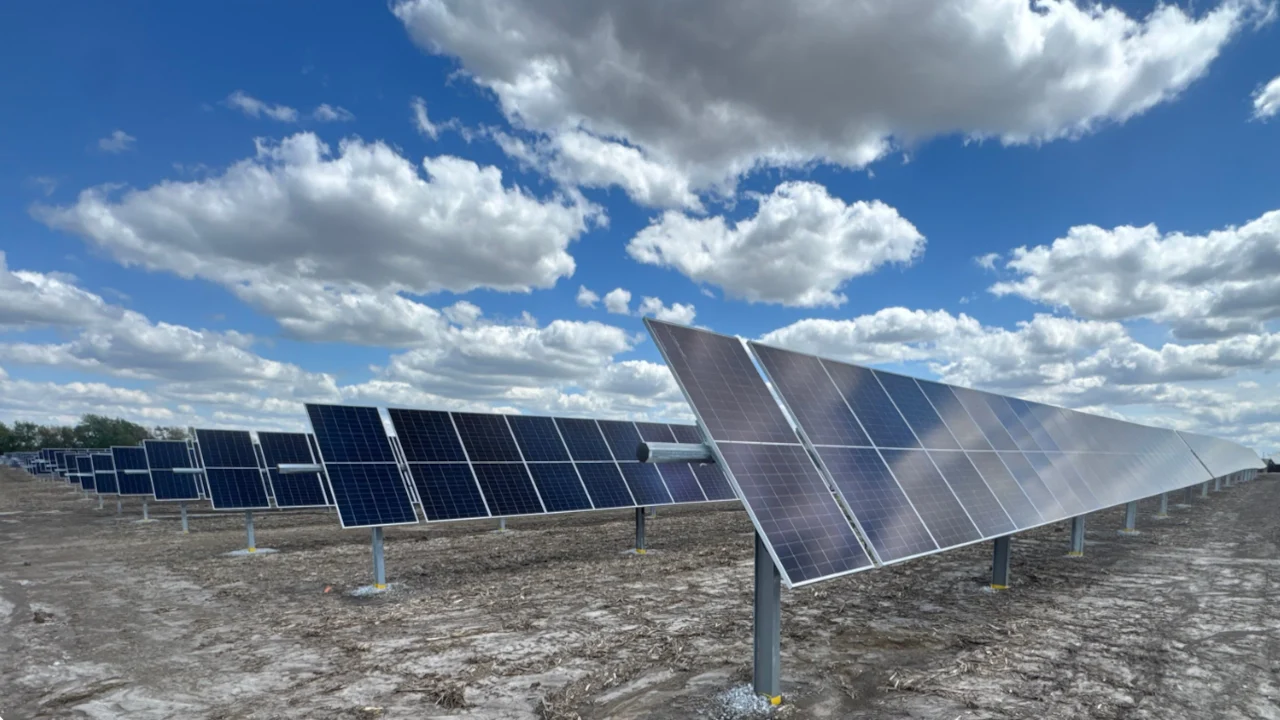
Because distributed solar is a volume business that reports in units of the wrong size. Roughly 1,000 completed projects against more than 200 MWdc of operating capacity gives an average of about 0.2 MW per project, the scale of a commercial rooftop or a small ground-mounted array rather than a power plant. Pivot's pipeline of 900 further projects implies the same arithmetic going forward.
That shape changes what capital is for. Each project carries its own site lease, interconnection application, utility programme enrolment and subscriber base, and none of those costs scale down with megawatts. So the money is consumed by origination and pre-construction work spread across hundreds of sites, which is precisely what the facility is earmarked for: final-stage project development and equipment purchases. Pivot's 2024 agreement with Microsoft ran on the same logic, covering up to 500 MWac spread across about 150 projects in roughly 100 communities.
It also explains the gap between the operating fleet and the target. Pivot is aiming for more than 1,000 MW of solar and 700 MWh of storage by the end of 2029, around five times what it operates now. Getting there is not a matter of building five more plants. It is a matter of getting several hundred more small projects through interconnection, which is a working capital problem before it is a construction problem.
Why is the facility only three years long?
Because it funds the stage before permanent financing, not the asset life. A three-year term signed in October 2026 matures in late 2029, which is also when Pivot's stated capacity target falls due. The facility is therefore sized to carry projects from late-stage development through to the point where each one can support its own long-term debt or be sold, and then be repaid.
That is a recycling instrument rather than a holding instrument. It is the same role Pivot's earlier facilities played: a $450 million debt warehouse in November 2024 covering 96 distributed generation projects, and $225 million raised in December 2025 led by ATLAS SP, First Citizens Bank and Comerica. Against those two, $500 million from a single lender is a step change in both size and simplicity.
The risk in a three-year term is timing rather than price. If interconnection queues or utility programme approvals run slower than the drawdown schedule assumes, projects reach the maturity date still in development, and the facility has to be extended or refinanced rather than repaid from permanent debt. That is the standard tension in distributed solar credit, and it is the reason these facilities are usually syndicated.
Enerdatics records 155 US distributed solar financings since the start of January 2024, worth $27.3 billion between them. The flow has been steady rather than growing: 68 financings in 2024, 42 in 2025 and 45 so far in 2026, with this year running at about $7.4 billion. Within that, 35 transactions reached $250 million or more, and ten of those came from a single named provider rather than a bank group, which makes the structure uncommon but not unprecedented.
What does the deal signal for US distributed solar?
That credit funds are competing directly with bank syndicates for the largest distributed portfolios. Nuveen is not new to the sector, appearing in Dimension Energy's upsized $650 million facility in 2024 and among the lenders on Spearmint's Red Egret battery project in 2026, but writing $500 million bilaterally is a different proposition from taking a slice. For sponsors, it means a single relationship can now cover a raise that previously required a roadshow.
It also marks where the scarce input has moved. Pivot has an owner in Energy Capital Partners, a pipeline of 900 projects and a 2029 target. What it needs is capital that tolerates several hundred separate interconnection timelines, and that is a credit judgement about process rather than about panels. The lenders willing to make it are increasingly infrastructure debt funds rather than commercial banks.
Frequently asked questions
How much did Pivot Energy raise and from whom? Pivot Energy secured $500 million from Nuveen Energy Infrastructure Capital, the infrastructure credit platform of Nuveen, announced on 15 October 2026. The facility is a three-year bilateral corporate credit facility.
What will the $500 million be used for? The proceeds will support Pivot Energy's expanding operational portfolio and fund new US solar and energy storage assets, specifically final-stage project development and equipment purchases.
How big is Pivot Energy's portfolio? Pivot Energy has completed around 1,000 projects and operates more than 200 MWdc of solar, with 900 further projects in development across more than 100 communities in 15 states. It targets more than 1,000 MW of solar and 700 MWh of storage by the end of 2029.
Ready to get deal-ready answers in seconds? Try Enerdatics Leap AI and access verified intelligence across M&A, financings, PPAs, projects, and energy market developments through natural language.