Why NextEnergy's 107 MW Battery Purchase Is a Solar Manager Buying Contracted Storage
.png)
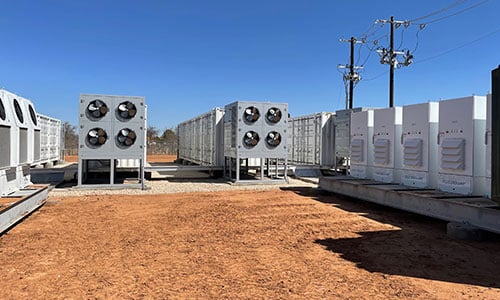
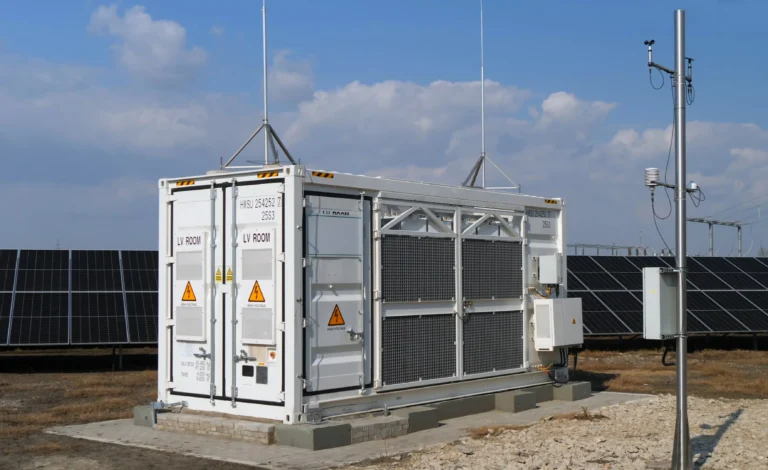
NextEnergy UK I has completed the acquisition of three standalone operational battery storage assets totalling 107 MW: the 40 MW Maldon, 28 MW Basildon and 39 MW Loudwater projects, all in southeast England close to major demand centres and grid infrastructure. Terms were not disclosed. All three hold long-term Capacity Market contracts with established routes to market. The purchase takes the fund's standalone battery capacity to 165 MW, from 58 MW previously, and follows NEUK I's final close at £733 million against a portfolio of around 1 GW of UK renewable infrastructure. NextEnergy Capital is a solar manager, and that is what makes the purchase interesting.
What did NextEnergy UK I acquire?
NEUK I acquired three operational standalone battery assets in southeast England: Maldon at 40 MW, Basildon at 28 MW and Loudwater at 39 MW. All are generating and immediately cash generative, and all benefit from long-term Capacity Market agreements alongside established commercial routes to market through operational counterparties. Terms were not disclosed. Enerdatics has no usable price benchmark for this exact profile: across the six UK operational battery transactions recorded since the start of 2023, carrying $1.85 billion of value between them, every one is missing either a disclosed value or a capacity figure, leaving no implied enterprise value per MW for the segment at all. That absence is itself worth noting in a market this active.
Why does the Capacity Market matter for a battery?
The Capacity Market is the UK mechanism that pays generators and storage operators to be available when the system needs them, awarded through competitive auctions and paid regardless of whether the asset actually runs. For a battery it provides a fixed, contracted payment stream that sits underneath the more volatile revenue from wholesale arbitrage and balancing services. That structure is what converts a merchant asset into something a fund can underwrite, because the contracted layer supports debt while the trading layer provides upside. A battery without a Capacity Market agreement earns entirely from price volatility, which is a materially different proposition for an investor buying stabilised income rather than optionality.
Why is a solar manager buying batteries?
Because the fund needs cash flows that solar cannot supply on its own. Enerdatics records 13 transactions involving NextEnergy Capital since the start of 2023, and only one previous battery deal appears among them: a 29 MW development-stage project bought from Cambridge Power for $28.2 million, or $0.97 million per MW, in November 2024. Every other transaction is solar, spanning the United Kingdom, Italy, Spain, Poland, the United States and Greece. Moving from a single development battery to 107 MW of operating capacity in one step is a considerable jump, and the choice of operating rather than development assets is deliberate: NEUK I is deploying a closed fund and needs assets that generate from day one rather than in three years. Ross Grier framed it as diversifying cash flows for investors, which is precisely what a solar-heavy portfolio needs when capture prices compress.
Enerdatics' data shows how consistently NextEnergy has bought stabilised assets. The firm's disclosed solar prints cluster tightly around the $0.91 million to $1.13 million per MW range, including 50 MW of operating Polish solar from Grenevia at $0.91 million per MW, 65.6 MW of operating Polish solar at $1.01 million per MW, and 100 MW of US development solar at $1.13 million per MW. Its listed vehicle NextEnergy Solar Fund also appears twice as a seller, including 35.22 MW to Downing at $1.01 million per MW, so capital recycles within the group as well as into it. The pattern across all 13 records is a manager that pays close to a million dollars per MW for assets with contracted or near-contracted revenue, and this transaction extends that discipline into a different technology rather than changing it.
What does the deal signal for UK storage?
The deal signals that operating UK batteries with Capacity Market contracts have become a mainstream infrastructure allocation, accessible to managers without storage-specific origination teams. Buying three assets already generating, already contracted and already served by operational counterparties requires no trading desk and no construction capability, which is what opens the segment to solar and renewables generalists. Expect more diversified funds to add standalone storage on the same basis, and expect the premium on Capacity Market-contracted operating batteries to hold while merchant-only assets trade at a widening discount.
The pricing opacity deserves separate attention. Six UK operational battery transactions since 2023 and not one usable price point is a striking gap in a market where storage has been among the most actively traded asset classes in Europe. Buyers with repeat exposure can triangulate from their own deal flow, but the absence of visible comparables raises the cost of entry for everyone else and is one reason operating storage has been slower to attract generalist capital than its fundamentals warrant. Transactions like this one being disclosed on capacity but not on value are exactly why that gap persists.
Key takeaways
- NextEnergy UK I acquired three standalone operational battery assets in southeast England totalling 107 MW: Maldon at 40 MW, Basildon at 28 MW and Loudwater at 39 MW. Terms were not disclosed.
- The purchase lifts the fund's standalone battery capacity to 165 MW from 58 MW, following NEUK I's final close at £733 million and around 1 GW of UK renewable assets built or acquired since launch.
- All three assets hold long-term Capacity Market contracts and established routes to market, and are immediately cash generative.
- Enerdatics records only one previous NextEnergy Capital battery transaction, a 29 MW development-stage project bought from Cambridge Power for $28.2 million at $0.97 million per MW in November 2024, from 13 transactions since 2023 that are otherwise all solar.
- Enerdatics records six UK operational battery transactions since 2023 carrying $1.85 billion of value, with every one missing either a disclosed value or a capacity figure, so no implied enterprise value per MW exists for the segment.
Frequently asked questions
How much did NextEnergy pay for the 107 MW battery portfolio?Terms were not disclosed. Enerdatics records six UK operational battery transactions since the start of 2023 carrying $1.85 billion of value, but every one is missing either a value or a capacity figure, so no implied enterprise value per MW benchmark exists for the segment. NextEnergy's own prior battery deal, a 29 MW development project, priced at $0.97 million per MW.
What is the Capacity Market?The Capacity Market is the UK mechanism that pays generators and storage operators to be available when the electricity system requires them, awarded through competitive auctions and paid whether or not the asset runs. It provides a contracted payment stream underneath more volatile wholesale and balancing revenues, which is what allows a battery to support debt.
How much storage does NextEnergy UK I now hold?The acquisition takes NEUK I's standalone battery capacity to 165 MW, up from 58 MW before the transaction. The fund reached final close at £733 million in commitments and has built or acquired a portfolio of around 1 GW of UK renewable energy infrastructure since launch.
Ready to get deal-ready answers in seconds? Try Enerdatics Leap AI and access verified intelligence across M&A, financings, PPAs, projects, and energy market developments through natural language.