Why Kerr's €1.2M Italian Solar Sale Shows the Auction Session You Enter Sets the Price
.png)
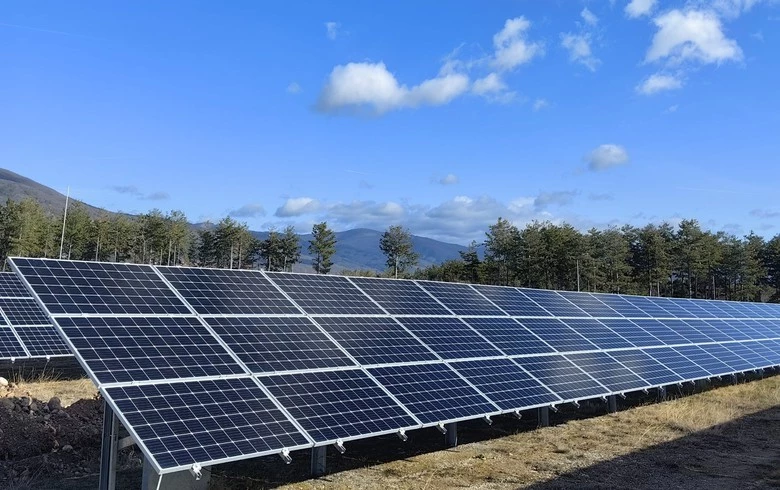
Kerr S.p.A. has sold the shares in a special purpose vehicle holding a ground-mounted photovoltaic plant of around 7 MW, built on industrial land in Italy, to a foreign investor already active in the Italian market. The equity was valued at approximately €1.2 million. The sale followed the project's admission to the FER-E tender at an incentive tariff higher than the one available in the April session, which chief executive Francesco De Meo identified as the difference in the deal's value. Construction begins in September. Kerr has said further transactions on the same model are planned over the coming months.
How much did Kerr get for the 7 MW solar project?
The share sale valued the vehicle at around €1.2 million for approximately 7 MW, which works out at roughly €171,000 per MWp, or about $0.20 million per MW. That is a strong outcome against Italian benchmarks. Enerdatics records the developer premium on Italian early-stage solar asset transactions since the start of 2024 at a median of $0.12 million per MW, within an interquartile range of $0.09 million to $0.15 million, measured across 17 priced deals from a 20-transaction slice carrying $20.99 million of value. The full range for that slice tops out at $0.18 million per MW, so this transaction cleared above every early-stage Italian solar deal Enerdatics has on record, and it sits above the $0.11 million to $0.16 million interquartile range for Italian ready-to-build solar as well.
What is the FER-E tender, and why does the session matter?
FER-E is the Gestore dei Servizi Energetici portal through which applications for Italy's FER incentive schemes are submitted, and the schemes run in scheduled sessions rather than continuously. Under the FER X framework, plants below 1 MW can access support directly, while larger projects bid competitively against a reference tariff expressed in euros per MWh, offering a discount to win an allocation. The clearing tariff therefore depends on how much capacity competes in that particular round against the contingent on offer. A round with fewer qualified bidders or a larger allocation clears at a higher tariff than a crowded one. The consequence is that two identical plants entering different sessions can end up with materially different twenty-year revenue, and therefore materially different value, without anything about the asset itself changing.
Why is a developer selling immediately after winning the tariff?
Because the tariff award is the last risk that can be retired without spending construction capital. Kerr carried the project through the authorisation process and into the tender, and the moment the incentive was secured the asset changed character: a twenty-year price for the output replaced exposure to Italian capture prices, which have been compressed by solar build-out. What the buyer acquires is contracted revenue with construction still ahead of it. What Kerr avoids is funding a build on a €59 million three-year revenue base with a 13 percent EBITDA margin in 2025. Selling at the tariff award, rather than at ready-to-build or after commissioning, targets the point where the value uplift is largest relative to the capital still required.
Enerdatics' data shows how thin and how small this segment is. The 20 Italian early-stage solar transactions recorded since the start of 2024 carry $20.99 million of disclosed value between them, an average of roughly $1 million each, so a single 7 MW project at €1.2 million is a typical ticket rather than an outlier. What separates this one is the price per MW. At $0.20 million it clears the top of the recorded early-stage range by around 10 percent and exceeds the early-stage median by 65 percent, and it does so on a project that has not started construction. Set against Enerdatics' Italian ready-to-build benchmark of $0.14 million per MW, the tariff award appears to be worth more than the remaining pre-construction development work.
What does the deal signal for Italian solar?
The deal signals that the auction calendar has become a development milestone in its own right, ranked alongside permitting and grid connection. If the difference between the April and July sessions moved the exit price on a 7 MW project, then timing the entry is now a real lever for any Italian developer with a portfolio to sell, and holding a permitted project back for a better round is a defensible strategy rather than a delay. Kerr has said explicitly that further transactions on the same model are planned. Expect other Italian developers to sequence their tender entries the same way, and expect buyers to start diligencing which session an asset was awarded in, not merely whether it holds a tariff.
The buyer detail is worth noting even though the name was withheld. A foreign investor already active in Italy, taking a single 7 MW construction-ready position on industrial land, is not making a market entry. It is topping up an existing platform with a contracted asset at a size most institutional buyers would not look at. That is the shape of demand at the small end of Italian solar: many buyers, small tickets, and a strong preference for anything carrying a state-backed tariff.
Key takeaways
- Kerr S.p.A. sold the shares in an SPV holding an approximately 7 MW ground-mounted solar plant on industrial land in Italy to a foreign investor, at an equity valuation of around €1.2 million.
- That equates to roughly €171,000 per MWp, or about $0.20 million per MW, against an Enerdatics median of $0.12 million per MW for Italian early-stage solar since 2024 and a recorded range topping out at $0.18 million.
- The sale followed admission to the FER-E tender at a tariff higher than the April session, which Kerr identified as the driver of the asset's value.
- Enerdatics records only 20 Italian early-stage solar transactions since the start of 2024, carrying $20.99 million of disclosed value between them.
- Construction starts in September, and Kerr has said further transactions on the same model are planned in the coming months.
Frequently asked questions
How much did the 7 MW Italian solar project sell for?The share sale valued the SPV at approximately €1.2 million for around 7 MW, roughly €171,000 per MWp or about $0.20 million per MW. Enerdatics records a median developer premium of $0.12 million per MW for Italian early-stage solar since 2024, with a recorded range topping out at $0.18 million per MW.
What is the FER-E tender?FER-E is the Gestore dei Servizi Energetici portal used to submit applications for Italy's FER renewable incentive schemes, which run in scheduled sessions. Under the FER X framework, plants below 1 MW access support directly while larger projects bid competitively against a reference tariff, so the clearing price depends on how much capacity competes in that round.
Why does the auction session matter to a project's value?Because the tariff awarded differs between rounds depending on competition and the capacity on offer. Two identical plants entering different sessions can secure materially different twenty-year revenue, which changes what a buyer will pay without anything about the asset itself changing.
Ready to get deal-ready answers in seconds? Try Enerdatics Leap AI and access verified intelligence across M&A, financings, PPAs, projects, and energy market developments through natural language.
.jpeg)