Eelpower Energy has bought its fifth battery project in twelve months. The Silkstead system in Hampshire is 50 MW and 200 MWh. It is the second number that decides what the asset is for.
Key takeaways
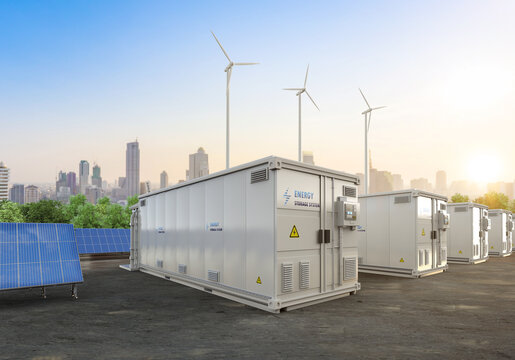
- Eelpower Energy acquired the 50 MW/200 MWh Silkstead BESS project in Hampshire, southeast of the Winchester substation, from Balanced Grid Works. Terms were not disclosed.
- The project received planning permission from Winchester City Council in March 2025, covering construction and operation of the facility, associated infrastructure, access and ecological enhancement. Construction is expected to start in 2027 with commercial operations in 2028.
- This is Eelpower's fifth acquisition since the company launched in September 2025, supporting a plan to invest £500 million, around $674.71 million, in battery projects across Great Britain and to own and operate more than 1 GW of grid-scale storage.
- Eelpower is currently building 500 MWh across four projects and expects to reach final investment decision on a further 1,500 MWh by the end of 2026.
- Enerdatics records 55 UK battery transactions since the start of 2024, of which only eleven carry a disclosed value, with in-construction assets priced at $0.61 million per MW (AIP Management, September 2025) and $0.40 million per MW (E.ON, March 2024).
What does 200 MWh on 50 MW actually mean?
Divide energy by power and you get duration. Four hours, in this case, meaning the system can run at full output for four hours before it is empty. That number determines which markets the asset can earn in. A one-hour or two-hour battery is built for frequency response and short balancing actions, where the value is in reacting fast rather than running long. A four-hour battery can shift bulk energy across the day, buying through a midday solar trough and discharging into the evening peak, and it can hold enough energy to be worth capacity payments at a meaningful derated rating. The trade-off is capital: more cells for the same connection capacity, so the arbitrage spread has to be wide enough and frequent enough to pay for them. Choosing four hours at Silkstead is a view that it will be.
Why buy at development stage rather than build or buy operating?
Because a consented project with a grid position is the cheapest entry point that still has a defined path to construction, and Eelpower is trying to build a portfolio quickly rather than acquire cash flow. Planning permission was granted in March 2025, so the hardest consenting risk is behind it, while construction is not due until 2027, which leaves time to sequence it against the rest of the pipeline. Enerdatics believes the acquisition was financed from equity committed to Eelpower in August 2025 by Equitix, Aware Super and the UK National Wealth Fund, though the funding of this specific transaction has not been confirmed. Buying five projects in a year against a 1 GW target is a pace that works at development stage and would be very expensive at operating stage.
Enerdatics' data shows what the operating end of that market costs. Across 55 UK battery transactions since the start of 2024, only eleven are priced. Operating assets have cleared roughly $1.04 million to $1.13 million per MW across the Harmony Energy Income Trust transactions during 2025. In-construction assets sit lower, at $0.61 million per MW when AIP Management bought 700 MW from BW Group in September 2025 and $0.40 million per MW when E.ON bought 230 MW from Quinbrook in March 2024. Development-stage positions run from $0.01 million to $0.80 million per MW depending on how far consent and grid have progressed. A consented, not-yet-built project sits at the bottom of that ladder, which is the point.
What does the deal signal for UK storage?
The deal signals that the new entrants in UK storage are assembling portfolios by acquisition rather than by development, and that institutional capital is underwriting them to do it. Eelpower did not exist two years ago and now has five projects, 500 MWh under construction and a further 1,500 MWh approaching investment decision. That is a buy-side story, not a build-side one, and it puts a floor under pricing for consented UK battery projects because there is a funded buyer for each one. Expect small developers to keep originating and selling rather than holding, which is the same division of labour visible in the way UK battery projects are being financed through construction.
The duration choice is the part worth watching across the sector. Britain's battery fleet was built predominantly at one and two hours because frequency services paid well and saturated quickly. Four-hour systems are a bet on a different revenue stack, weighted towards wholesale arbitrage and capacity rather than balancing services. Silkstead will not operate until 2028, so the decision is being made against expected spreads several years out. If more of the pipeline reaching final investment decision in 2026 looks like this one, that is the clearest available signal on where owners think the money will be.
Frequently asked questions
How much did Eelpower pay for the Silkstead project?Terms were not disclosed. For context, Enerdatics records UK development-stage battery positions trading between $0.01 million and $0.80 million per MW depending on consent and grid status, against $0.40 million to $0.61 million per MW for in-construction assets.
What does a four-hour battery duration mean?It means the system can discharge at its full 50 MW output for four hours before depleting, which is what 200 MWh of energy capacity on 50 MW of power capacity produces. Longer duration suits shifting bulk energy across the day and earning capacity payments, rather than the fast frequency response that shorter-duration systems are built for.
How large is Eelpower's portfolio?Silkstead is its fifth acquisition since launching in September 2025. The company is constructing 500 MWh across four projects, expects final investment decision on a further 1,500 MWh by the end of 2026, and is targeting more than 1 GW of grid-scale battery capacity backed by a £500 million investment programme.
Ready to get deal-ready answers in seconds? Try Enerdatics Leap AI and access verified intelligence across M&A, financings, PPAs, projects, and energy market developments through natural language.