Kansai Electric Power is buying 40 percent of a Polish offshore wind farm that already holds its permits, has its turbines ordered and $2.3 billion of debt committed behind it. No price was disclosed. What makes the stake readable is that the Japanese utility bought almost exactly the same thing two years ago, in Germany, and that time the number was public.
Key takeaways
- Kansai Electric Power, through its subsidiary KPIC Netherlands B.V., agreed on 20 November 2026 to buy a 40 percent stake in the 390 MW BC-Wind offshore wind project in Poland from Ocean Winds, the 50:50 joint venture of EDP Renewables and ENGIE. No consideration was disclosed.
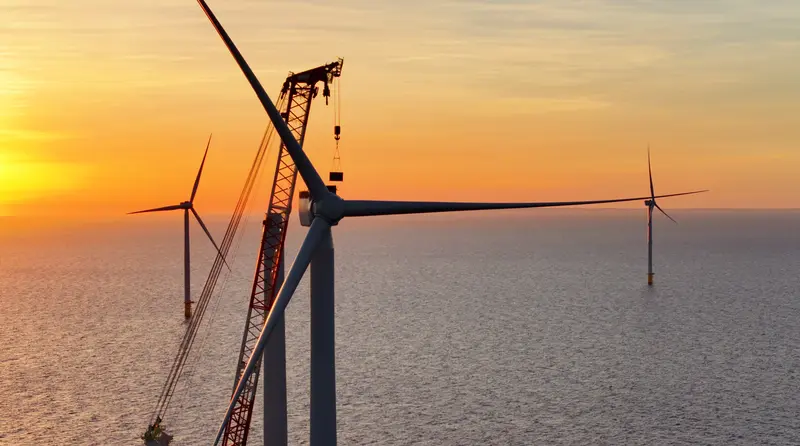
- BC-Wind is a bottom-fixed offshore wind farm in the Polish Exclusive Economic Zone of the Baltic Sea, about 23 km off the coast near Krokowa and Choczewo, on monopile foundations in water depths of 30 to 60 metres. First power is expected in 2028.
- The project holds a Contract for Difference awarded in June 2021 by the Polish Energy Regulatory Office covering 369.5 MW at PLN 319.60 per MWh ($79.30 per MWh), which is 94.7 percent of its 390 MW nameplate capacity.
- Ocean Winds reached financial close in December 2025 on about 2 billion euros ($2.32 billion) from the European Investment Bank, Instituto de Credito Oficial and 13 commercial banks, equal to $5.95 million of debt per MW, with the EIB alone providing 30 percent of the package.
- Enerdatics records two offshore wind M&A transactions in Poland since the start of 2024 and neither carried a disclosed price. Kansai Electric Power's own December 2024 purchase of 49 percent of the 315 MW Windanker project in Germany, for $658.56 million, prices at $4.27 million per attributable MW.
What is left to buy once a project is permitted, contracted and financed?
Construction and operating risk, and the return for carrying it. Almost everything that normally decides whether an offshore wind farm happens at all has already happened here. The revenue contract was awarded in 2021 and the permits in 2025, and Siemens Gamesa, Cadeler and DEME are contracted to build it. A Contract for Difference pays a generator the difference between a fixed strike price and the prevailing market price, so with that in hand and the debt drawn, a buyer here acquires a share of a build programme rather than a bet on whether one will exist.
One item in the permitting record looks like bad news and is not. In July 2026 the Pomeranian Voivode amended the August 2025 permit, cutting the approved turbine count from 32 to 26. Capacity did not move. The 26 machines are SG 14-236 units rated at 15 MW each, which comes to 390 MW, where 32 would have meant about 12.2 MW apiece. Fewer, larger turbines deliver the same nameplate with six fewer foundations.
Kansai has come at offshore wind from the opposite end before, taking an 80 percent stake in Simply Blue Energy's offshore wind development arm in October 2025: a majority of a developer with nothing yet built, against a minority of one asset with nothing left to permit.
How much does 40 percent of BC-Wind cost?
The parties did not say, but the closest comparable belongs to the buyer itself. Forty percent of 390 MW is 156 MW of attributable capacity. In December 2024 Kansai bought 49 percent of the 315 MW Windanker offshore wind farm in Germany from Iberdrola for $658.56 million. That stake carried 154.35 MW of attributable capacity, within two megawatts of what it is buying in Poland, in the same technology and at the same in-construction stage, and it priced at $4.27 million per attributable MW.
Applying that rate to 156 MW implies roughly $666 million. That is arithmetic from a disclosed comparable, not a reported price, and it indicates the order of magnitude the market supports rather than what Kansai agreed to pay. The wider band brackets it: grossed up to full ownership, European offshore minority stakes run from $3.30 million per attributable MW, where Norges Bank bought into RWE's German and Danish portfolio, to the $6.53 million Allianz paid Ocean Winds for a fifth of a French project.
Grossing up is the step that goes wrong. A consideration near $666 million measured against the full 390 MW nameplate reads as $1.71 million per MW, understating the price by two and a half times, because it divides the cost of two fifths of a wind farm by all of it. Enerdatics made the same correction when Ocean Winds bought Shell out of SouthCoast Wind.
Why does a contract covering 369.5 MW matter on a 390 MW wind farm?
Because the 20.5 MW difference has to sell its output at whatever the market pays. The contract covers 94.7 percent of nameplate; the remainder is merchant, earning the wholesale price with no floor under it. That tail is a rounding item on a project this size, and the record does not explain why the contracted quantity sits below nameplate. What the gap establishes is the shape of the asset: close to fully contracted, the profile an overseas investor can underwrite without a view on Polish power prices.
One caution belongs on the strike price. The record does not state how PLN 319.60 per MWh is indexed, so what a 2021 award is worth against 2028 commissioning is not something this deal settles.
Enerdatics records 24 Polish wind M&A transactions since the start of 2024, of which 12 carry a disclosed value, so this market puts a price in public exactly half the time. Offshore is where the disclosure stops: just two of those 24 are offshore, this deal and RWE's December 2025 sale of the 350 MW F.E.W. Baltic II project to PGE, and neither carried a price.
What does the deal signal for Polish offshore wind?
That Poland's first wave of offshore projects has reached the stage where international capital will pay for delivery risk. Phase I handed out Contracts for Difference in 2021 to projects that then had to be permitted, financed and built. BC-Wind is the one now selling equity on the far side of financial close, to a Japanese utility making its first investment in the country, lifting its attributable overseas capacity to about 2,654 MW.
For Ocean Winds it is a pattern rather than an exit. Selling down once the debt is closed releases capital at a construction-stage valuation while keeping control, and the joint venture has done it twice recently, in France and in Lithuania. The price signal Polish offshore wind lacks will come from the next deal that discloses one, and on three years of evidence that is not safe to wait for.
Frequently asked questions
What did Kansai Electric Power buy?A 40 percent stake in the 390 MW BC-Wind offshore project in the Polish Baltic, bought through its subsidiary KPIC Netherlands B.V. from Ocean Winds. Announced on 20 November 2026, with no consideration disclosed and Addleshaw Goddard advising Kansai.
What might the stake have cost?No price was disclosed. Kansai's December 2024 purchase of 49 percent of the 315 MW Windanker project for $658.56 million priced at $4.27 million per attributable MW, which applied to 156 attributable MW implies roughly $666 million. Comparable European offshore stakes run from $3.30 million to $6.53 million per attributable MW grossed up.
Is BC-Wind contracted and financed?Yes to both. It holds a Contract for Difference awarded in June 2021 covering 369.5 MW at PLN 319.60 per MWh, and Ocean Winds closed about $2.3 billion of project financing in December 2025. First power is expected in 2028.
Ready to get deal-ready answers in seconds? Try Enerdatics Leap AI and access verified intelligence across M&A, financings, PPAs, projects and energy market developments through natural language.