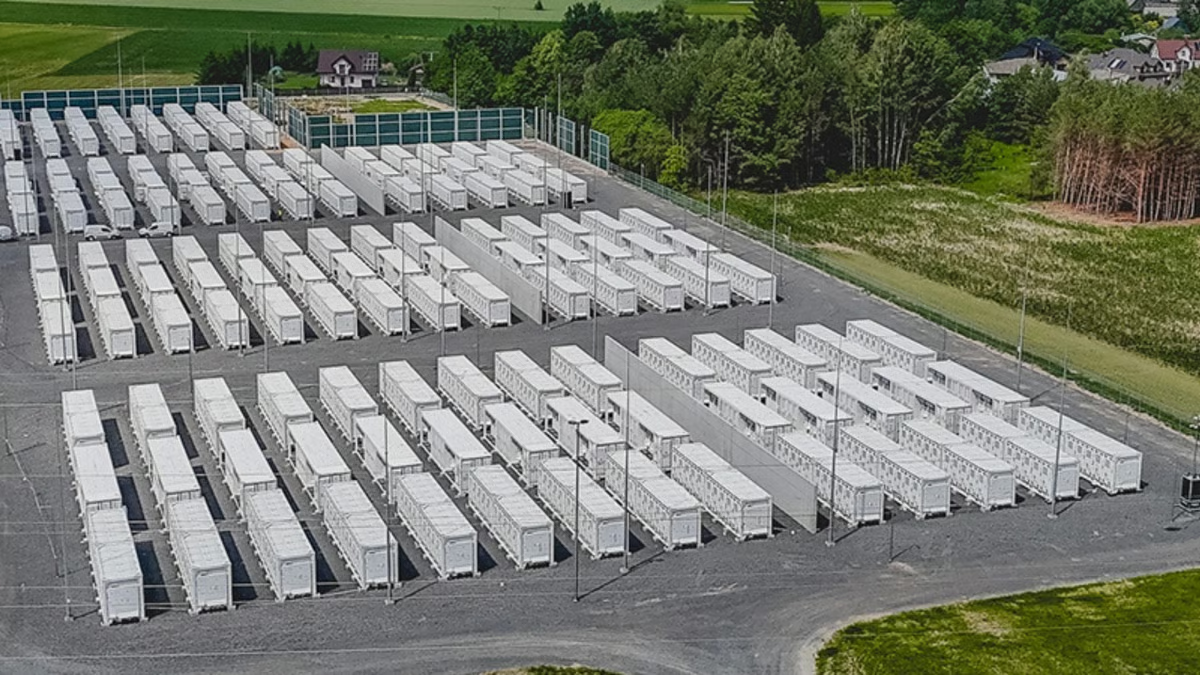
Copenhagen Energy has bought a 70 MW battery project in Lithuania from Navitas Group. The project holds 280 MWh of energy capacity, secured its grid connection in September 2026 and received its development permit in October. The sale was announced the same month the permit arrived. And until January of this year, the 70 MW was two companies.
Key takeaways
- Copenhagen Energy has acquired the 70 MW and 280 MWh Primum Navitas battery storage project in Lithuania from Navitas Group, announced on 28 October 2026 with no disclosed consideration.
- The project was formed by merging two Lithuanian companies, Angusiae Navitas UAB and Quartum Navitas UAB, into Primum Navitas UAB through a merger by absorption initiated on 18 December 2025 and scheduled for completion by 20 January 2026.
- Primum Navitas secured its grid connection in September 2026 and its development permit in October 2026, placing it at late stage development when it changed hands.
- At four hours of duration the project is the longest duration battery in any Baltic storage transaction Enerdatics has recorded since the start of 2024, against two hours for the two prior Lithuanian deals that stated energy capacity.
- The acquisition is Copenhagen Energy's first in the Baltics and extends a battery platform previously confined to Denmark and Germany.
What does a merger by absorption do to a battery project?
It turns separate legal positions into one asset that can be sold once. A merger by absorption is a corporate reorganisation in which one company takes on all the rights and obligations of another and the absorbed company ceases to exist. Navitas Group ran that process on two of its Lithuanian subsidiaries, with Primum Navitas UAB as the surviving entity and the documents available for inspection at an address in Kaunas associated with the group.
For a storage developer this is housekeeping with a commercial purpose. Grid connection applications, land rights and permits in Lithuania attach to a company, and a developer accumulating positions over several years holds them in several companies. Consolidating them before a sale means the buyer acquires one set of share transfers, one connection agreement and one permit, rather than running diligence twice and closing twice.
Seventy megawatts and 280 MWh is therefore the sum of what two companies held, assembled ten months before the transaction and then taken through to permit as one project. Read the sequence in order, from the December restructuring to the September connection to the October permit, and the sale is no surprise at the end of it. It is the point the exercise was built towards.
Why does duration matter more than capacity in this deal?
Because duration is what a battery is paid for, and it is the one specification here that stands out. Duration is energy capacity divided by power capacity, the hours a battery can sustain full output before it is empty. At 280 MWh over 70 MW the answer is four, and that is a different commercial animal from the two hour systems that have dominated Baltic storage.
Short duration batteries earn from frequency response and fast balancing, where the value lies in reacting within seconds and the energy involved is small. Longer systems earn from arbitrage, buying cheap and selling dear, which requires enough stored energy to cover a meaningful part of the day. The Baltic states synchronised their grids with Continental Europe in February 2025, and the balancing markets that followed have so far rewarded the shorter systems. A four hour build is a bet that the spreads come next.
Line up what the region has traded and the distinction is stark. Enerdatics records ten Baltic battery transactions since the start of 2024. Where energy capacity is stated, durations run at two hours for the 50 MW Kaunas project sold by Aquila Clean Energy, two hours for the 70 MW Salcininkai project sold by Aura Power and Balancy Grid, roughly 2.2 hours for Estonia's 192 MW Raudsepa project, and roughly 2.7 hours for the 45 MW and 120 MWh Latvian portfolio Futureal Group bought from Aretis Group in June 2026. Primum Navitas is the only four hour system in the set.
What can a buyer actually benchmark in Lithuania?
Very little, on price. Enerdatics records four Lithuanian battery transactions since the start of 2024, including this one, and not one carries a disclosed value. Widen to every sector and the picture barely improves: of 14 Lithuanian renewable transactions on file over the same period, four disclose a consideration, and all four are wind or solar.
The two Baltic battery prices that do exist are a warning rather than a guide. In February 2026 NGEN Group paid $59.16 million for a 100 MW and 200 MWh project in Latvia, which works out at $0.59 million per MW. In March 2026 Byhmgard paid $0.87 million for a 15 MW Latvian project, or $0.058 million per MW. Both were development stage assets six weeks apart in the same country. Two observations a factor of ten apart are not a benchmark.
Enerdatics' data shows what is left to underwrite when price comparables are absent. Across those ten Baltic battery transactions the common feature is not size or price but stage: every one changed hands before operation, most at the point a connection or a permit landed. Lithuania in particular trades consented paper rather than running plant, a pattern visible in the 163 MW ready-to-build portfolio E energija sold to Energix in May 2026 with permits, land rights and grid connection already secured. What a buyer prices is the date it can start building and the specification it may build.
What does the deal signal for Baltic storage?
That sellers and buyers in this market are making different bets about how Baltic batteries earn. Sellers exit at the permit, crystallising a development margin without exposure to how the revenue stack evolves. Buyers taking four hour assets through construction accept that exposure deliberately, because a longer system is only worth building if intraday spreads widen as more wind and solar connect.
Copenhagen Energy has now been on both sides of that trade. In August 2026 it sold an 18.85 MW four hour battery at Ringsted in Denmark and kept the asset management and balancing responsibilities that generate its trading income. In Lithuania it is buying rather than selling, and at permit rather than at commissioning, which means construction risk in a market where it has not built before. The common thread is the four hour specification. Copenhagen Energy appears to have a view on duration and is now expressing it in a second market.
Frequently asked questions
How much did Copenhagen Energy pay for the Primum Navitas project?The consideration was not disclosed, and Lithuanian battery pricing is unobservable: none of the four Lithuanian battery transactions Enerdatics records since the start of 2024 carries a disclosed value. The nearest references are two Latvian prints from early 2026 that sit a factor of ten apart at $0.59 million and $0.058 million per MW.
What does four hours of battery duration mean?Duration is energy capacity divided by power capacity, so 280 MWh across 70 MW gives four hours at full output. Four hour systems are built to arbitrage daily price spreads; two hour systems mainly for balancing and frequency services.
Why were two companies merged before the sale?Grid connection rights, land rights and permits in Lithuania attach to the company holding them. Consolidating Angusiae Navitas UAB and Quartum Navitas UAB into Primum Navitas UAB gave the project one owner of all those rights, so the buyer acquires one entity rather than two.
Enerdatics tracks battery storage M&A across the Baltics and the rest of Europe, including the ten Baltic transactions since 2024 and the two with disclosed prices. Explore Enerdatics for the full comparables set behind this analysis.