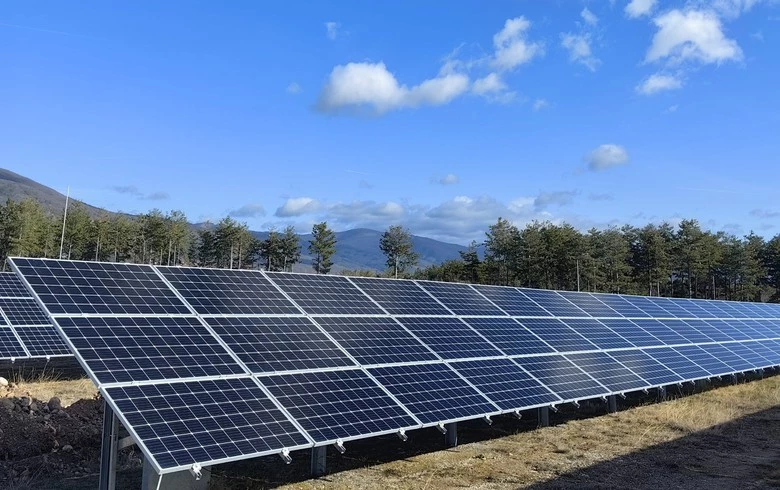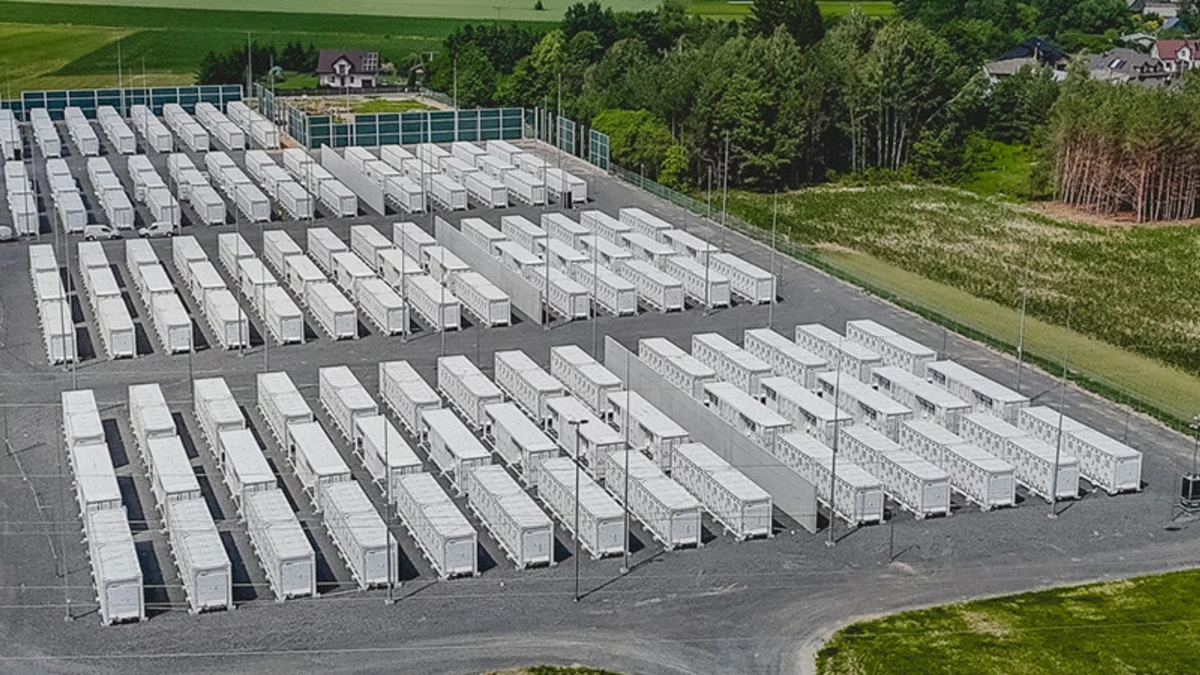
The Vert solar plant in the Landes generates about 90 GWh a year. Orange France has contracted for 90 GWh a year from it until 2039. Credit Agricole is buying 49 percent of what is left after that arithmetic, which explains why three regional agricultural banks, not an infrastructure fund, are the buyers.
Key takeaways
- ZE Energy has agreed to sell a 49 percent stake in the 77 MW Vert solar plant and its co-located 14.8 MW and 29.6 MWh battery in the Landes, southwestern France, to Credit Agricole Group, announced on 26 October 2026 with no disclosed consideration.
- The buyer is three Credit Agricole regional banks, Aquitaine, Pyrenees Gascogne and Toulouse 31, and Terra Energies, a Nouvelle-Aquitaine investment fund, is expected to join as a shareholder by the end of 2026.
- The project cost 84 million euros, funded with 52 million euros of non-recourse senior debt from Bpifrance and Caisse d'Epargne Ile-de-France secured in May 2024 and 32 million euros of sponsor equity, and became operational in October 2025.
- A 15-year corporate power purchase agreement signed with Orange France in May 2024 covers 90 GWh a year for the operator's telecommunications networks, which matches the project's entire expected annual output.
- Enerdatics records 36 French solar transactions since the start of 2024, of which just two carry a disclosed value usable per MW, and the only priced operating asset is Eni's purchase of roughly 760 MW from Neoen for $1.07 billion in November 2025, about $1.40 million per MW.
What is a 49 percent stake in a fully contracted plant actually worth owning?
A share of a fixed payment stream, not of a power plant. The Orange agreement runs 15 years from May 2024 and covers 90 GWh annually, and Leap records the project's expected annual generation at about 90 GWh. There is no meaningful uncontracted volume, no capture-price exposure to optimise, and no merchant tail until the late 2030s. What changes hands is a known revenue line underwritten by one telecoms counterparty.
That reframes the battery too. A 14.8 MW and 29.6 MWh unit on a 77 MW solar site is two hours of duration on a fifth of the generating capacity, which is not an arbitrage asset. Omexom supplied, installed and commissioned the five battery units and will provide operations and maintenance, each connected separately to the Enedis network. Its job is to shift delivery within the day so the plant meets a contractual profile rather than dumping output at midday. The storage makes the contract deliverable rather than adding a second revenue stack.
The equity arithmetic follows from the cost stack. Against a total investment of 84 million euros, 52 million euros is non-recourse senior debt, leaving 32 million euros of sponsor equity. A 49 percent slice of that layer is a small cheque by infrastructure standards, and it shrinks further when Terra Energies comes in.
Why is this ZE Energy's second route to the same outcome?
Because the company sells stakes rather than assets. ZE Energy describes the transaction as part of a strategy of opening the capital of its mature assets to financial partners so it can recycle proceeds into new French development. It keeps the majority and the pipeline, and converts a finished plant into cash without giving up control.
It has done the same on a different technology in a different country. Octopus Energy Generation co-invested alongside ZE Energy in the 98.5 MW and 895 MWh Sessa Aurunca battery in Campania, which Enerdatics covered as evidence of Italy's shift toward contracted battery storage. The pattern is the same: develop until the revenue is visible, then sell a minority to someone who wants the visibility and not the work.
The counter-move exists in the same market, which is what makes the structure legible. Earlier this year TSE bought out Siloe Infrastructures Fund to take full ownership of a 95 MW French solar portfolio it had developed and still operated, removing minority capital from stabilised assets to recapture the yield. Developers open the capital of mature plants when they need money for the next project and close it when they do not. ZE Energy also raised 54 million euros of corporate equity in November 2024, a portion of which Enerdatics believes may have supported this project.
Why does a plant built on storm-damaged forest get built at all?
Because the land had no competing use. The site covers 67 hectares in the municipality of Vert and reuses 60 hectares damaged by Storm Klaus in January 2009, which flattened large tracts of maritime pine across the Landes. Ground that cannot return to forestry for a generation clears the hardest obstacle in French solar, which is land-use legitimacy rather than engineering.
That is the same logic pulling French capital toward repurposed industrial and degraded sites. Alpiq bought France's largest operational battery on a former fossil-fuel plant site in January 2026, where grid access, zoning and permitting had been absorbed by the previous use. Vert is the agricultural version of that trade: the storm did the site clearance.
Enerdatics records 36 French solar transactions since the start of 2024, of which only two carry a disclosed value usable per MW and 34 are undisclosed. The single priced operating asset is Eni's acquisition of roughly 760 MW from Neoen for $1.07 billion in November 2025, a figure Enerdatics identified despite no public disclosure, which works out at about $1.40 million per MW. Vert's own build cost of 84 million euros across 91.8 MW of solar and storage is roughly 0.92 million euros per MW, well under that. A large contracted portfolio with an operating history commands something the construction invoice does not capture, and until a second operating French print appears nobody can say how much.
What does the deal signal for French solar?
It signals that the buyer pool for operating French solar now reaches below the infrastructure funds. Three regional Credit Agricole banks and a Nouvelle-Aquitaine fund taking a minority of one plant is a different kind of capital from a pan-European fund running a portfolio strategy. It is comfortable with a non-controlling position because the revenue is contracted and the asset sits where its depositors live.
It also marks a step up in asset maturity for the buyer. Credit Agricole took a 49 percent stake in a 253 MW solar and battery portfolio from Apex Energies in December 2025, but those assets were under development. Vert has been running since October 2025. The same percentage applied to a smaller but finished plant suggests the group is moving along the risk curve rather than up the size curve. For developers, the read is that a 15-year contract with a recognisable offtaker is now the product being sold in France.
Frequently asked questions
How much is Credit Agricole paying for its stake in the Vert solar project?The consideration was not disclosed. The project's total investment was 84 million euros, of which 52 million euros was non-recourse senior debt, leaving 32 million euros of sponsor equity before the 49 percent stake is applied.
Who buys the electricity from the Vert solar plant?Orange France, under a 15-year corporate power purchase agreement signed in May 2024 covering 90 GWh a year for its telecommunications networks. That volume matches the project's entire expected annual generation.
How big is the battery at the Vert project and what is it for?It is 14.8 MW and 29.6 MWh, two hours of duration, delivered as five units each connected to the Enedis grid. At that size against 77 MW of solar it shifts delivery and supports the connection rather than trading in the market.
Ready to get deal-ready answers in seconds? Try Enerdatics Leap AI and access verified intelligence across M&A, financings, PPAs, projects, and energy market developments through natural language.