
Octopus and ZE Energy Signal Italy’s Shift to Contracted Battery Storage
.png)
Italy’s battery storage market is shifting from merchant-led development risk to contracted, grid-critical infrastructure, and Octopus Energy Generation’s co-investment with ZE Energy in the Sessa Aurunca battery project shows how quickly institutional capital is adjusting. The commercial change is clear: buyers are no longer just backing storage capacity; they are backing late-stage assets with fixed revenue visibility, grid access, and a credible delivery path into Italy’s 2028 storage window. The Campania project, developed by ZE Energy, is now being supported by Octopus through its Sky fund, with the asset expected to become the largest standalone battery in south-central Italy once operational in 2028.
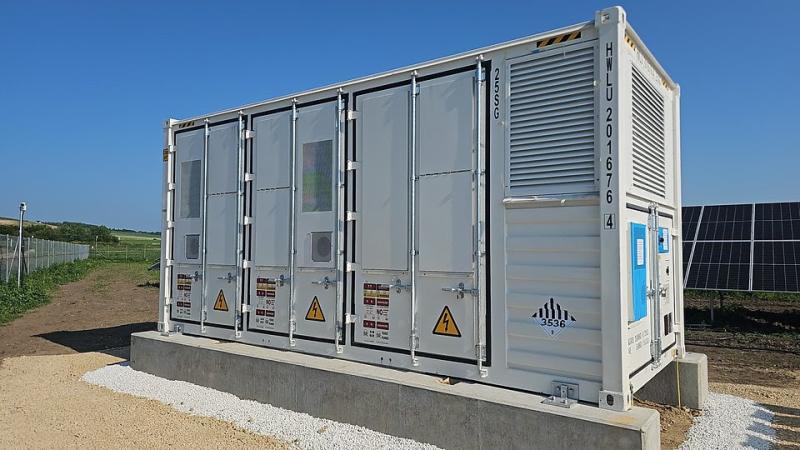
The deal centers on a 98.5 MW / 895 MWh standalone battery in Sessa Aurunca, Campania. The asset is in the final stages of development, with construction scheduled to begin this summer and operations expected in 2028. Its storage capacity is large enough to meet the daily electricity needs of around 130,000 Italian homes, but the more important commercial feature is its connection strategy: the project will link into a substation serving multiple power producers, effectively positioning the battery as a local flexibility hub rather than a standalone merchant asset.
The real value signal is the MACSE contract. The project secured support through Terna’s storage procurement mechanism, locking in a fixed 15-year contract and accounting for 42% of capacity awarded in its region. That changes the risk profile for Octopus. Instead of underwriting a pure arbitrage asset exposed to wholesale volatility, Octopus is backing a project with long-term contracted capacity revenue, while still gaining exposure to Italy’s growing need for renewable balancing. For ZE Energy, the partnership validates its ability to originate, permit, and de-risk large-scale storage in one of Europe’s most competitive battery markets.
Terna’s first MACSE auction underlines why this matters. The system operator procured 10 GWh of storage capacity across Southern Italy and the islands, with bids exceeding demand by more than four times. Weighted average clearing prices came in at €12,959/MWh-year, far below the €37,000/MWh-year reserve premium, while Central-South cleared at €14,566/MWh-year. This is a pricing signal as much as a policy signal: Italy has created a bankable storage route-to-market, but competition is already compressing contracted returns.
That makes project selection more important than headline capacity. A MACSE-backed battery with advanced development status, substation access, and construction visibility is more financeable than a larger but less de-risked pipeline. Lenders can underwrite a clearer revenue floor. Infrastructure funds can price the asset closer to contracted infrastructure. Developers can bring in equity before construction without giving buyers full merchant exposure. The Sessa Aurunca deal sits exactly at that intersection.
Enerdatics data points to the same buyer behavior shift across Europe. In Q3 2025, European M&A activity was led by a 120% year-over-year surge in BESS transactions, with around 18 GW traded across 22 deals. The UK, Germany, and Italy accounted for more than 60% of traded capacity, supported by price volatility and frameworks such as Italy’s MACSE and Germany’s EEG. Investors were particularly focused on advanced-stage, shovel-ready BESS portfolios, rather than early-stage development exposure.
The valuation implication is already visible. Enerdatics data shows European BESS developer premiums generally around $20K/MW for early-stage assets, rising to about $50K/MW for advanced projects with provisional interconnection and at least $80K/MW at ready-to-build stage. Projects under mechanisms such as MACSE can receive valuation uplifts because regulated or auction-backed revenues improve revenue certainty. In this context, the Octopus-ZE Energy transaction is not just a project investment; it is a premium-quality storage farm-in built around contract visibility and execution readiness.
For Octopus, the deal strengthens an Italian strategy that already includes more than 2 GW of new battery storage, wind, solar, and rooftop solar projects through developer investments. The commercial logic is portfolio depth: Italy’s solar expansion creates growing flexibility needs, but storage assets with MACSE contracts can offer more stable entry points than merchant-only batteries.
For ZE Energy, the deal is a step change from development to delivery. The company is active in France, Germany, and Italy, and has identified Italy as a core market for its 2030 plan. Its stated target of reaching 1.5 GW of installed capacity by 2030 depends on converting hybrid solar-plus-storage and standalone battery development into financeable projects. Sessa Aurunca gives ZE Energy a large reference asset in a market where winning MACSE capacity, securing grid connection, and attracting institutional equity are becoming the main tests of developer quality.
The pressure now falls on developers without awarded capacity, grid-ready sites, or balance-sheet partners. Italy’s first MACSE auction showed strong demand, but also thin pricing discipline. Buyers will not pay equally for all storage pipelines. They will prioritize projects that can enter construction on a defined timeline, qualify for contracted support, and demonstrate grid relevance in high-renewables regions. Early-stage merchant BESS pipelines may still have strategic value, but their pricing will increasingly depend on whether they can convert into MACSE-style contracted infrastructure.
The forward-looking signal is that Italy’s next storage deals will be less about land-grabbing and more about bankability. Institutional investors, utilities, and specialist renewables funds are likely to compete hardest for awarded, late-stage, long-duration batteries that combine fixed capacity revenue with local flexibility value. Developers that can deliver those assets will retain pricing power. Those holding uncontracted pipelines will face tougher diligence, deferred payments, or partnership structures that shift more construction and market risk back onto the seller.
Want to track the latest M&A, financings, PPAs, and key developments across the industry? Explore the Enerdatics Insights page.

.jpeg)


