
Why Igneo's Vertis Launch Is a Bet on 240 Australian Customer Sites, Not 46 Megawatts
.png)
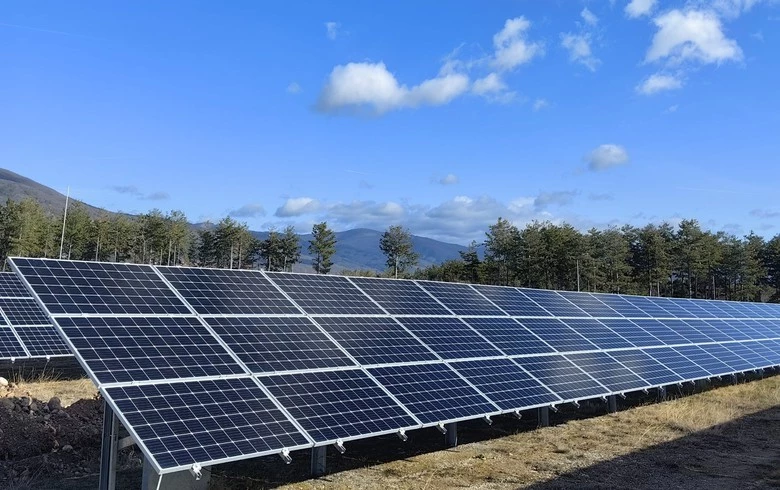
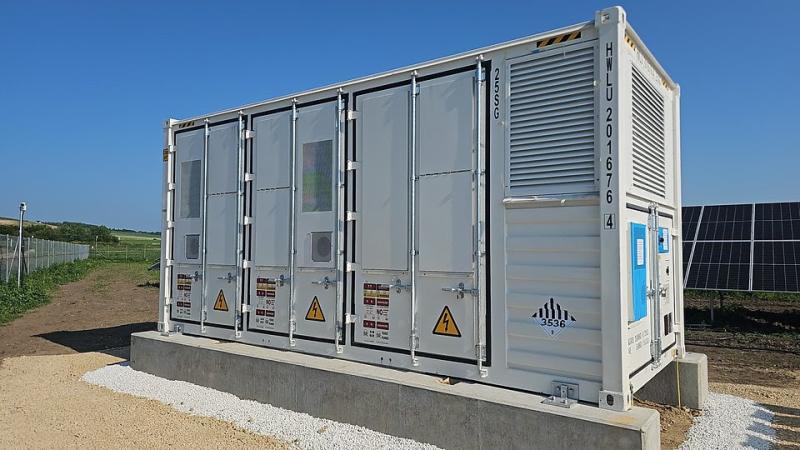
Igneo Infrastructure Partners has established Vertis Energy as its dedicated Australian distributed energy platform, launching it with binding agreements to acquire 100 percent of Green Squares Energy plus two immediate follow-on acquisitions, together totalling 46 MW of operating distributed energy assets. Enerdatics records Future Group as the seller. The portfolio spans 240 sites, split between 34 MW of behind-the-meter solar and 12 MW of small front-of-meter solar farms with co-located battery developments. Terms were not disclosed and completion is expected in the third quarter of 2026, subject to regulatory approval. Jason Willoughby, formerly of CWP Renewables and Squadron Energy, has been appointed chief executive.
What did Igneo acquire to launch Vertis Energy?
Igneo executed binding agreements to buy all of Green Squares Energy, a commercial and industrial behind-the-meter specialist, together with two further acquisitions completing simultaneously. Enerdatics logs the combined transaction at 46 MW with Future Group on the sell side, a counterparty the announcement does not name. The assets average roughly 192 kW per site across 240 locations. The consideration was not disclosed. Enerdatics' benchmark for Australian operating solar since the start of 2022 puts the median implied enterprise value at $1.00 million per MW within an interquartile range of $0.66 million to $1.42 million, indicating a range of roughly $30 million to $65 million for 46 MW, though behind-the-meter portfolios price on contracted customer cash flows rather than on capacity alone.
What is behind-the-meter solar, and why does site count matter more than capacity?
Behind-the-meter solar sits on the customer's side of the electricity meter, generating power consumed on site rather than exported to the grid. The asset competes against the retail tariff the customer would otherwise pay, which is far higher than the wholesale price, so the economics rest on displaced consumption and on a long-term contract with the site occupier. That makes the counterparty, not the megawatt, the unit of value. A 192 kW average system is trivial as generation, but 240 of them represent 240 commercial relationships, each with its own contract term, credit quality, roof and renewal cycle. Assembling that base one customer at a time takes years of origination. Buying it whole is the only fast route in, which is why these portfolios trade as businesses rather than as asset packages.
Why is Igneo building a platform rather than buying assets?
Because it already owns Australian distributed energy interests that need an operator. Igneo has held a majority position in CPE Renewable Investment Trust since 2019, covering distributed solar and battery assets and precinct energy services at Barangaroo, Central Park, Mascot and Tonsley, with day-to-day operations contracted out to Clean Peak Energy on a fixed-term basis. Vertis will take over management oversight of that interest alongside the Green Squares assets. Enerdatics records four Australian acquisitions by Igneo totalling 849.4 MW, including 427 MW of operating solar bought from Elliott Investment Management for $357.58 million in April 2022, 228 MW of wind from Green Investment Group and InfraRed Capital Partners for $192.08 million later that year, and 148.4 MW of wind from PowerChina and Goldwind in December 2024. Bringing operations in-house under a dedicated management team is the logical next step for an owner at that scale.
Enerdatics' data shows how thin the Australian distributed generation market still is. Across the transactions recorded since the start of 2023, only six distributed generation deals appear, with no buyer completing more than one: Clean Energy Finance Corp, CleanPeak Energy, Five V Capital, KKR, VH Global Sustainable Energy Opportunities and now Igneo. The contrast with the United States is stark. Enerdatics records 206 US distributed solar transactions over the same period, led by repeat acquirers including Standard Solar on 20 deals, Altus Power on 16 and Aspen Power Partners on 12. Australia has the same commercial logic and roughly one thirty-fifth of the deal flow. Pricing is correspondingly opaque, with the only disclosed comparable being KKR's 240 MW distributed position at $328.268 million, equivalent to $1.37 million per MW, near the top of the Australian operating solar range.
What does the deal signal for Australian distributed energy?
The deal signals that Australian behind-the-meter solar is entering its institutional phase, and that the entry route is buying an operator rather than accumulating assets. Igneo manages A$34.5 billion, and the ticket here is 46 MW, which only makes sense as the foundation of something larger. The structure confirms it: a named chief executive recruited from utility-scale developers, three acquisitions closing at once, and an explicit mandate covering solar, battery, heating and cooling across commercial and industrial sites. That is a platform build, not a portfolio purchase. Expect the follow-on acquisitions to be larger than the first, and expect the small number of established Australian behind-the-meter operators to receive approaches from other infrastructure managers watching the same demand.
The commercial case rests on customers rather than on policy, which distinguishes this from most renewables M&A. Willoughby has framed the proposition as helping businesses treat energy as a lever for cost certainty and resilience rather than as a procurement line item, and behind-the-meter assets deliver that by displacing retail tariffs directly. In a market where grid-connected renewables face connection queues and curtailment, generation sited at the point of consumption avoids both. The constraint is scale: reaching institutional size requires signing hundreds more sites, and Enerdatics' record of six Australian distributed generation transactions in three and a half years suggests there are not many more portfolios of this kind available to buy.
Key takeaways
- Igneo Infrastructure Partners established Vertis Energy as its Australian distributed energy platform, launching with binding agreements to acquire Green Squares Energy plus two follow-on acquisitions totalling 46 MW. Terms were not disclosed, with completion expected in Q3 2026.
- Enerdatics records Future Group as the seller, a counterparty the announcement does not name.
- The portfolio spans 240 sites averaging roughly 192 kW each, comprising 34 MW of behind-the-meter solar and 12 MW of front-of-meter solar with co-located battery developments.
- Enerdatics data shows only six Australian distributed generation transactions recorded since 2023, with no buyer completing more than one, against 206 comparable US transactions over the same period.
- Enerdatics records four Australian acquisitions by Igneo totalling 849.4 MW, including 427 MW of operating solar bought from Elliott Investment Management for $357.58 million in 2022.
Frequently asked questions
How much did Igneo pay for Green Squares Energy?The consideration was not disclosed. Enerdatics' benchmark for Australian operating solar since 2022 is a median of $1.00 million per MW within a $0.66 million to $1.42 million interquartile range, indicating roughly $30 million to $65 million for 46 MW, although behind-the-meter portfolios are valued on contracted customer cash flows rather than capacity alone.
What is behind-the-meter solar?Behind-the-meter solar generates electricity on the customer's side of the meter for consumption on site rather than export to the grid. Because it displaces the retail tariff rather than earning the wholesale price, its value depends on the site's consumption and on a long-term contract with the occupier, making customer relationships the core asset.
Who is Vertis Energy?Vertis Energy is Igneo's wholly owned Australian distributed energy platform, established in May 2026 and led by chief executive Jason Willoughby, formerly of CWP Renewables and Squadron Energy. It will build, own and operate on-site solar, battery, heating and cooling systems for commercial and industrial customers, and will also oversee Igneo's existing interest in CPE Renewable Investment Trust.
Ready to get deal-ready answers in seconds? Try Enerdatics Leap AI and access verified intelligence across M&A, financings, PPAs, projects, and energy market developments through natural language.

.jpeg)


