Origis Energy has raised $317 million in tax equity from J.P. Morgan for two solar projects in two different states. One, in Mississippi, comes with a four-hour battery. The other, in New Mexico, is being built where a coal-fired power station used to stand. A single investor is backing both, and the record does not say which credit attaches to which.
Key takeaways
- Origis Energy secured $317 million in project tax equity funding from J.P. Morgan, announced on 24 January 2024, for the Escalante solar project in New Mexico and the Golden Triangle II solar project in Mississippi.
- The Origis Energy and J.P. Morgan tax equity agreement uses both the Investment Tax Credit and the Production Tax Credit available under the Inflation Reduction Act.
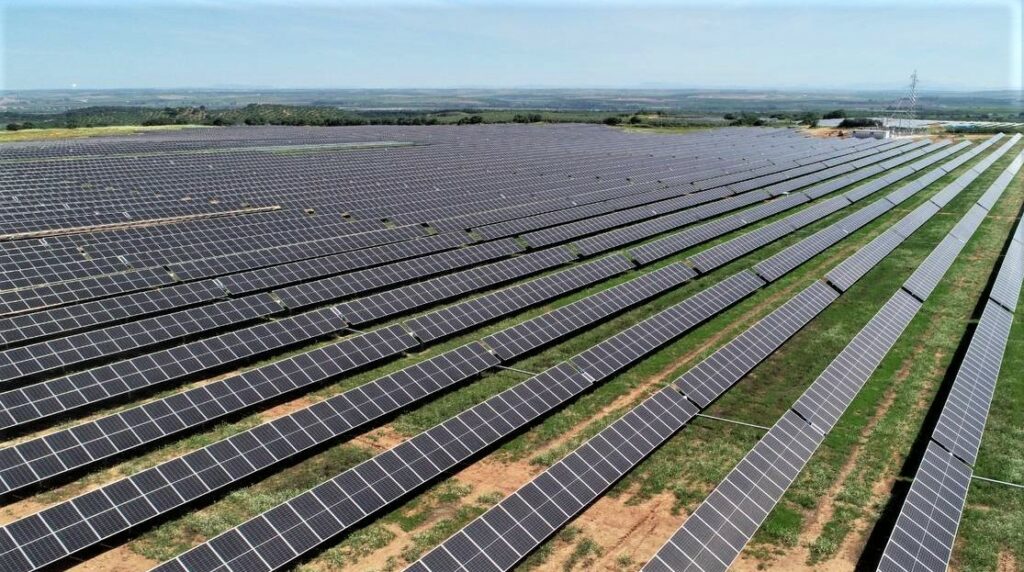
- Golden Triangle II is a 150 MW solar plant in Mississippi with a 50 MW, four-hour battery, originally developed by TurningPoint Energy, which began construction in August 2023 and is expected to reach commercial operation in the fourth quarter of 2024.
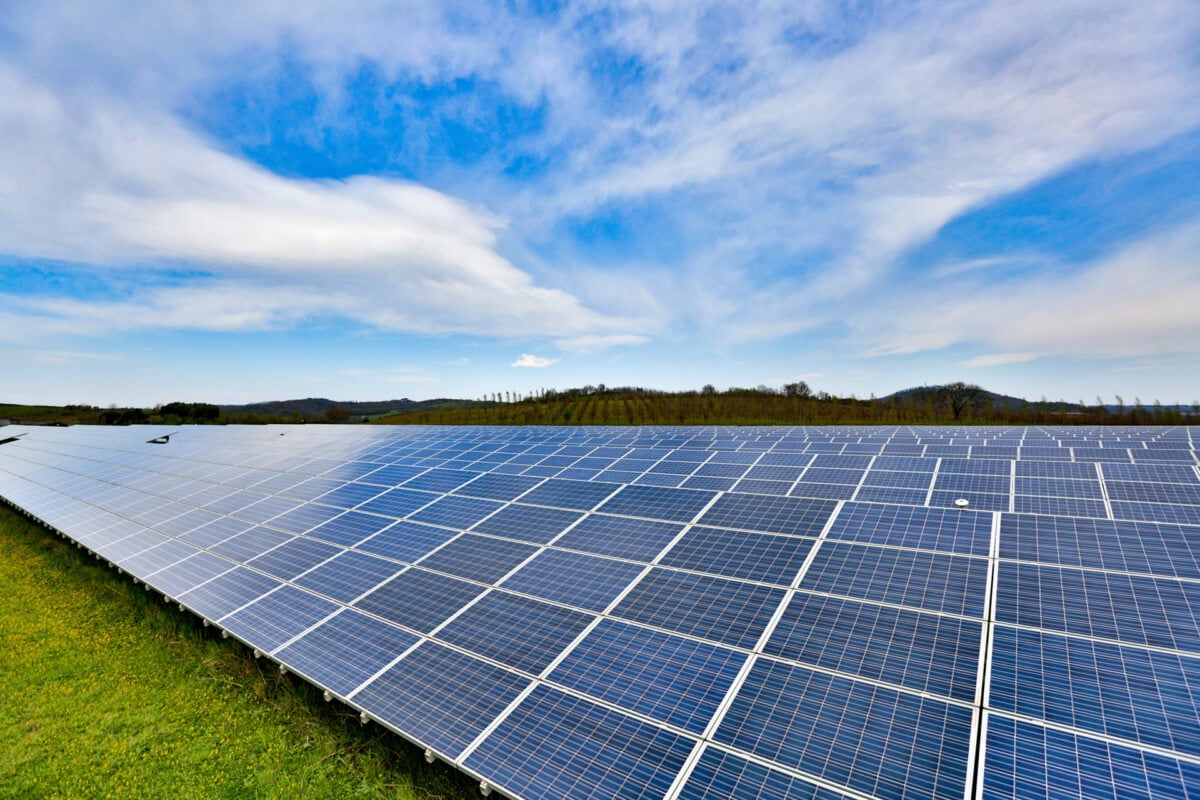
- Escalante Solar is a 200 MW solar plant in New Mexico built on the site of the 253 MW coal-fired Escalante Station, which retired in 2020, with construction starting in October 2023 and commercial operation expected in the first half of 2024.
- Norton Rose Fulbright represented Origis Energy and Hunton Andrews Kurth acted as counsel to J.P. Morgan on the $317 million tax equity financing.
What is tax equity, and why does Origis need it?
Tax equity is an investment in a renewable project by an investor that wants its tax benefits more than its cash. US federal tax credits are worth most to a company with a large tax bill. A developer building projects in quick succession often has little tax to offset, so it brings in a bank or corporation that does.
The investor puts in cash during construction or at completion. In return it takes most of the tax credits and depreciation, plus a share of cash flows, until it reaches an agreed return. After that its interest drops and the developer keeps most of the project.
For Origis, a developer and owner that finances project after project, tax equity is one of the three main sources of capital alongside construction debt and its own equity. The $317 million here covers 350 MW of solar across the two projects, about $0.91 million per MW of solar capacity, before counting the battery.
Why does one financing use two different tax credits?
Because the Inflation Reduction Act lets each project choose the credit that suits it. The Investment Tax Credit, or ITC, is a credit worth a percentage of the cost of building the project, claimed once when it starts operating. The Production Tax Credit, or PTC, pays a fixed amount for each megawatt-hour the project generates over its first ten years.
Which is worth more depends on the project. A plant with high costs relative to its expected output tends to favour the ITC. A plant that will generate a lot of power for each dollar spent tends to favour the PTC.
The record confirms that the agreement draws on both credits but does not say which project uses which. A financing that combines them shows a tax equity investor comfortable underwriting two different credit profiles within one transaction.
What makes the two projects different?
Their history and their design. Golden Triangle II began with another developer. TurningPoint Energy owned and developed it before Origis acquired the development rights. The plant also includes a 50 MW, four-hour battery, which can store up to 200 MWh and release it after sunset. Construction began in August 2023.
Escalante is a replacement plant. It sits on the site of the 253 MW Escalante Station, a coal-fired power station that retired in 2020. Building solar on a retired coal site can reuse existing land and infrastructure. The new plant is smaller than the coal station it follows, at 200 MW, and construction began in October 2023.
Both were in construction when J.P. Morgan committed, and both were due to start operating in 2024: Escalante in the first half and Golden Triangle II in the fourth quarter.
Enerdatics records 49 tax equity financings for US solar projects announced in 2023 and 2024. Thirty-three of them disclose an amount, with a median of $140 million. Origis's $317 million is more than twice that and ranks eighth among the 33. The seven larger deals include ENGIE's $1 billion from J.P. Morgan, Goldman Sachs and BNP Paribas for 1.3 GW of assets, SB Energy's $800 million and Orsted's $680 million from J.P. Morgan. J.P. Morgan appears as an investor in five of the eight largest, including this one.
What does the deal signal for US solar finance?
It signals the shape of Origis's capital stack. Leap records a $344 million MUFG loan for Golden Triangle I in December 2023, followed by J.P. Morgan tax equity for the same project in October 2024. For Rice Creek in 2024, Origis paired a $136 million MUFG loan with $71 million of tax equity from US Bancorp Impact Finance. Debt from one lender and tax equity from another is the standard pattern, and Origis repeats it project by project.
The pattern has continued at a similar price. In December 2025 Origis raised $265 million of tax equity from Advantage Capital for a 305 MW solar portfolio, about $0.87 million per MW. In February 2026 it raised $340 million from Crux for a 413 MW portfolio, about $0.82 million per MW. The J.P. Morgan deal sits at the top of that range.
The company has also moved beyond project-level money. Leap records a $1 billion equity investment from Brookfield and Antin in January 2025, and a corporate facility covered in Enerdatics' analysis of Origis's $900 million credit facility. Project financings remain the base layer, as in the $290 million package for the Swift Air II and III projects in Texas.
Finally, it signals that coal sites are part of the solar build-out. Escalante replaces a retired coal station with a solar plant of similar scale, financed by the investor that appears most often among the largest US solar tax equity deals in Leap.
Frequently asked questions
How much tax equity did Origis Energy raise from J.P. Morgan?Origis Energy secured $317 million in tax equity from J.P. Morgan, announced on 24 January 2024, for the Escalante and Golden Triangle II solar projects.
Which projects does the financing cover?The 200 MW Escalante Solar project in New Mexico and the 150 MW Golden Triangle II solar project in Mississippi, which includes a 50 MW, four-hour battery.
Which tax credits does the deal use?The agreement uses both the Investment Tax Credit and the Production Tax Credit under the Inflation Reduction Act. The record does not specify which project uses which credit.
Ready to get deal-ready answers in seconds? Try Enerdatics Leap AI and access verified intelligence across M&A, financings, PPAs, projects, and energy market developments through natural language.