How Fengate Bought Into Accelergen as Well as Its Project Pipeline
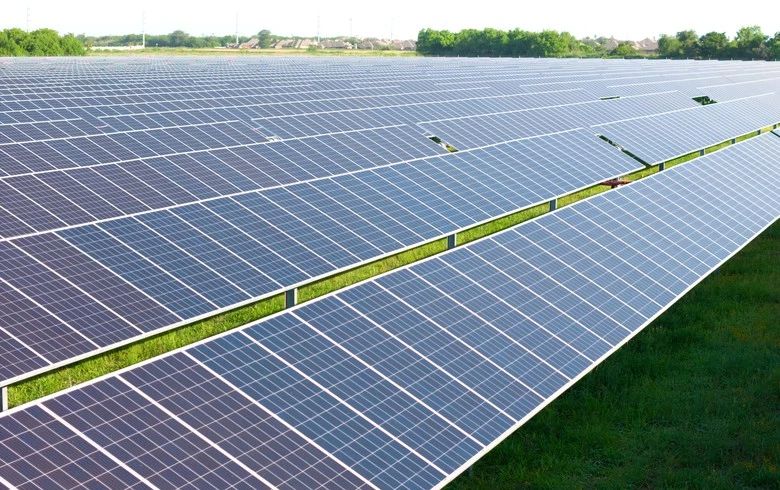
Fengate has acquired seven US solar and battery projects from Accelergen Energy, and taken an equity stake in Accelergen at the same time. Neither the capacity nor the price was disclosed. Of the four projects Enerdatics could identify, not one begins construction before 2028, and one has stopped.
Key takeaways
- Fengate Asset Management has acquired seven utility-scale solar plus battery and standalone battery projects in the US from Accelergen Energy, alongside a direct equity investment in Accelergen itself. The deal was executed through Fengate Infrastructure Fund V, and terms were not disclosed.
- All seven projects are at development stage, in markets served by the Southwest Power Pool and the Western Electricity Coordinating Council, and Enerdatics records no disclosed capacity for the transaction.
- Enerdatics has identified four of the seven, carrying about 375 MW of solar and 686.5 MW of battery between them: the 300 MW East Side and 199 MW Wolf Creek batteries in Kansas, the 125 MW Valley Range solar project in Colorado with 62.5 MWac of storage, and the 250 MW Coyote Willow solar project in New Mexico with 125 MWac.
- Construction on those four begins no earlier than 2028: East Side's initial 200 MW phase in 2028 for operations in 2029, Wolf Creek in June 2028, and Valley Range in 2028 for operations in December 2029. Coyote Willow's development has been paused.
- Valley Range will sell power to a partnership of four Colorado electric cooperatives under Tri-State Generation and Transmission Association's Bring Your Own Resource programme, and subject to Montezuma County approval its full solar output would equal 40 percent of that partnership's 2024 peak demand.
What did Fengate buy that a portfolio of projects alone would not have given it?
A developer able to carry those projects to construction. Development-stage projects generate nothing, and the distance between a permitted project and a built one is closed with capital rather than with development work.
So the equity investment is not a side note. Its stated purpose is to give Accelergen the balance-sheet support to move development-stage projects through construction to commercial operation, and to fund further greenfield development and targeted acquisitions. Accelergen's management team stays in place, and the company intends to become an independent power producer rather than a seller of projects.
That makes this a different transaction from an asset purchase. A fund that buys projects takes delivery and hires a contractor. A fund that also buys part of the developer keeps the team that originated them and pays for the next round. The distinction matters because Accelergen's origination runs through an analytics platform it calls Grid Miner, which forecasts grid conditions, assesses development risk and picks substations and sites. Buying the output of that process once gives a portfolio. Buying into the process gives a pipeline.
Why does the earliest construction date sit in 2028?
Because what these projects have secured is position rather than readiness, and position does not expire while it waits.
Wolf Creek is a 199 MW lithium iron phosphate battery in Leavenworth County, Kansas, due to start construction in June 2028 and sited in one of the most congested parts of the twelve-state Southwest Power Pool footprint. Congestion is what happens when transmission cannot carry all the power that wants to cross it, holding prices down on one side of the constraint and raising them on the other. A battery placed there stores cheap power and releases it into high demand, and it keeps that advantage through three years of waiting.
East Side, a 300 MW standalone battery in Wyandotte County, Kansas, is phased on a similar timetable, and Valley Range in Montezuma County, Colorado, starts in 2028 for operations in December 2029. Coyote Willow, in Chaves County, New Mexico, has paused development altogether. So a buyer here is not underwriting 2027 cash flow. It is underwriting the cost of equipment, labour and capital three years out against grid positions held today, a shape Enerdatics has covered in US deals where the capital arrives as each project finishes rather than at signing.
How large is a portfolio with no disclosed capacity?
About 1,061 MW on the four projects that can be identified, with three more unaccounted for.
Those four give 375 MW of solar and 686.5 MW of battery, including the two co-located systems. Co-located storage means a battery built on the same site as a generator and sharing its grid connection, so those megawatts sit alongside the solar rather than adding separate projects. Enerdatics flags the identification as transaction intelligence rather than disclosure, matched on location and stage because neither party named the assets, and the remaining three are not identified at all. A deal with neither a numerator nor a denominator cannot be compared with anything.
Enerdatics records 42 US transactions tagged to the Southwest Power Pool since the start of 2024, and only seven are confined to SPP alone rather than spanning several power markets. Exactly one of those seven carries a disclosed value: MARA's December 2024 purchase of the 114 MW Great Plains wind farm from Geronimo Power for $50 million, or $0.439 million per MW, an operating wind asset rather than a development-stage battery. Across the wider US development-stage solar market Enerdatics records 212 transactions since the start of 2024, with a median developer premium, the premium paid per MW of development-stage pipeline, of $0.06 million per MW across 17 priced deals and $0.05 million across the 11 priced late-stage ones. This deal discloses neither a price nor a capacity, so it cannot be placed on that scale from either end.
What does the deal signal for the US development market?
It signals that capital entering US development is increasingly buying the developer alongside the projects. Orsted invested $55 million in Mission Clean Energy in March 2025, Brookfield and Antin Infrastructure Partners agreed to invest around $1 billion in Origis Energy in January 2025, and Harrison Street paid $300 million for 33 percent of CPV Renewable Power in August 2024. Those are platform investments measured against pipelines of roughly 11,000 MW, 29,000 MW and 5,031.5 MW, which is why per-MW arithmetic on them describes the denominator more than the deal.
What differs here is scale. Fengate has bought a small, identifiable set of late-stage projects and a stake in the developer in one transaction, rather than funding a pipeline and waiting for projects to come out of it. For a developer with a few well-sited projects and no balance sheet, that is a third route between selling the company and rotating assets one at a time. The price record is unchanged: the week before, a 715 MW late-stage US solar portfolio changed hands with no price and no power contract attached, and this one adds no price either.
Frequently asked questions
How much did Fengate pay for the Accelergen portfolio?Terms were not disclosed, and neither was the portfolio's capacity. Of the 42 US transactions Enerdatics records in the Southwest Power Pool since the start of 2024, only one confined to SPP alone carries a disclosed value, at $0.439 million per MW for an operating wind farm.
When will the acquired projects be built?On the four projects Enerdatics has identified, construction begins no earlier than 2028, with East Side's initial 200 MW phase and Valley Range both starting that year and Wolf Creek in June 2028. Coyote Willow has paused development.
What does Fengate get from the equity investment in Accelergen?It is intended to give Accelergen the balance-sheet support to take development-stage projects through construction to commercial operation, and to fund further greenfield development and acquisitions. Accelergen's management team continues to oversee the portfolio.
Enerdatics identifies the assets behind portfolio transactions that disclose neither capacity nor price. Browse more transaction analysis in the Enerdatics insights archive.