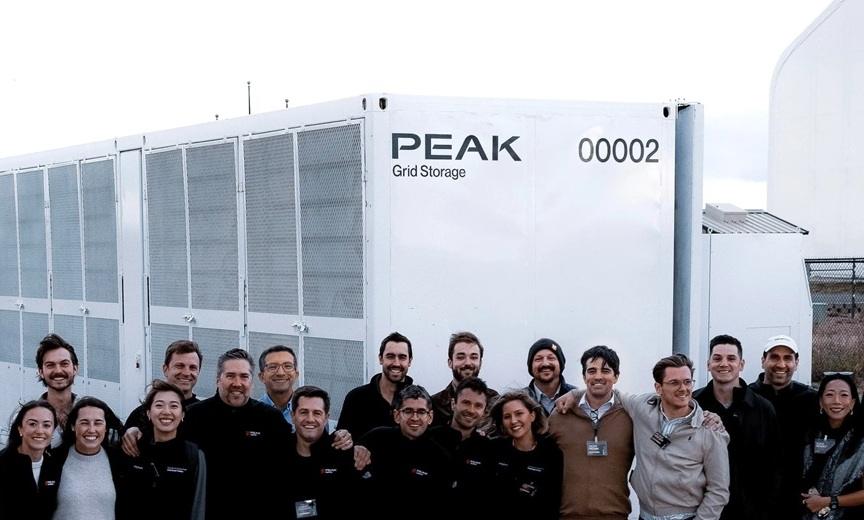
Foresight Group has bought a battery in northern Finland that will not store a unit of electricity until the second half of 2028. The asset is rated at 100 MW and 400 MWh. No price was disclosed, which in this market is closer to the rule than the exception. The number worth looking at is the one that did get disclosed.
Key takeaways
- Foresight Energy Infrastructure Partners II acquired the 100 MW/400 MWh Nivala battery storage project in North Ostrobothnia, Finland, from Fotowatio Renewable Ventures, announced on 15 October 2026. The consideration was not disclosed.
- The Nivala project is at the ready-to-build stage, holds all required permits and a grid connection agreement with Finnish transmission operator Fingrid, and is expected to reach commercial operations in the second half of 2028.
- 400 MWh across a 100 MW rating gives the project a four-hour duration, against a median of 2.4 hours across the 15 Finnish battery transactions Enerdatics records with a stated energy capacity since the start of January 2024.
- Of 28 asset-level Finnish battery transactions Enerdatics records since January 2024, exactly two carry a disclosed consideration: Alpiq's 125 MW Pysayspera project at $7.24 million in March 2025 and Alpiq's 30 MW/36 MWh Valkeakoski project at $0.80 million in June 2024.
- EY-Parthenon acted as financial adviser and Bird & Bird as legal adviser to Fotowatio Renewable Ventures; EY advised Foresight Group on financials, with Krogerus on legal and Natural Power on technical.
What does a four-hour battery earn that a two-hour one does not?
Energy arbitrage, and very little else. Duration is a battery's energy capacity divided by its power rating, so it measures how long the asset can hold full output. Reserve and balancing products pay mainly for the ability to deliver power on demand, which a one-hour or two-hour battery can do as well as a longer one. Shifting electricity from cheap hours to expensive hours is the service that needs stored energy, and the only one that improves roughly in proportion to duration.
That makes duration a statement about which revenue the owner expects to live on. Leap records that the Nivala facility is expected to participate in Finland's wholesale, intraday and ancillary services markets, so all three routes are in scope rather than reserves alone. A four-hour configuration on a merchant asset reads as a bet that the spread between hours, rather than the payment for standing ready, carries the returns over the asset's life. Nothing in the record prices that bet, because nothing in the record prices anything.
Why has Finnish battery duration more than doubled in ten months?
Because the assets changing hands since the end of 2025 are built to a different specification from the ones before them. Every four-hour project among the Finnish battery deals Enerdatics records with a stated energy capacity was announced on or after 31 December 2025: the 125 MW/500 MWh Tuovila project, a 100 MW/400 MWh project sold by Usva Energia to Prime Capital in March 2026, the 125 MW/500 MWh Kristinestad project in September 2026, the 100 MW/400 MWh Aurora project on 5 October 2026, and now Nivala ten days later. The shortest asset in the set, Alpiq's 30 MW/36 MWh Valkeakoski project at 1.2 hours, dates from June 2024.
Three of the four most recent Finnish battery deals carrying a stated energy capacity are four-hour assets. Leap also flags a demand-side reason for the shift, pointing to Google's announced 13 billion euro (about $14.6 billion) data centre programme in Finland as evidence of growing demand for grid flexibility. That is Enerdatics' reading of the driver rather than a disclosed link to this transaction, and the Nivala asset carries no contract with any data centre operator on record.
Why is Nivala the third battery in one small town to change hands?
Because the scarce thing is the connection, not the land. Enerdatics records three separate battery projects in or beside Nivala trading since 2024. OX2 sold the 50 MW Uusnivala project to the L&G NTR Clean Power Fund in August 2024. Ingrid Capacity sold a majority stake in a 70 MW Nivala battery in March 2025. Foresight's asset is the third and largest, sitting on about 2.1 hectares in the Mehtapera area and east of the Uusnivala electrical substation.
These are three distinct assets rather than one project resold, and they should not be added together as a single portfolio. What they share is a node. A permitted grid connection in a strong part of the Finnish network is harder to originate than a site, so once one developer proves a substation can absorb storage, others follow to the same point. The City of Nivala's technical permits subcommittee approved Foresight's project unanimously in April 2025, which is the step that turns a location into a tradeable asset.
Enerdatics records 29 Finnish battery transactions since the start of January 2024, of which 28 are asset deals and one is a corporate fundraising. Two of the 28 asset deals carry a disclosed consideration in Leap's structured value field, which is 7 percent of the market by count. A third transaction, the 85 MW/170 MWh Pyhasalmi project, has a figure quoted in its narrative but none recorded as a deal value, so Leap treats it as unpriced. Against that, there is no usable per-MW curve for Finnish storage, and a buyer arriving today is pricing off its own model rather than off the market.
What does the deal signal for Finland's battery market?
It signals that the duration debate is settled for new build. A year ago a Finnish battery was a two-hour asset bought for reserve revenue. The assets that funds are now willing to underwrite at the ready-to-build stage hold four hours, and they are being bought two years ahead of commercial operation, with the buyer taking construction risk and the full merchant exposure that follows. Foresight is a repeat buyer of long-duration flexibility, having also taken a stake in the 1.8 GW Earba pumped storage project in Scotland in October 2026, where the storage is measured in hours rather than minutes for the same reason.
It also signals that the information gap is not closing. Fotowatio Renewable Ventures ran a sale with advisers on both sides and disclosed nothing, exactly as Enlight did ten days earlier when it bought a ready-to-build battery of the same 100 MW and 400 MWh rating without naming the asset. The offtake side is no clearer, with the only Finnish battery tolling agreements on record disclosing neither price nor term. For anyone underwriting Finnish storage, the practical consequence is that comparables have to be built from capacity, duration and stage, because price is not available.
Frequently asked questions
What did Foresight Group buy in Finland? Foresight Energy Infrastructure Partners II acquired the 100 MW/400 MWh Nivala battery storage project in North Ostrobothnia from Fotowatio Renewable Ventures, announced on 15 October 2026. The consideration was not disclosed.
When will the Nivala battery start operating? Commercial operations are expected in the second half of 2028. The project is at the ready-to-build stage with all permits secured and a grid connection agreement with Fingrid in place.
How much do Finnish battery projects sell for? There is almost no public evidence. Of 28 asset-level Finnish battery transactions Enerdatics records since January 2024, only two carry a disclosed consideration, both of them Alpiq acquisitions at $7.24 million and $0.80 million.
Ready to get deal-ready answers in seconds? Try Enerdatics Leap AI and access verified intelligence across M&A, financings, PPAs, projects, and energy market developments through natural language.