Why Alpiq's German Battery Entry Came Through a Counterparty It Had Already Been Tolling
.png)
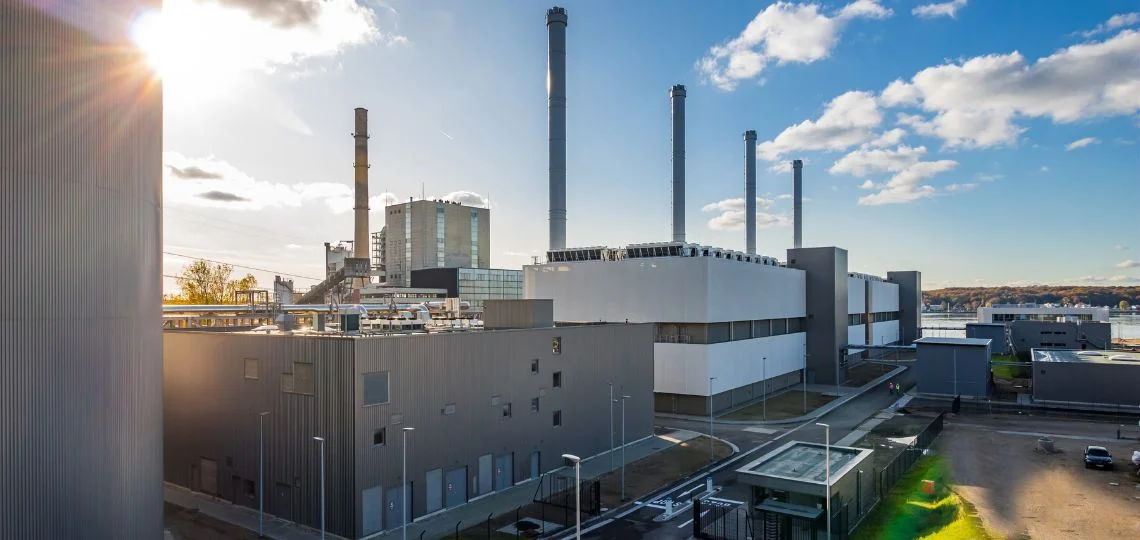
Alpiq has acquired the Bollingstedt battery storage system in Schleswig-Holstein from ECO STOR, taking 103.5 MW and 238 MWh of capacity that has been operating since June 2025. Terms were not disclosed. It is Alpiq's first operational large-scale battery in Germany and the third in its portfolio, after Cheviré in France at 100 MW and Valkeakoski in Finland at 30 MW. The seller is not a new counterparty. In November 2025 Alpiq signed a long-term tolling agreement for a different ECO STOR battery at Schuby, also in northern Germany.
What did Alpiq acquire?
Alpiq acquired one of Germany's largest operating battery systems, at 103.5 MW and 238 MWh, giving a duration of roughly 2.3 hours. It was developed, built and commissioned by ECO STOR, the German-Norwegian developer, and has run since June 2025. Alpiq and ECO STOR agreed not to disclose the financial terms. The duration is worth noting against Alpiq's other operating assets: Cheviré runs 100 MW and 200 MWh, exactly two hours, so the portfolio is being assembled at a consistent point on the duration curve rather than opportunistically.
What is a tolling agreement, and why does it lead here?
A tolling agreement gives one party the right to charge and discharge a battery it does not own, in exchange for a fixed payment to the owner. The owner receives contracted revenue and sheds market risk; the toller takes the trading upside and the volatility. What matters commercially is that a toller spends the term learning the asset in detail: its response characteristics, availability, degradation and how it behaves in the specific market it sits in, alongside the operator's competence. That is diligence conducted through operation rather than through a data room. Nine months after tolling Schuby, Alpiq has bought Bollingstedt outright from the same developer, which is a natural progression rather than a coincidence.
Why buy operating assets when you have just bought a developer?
Because the two purchases solve different problems. Enerdatics records nine Alpiq acquisitions since the start of 2023, seven of them battery, and the pattern has shifted markedly. The earlier deals were development-stage and small: 30 MW from Merus Power in Finland at $0.027 million per MW in 2024, 125 MW from Arise in Finland at $0.058 million per MW in 2025, 100 MW from Harmony Energy in France, and 36 MW from ToRa in Germany. Since January the company has bought operating capacity instead, taking the completed 100 MW Cheviré project from Harmony Energy, then a 90 percent stake in Harmony Energy itself in July, and now Bollingstedt. Pipeline gives it future capacity; operating assets give it earnings today, and Alpiq has said explicitly that it will explore further opportunities in Germany involving batteries that are already operational.
Enerdatics' data also shows how concentrated Alpiq's counterparty list is. Harmony Energy appears three times as a seller across France and the United Kingdom, culminating in the platform acquisition, and ECO STOR now twice as a commercial counterparty. That is a company building a European storage position through repeated dealings with a small number of developers it knows, rather than through open competitive processes. ECO STOR is itself a substantial German developer, having sold a 6,000 MW development portfolio to X-Elio and Nature Infrastructure Capital in February 2024, so the relationship gives Alpiq access to a pipeline as well as to individual assets.
What does the deal signal for German storage?
The deal signals that operating German batteries are now trading, and that the buyers are utilities with trading desks rather than infrastructure funds seeking contracted yield. German storage earns from intraday spreads, balancing services and dispatch flexibility rather than from a capacity payment, so the owner that captures most value is the one that can optimise the asset in the market. Alpiq's route, tolling first and buying second, lets it price that optimisation from experience rather than from a model. Expect more German operating batteries to change hands between parties already commercially linked, and expect tolling agreements to function as a preliminary stage in ownership transfer as much as a revenue structure.
The portfolio position is becoming substantial. With Bollingstedt, Alpiq holds 233.5 MW of operating batteries across three countries, more than 250 MW under construction or near commissioning, development projects in Italy and Switzerland, and the multi-gigawatt Harmony pipeline across the United Kingdom, France, Germany and Poland. What it does not have is any disclosed pricing on its operating acquisitions, which makes the two Finnish development prints the only visible marks on its record. For a company positioning itself as a leader in European storage, that opacity is notable.
Key takeaways
- Alpiq acquired the 103.5 MW / 238 MWh Bollingstedt battery in Schleswig-Holstein from ECO STOR, operating since June 2025 and one of Germany's largest. Terms were not disclosed.
- Alpiq signed a long-term tolling agreement with ECO STOR for the Schuby battery in northern Germany in November 2025, roughly nine months before acquiring Bollingstedt from the same developer.
- Bollingstedt is Alpiq's third operating battery after Cheviré in France at 100 MW and Valkeakoski in Finland at 30 MW, taking operating capacity to 233.5 MW.
- Enerdatics records nine Alpiq acquisitions since 2023, seven of them battery, with Harmony Energy appearing three times as seller including the 90 percent platform acquisition in July 2026.
- The only disclosed prices on Alpiq's record are development-stage Finnish deals at $0.027 million per MW from Merus Power and $0.058 million per MW from Arise, so its operating acquisitions carry no visible pricing.
Frequently asked questions
How much did Alpiq pay for the Bollingstedt battery?Alpiq and ECO STOR agreed not to disclose the financial terms. Enerdatics records no disclosed value on any of Alpiq's operating battery acquisitions, with its only priced deals being development-stage Finnish transactions at $0.027 million per MW from Merus Power and $0.058 million per MW from Arise.
What is a tolling agreement for a battery?A tolling agreement gives one party the right to charge and discharge a battery it does not own, in return for fixed payments to the owner. The owner receives contracted revenue without market exposure, while the toller takes the trading upside and the volatility, and in doing so learns how the asset performs.
How much battery storage does Alpiq now operate?Bollingstedt at 103.5 MW takes Alpiq's operating battery capacity to 233.5 MW across three countries, alongside Cheviré in France at 100 MW and Valkeakoski in Finland at 30 MW. More than 250 MW is under construction or close to commissioning, with development projects in Italy and Switzerland.
Ready to get deal-ready answers in seconds? Try Enerdatics Leap AI and access verified intelligence across M&A, financings, PPAs, projects, and energy market developments through natural language.