Why ABO Energy Sold a Working German Hydrogen Plant Twelve Months After Commissioning It
.png)
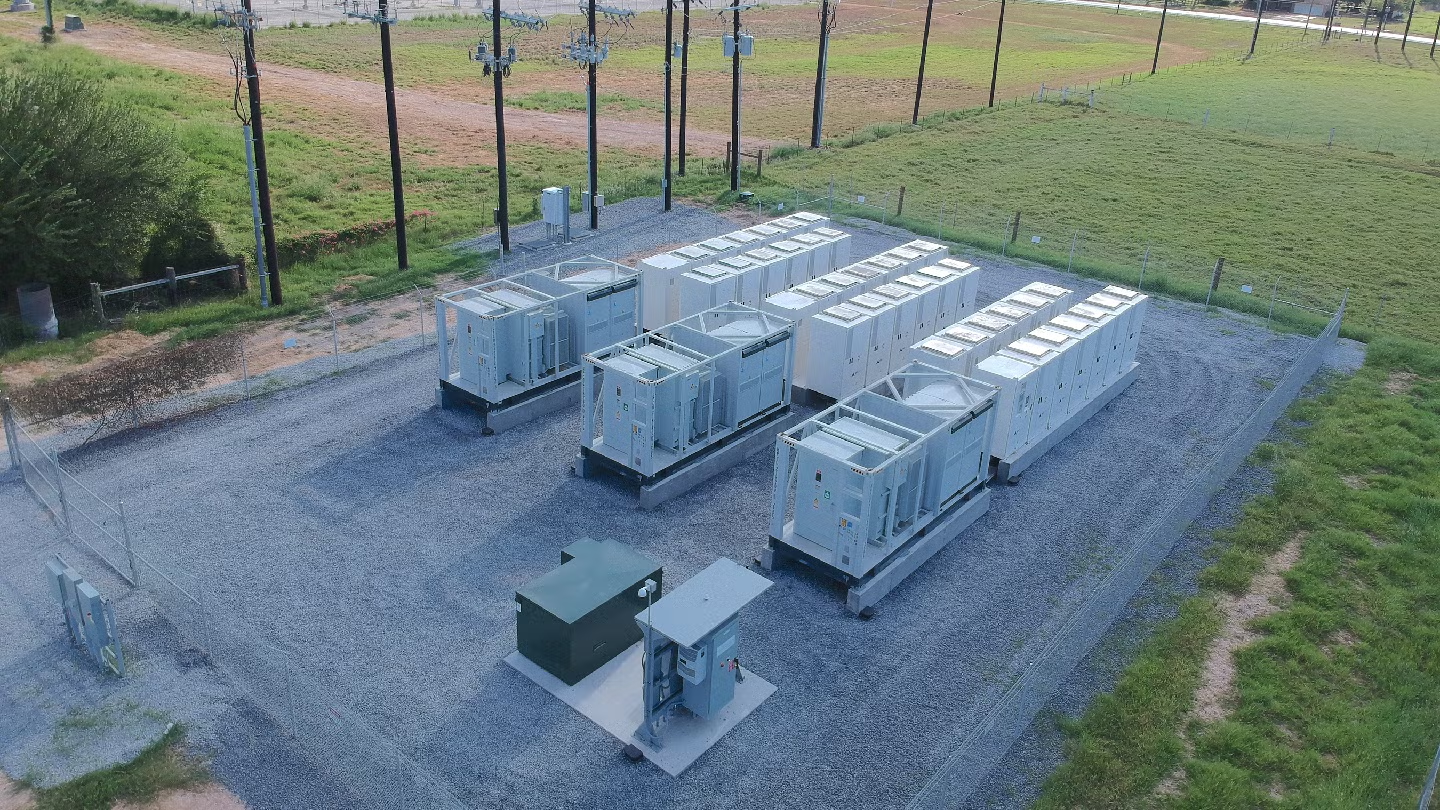
ABO Energy has sold a hydrogen project at Hünfeld in Hesse to Tyczka Hydrogen, comprising a 5 MW electrolyser, a hydrogen refuelling station and a trailer filling station. Terms were not disclosed. The plant has produced RNFBO-certified green hydrogen for fuel cell buses and lorries since August 2025, generating up to 450 tonnes a year from wind and solar power, and received TÜV certification under the CertifHy EU RNFBO Voluntary Scheme in July 2025 as one of the first in Germany. The project received €12 million of public funding. It was sold roughly twelve months after commissioning.
What did Tyczka Hydrogen acquire?
Tyczka acquired the complete Hünfeld hydrogen hub: a 5 MW electrolyser, a 350-bar refuelling station and a trailer filling station, together with the operating asset's certification and offtake to fuel cell buses and lorries. Output runs to approximately 450 tonnes of hydrogen a year, which at typical electrolyser efficiency of around 50 kWh per kilogram implies roughly 22,500 MWh of electricity consumption and a utilisation rate near 50 percent. Terms were not disclosed. ABO Kraft & Wärme has managed operations since the plant opened, and the transaction transfers a fully commissioned, certified and revenue-generating facility rather than a project under development.
What is an RNFBO certification, and why does it matter?
RNFBO stands for Renewable Fuel of Non-Biological Origin, the European Union classification for hydrogen and derived fuels produced from renewable electricity under strict rules on additionality, temporal correlation and geographic correlation between the power source and the electrolyser. Certification under a scheme such as CertifHy is what allows the hydrogen to count towards EU renewable transport and industry targets, and therefore what allows an offtaker to pay a premium for it rather than treating it as ordinary industrial gas. Hünfeld received that certification in July 2025 and was among the first plants in Germany to do so. For a buyer, the certification is a substantial part of what is being acquired, because replicating it requires the same demonstrable link between renewable generation and production.
Why sell a plant that is already working?
Because ABO Energy is a developer, not a hydrogen operator, and it is under financial pressure. The company has been pursuing a restructuring and financing solution with its lenders, having entered a standstill agreement, commissioned a restructuring report and appointed a chief restructuring officer, and has spent 2026 selling assets: its Greek subsidiary, most of its Finnish wind pipeline, and its Polish and Hungarian subsidiaries with roughly 2 GW of pipeline to PPC. Hünfeld belongs to the same programme. Managing director Karsten Schlageter framed the sale around having realised a complex project from planning through construction and commissioning, and having found a strong buyer, which is the accurate description of a developer completing its role. Running a refuelling network for bus and lorry fleets is an industrial gas business, and Tyczka is an industrial gas company.
Enerdatics' data shows how thin the surrounding market is. The €12 million of public funding from the German Federal Ministry for Digital and Transport Affairs, supplemented through the NextGenerationEU Recovery and Resilience Facility, works out at €2.4 million per MW of electrolyser capacity from grants alone, or roughly €27,000 for each tonne of first-year production capacity. Hydrogen dealmaking has contracted sharply across Europe over the same period in which biomethane has kept transacting through every phase of the rate and policy cycle, sustained by a product that drops into existing gas grids with no new demand infrastructure required. Hydrogen mobility has the opposite problem: every tonne requires a refuelling station and a fleet built to use it, which is precisely why 450 tonnes a year represents a meaningful German asset rather than a rounding error.
What does the deal signal for German hydrogen?
The deal signals that Germany's first generation of grant-funded hydrogen mobility projects is reaching the point where ownership separates from development. Public money financed demonstration at a scale no commercial case would have supported, and those assets now need owners whose business is distributing industrial gas to fleet customers rather than building energy infrastructure. Expect more transfers of this kind as the National Innovation Programme cohort completes commissioning, and expect the buyers to be gas and logistics specialists rather than renewable developers or infrastructure funds.
The open question is what happens to the subsidy obligations. Grants of this type typically carry conditions on operating period, use and ownership, and a change of control within twelve months of commissioning would ordinarily require consent from the funding bodies. Neither party has disclosed how that was handled, nor whether any portion of the €12 million remains at risk. For anyone assessing comparable German hydrogen assets, that is the term that matters most, because it determines whether a certified, operating plant can actually be traded or whether the subsidy effectively locks the original owner in place.
Key takeaways
- ABO Energy sold its Hünfeld hydrogen project in Hesse to Tyczka Hydrogen, comprising a 5 MW electrolyser, a 350-bar refuelling station and a trailer filling station. Terms were not disclosed.
- The plant has produced RNFBO-certified green hydrogen since August 2025 at up to 450 tonnes a year, implying roughly 22,500 MWh of electricity consumption and around 50 percent utilisation.
- It received TÜV certification under the CertifHy EU RNFBO Voluntary Scheme in July 2025, among the first plants in Germany to do so.
- The project received €12 million of public funding through Germany's National Innovation Programme for Hydrogen and Fuel Cell Technology and the NextGenerationEU Recovery and Resilience Facility, equivalent to €2.4 million per MW of electrolyser capacity.
- The sale forms part of ABO Energy's wider disposal programme alongside its Greek subsidiary, most of its Finnish wind pipeline and its Polish and Hungarian subsidiaries, conducted while the company pursues a restructuring with its lenders.
Frequently asked questions
How much did Tyczka Hydrogen pay for the Hünfeld plant?Terms were not disclosed. For context, the project received €12 million of public funding, equivalent to €2.4 million per MW of electrolyser capacity or roughly €27,000 for each tonne of annual production capacity, so grant support alone was substantial relative to the size of the asset.
What is RNFBO-certified hydrogen?RNFBO stands for Renewable Fuel of Non-Biological Origin, the EU classification for hydrogen produced from renewable electricity under rules governing additionality and the temporal and geographic link between the power source and the electrolyser. Certification allows the hydrogen to count towards EU renewable transport and industry targets.
How much hydrogen does the Hünfeld plant produce?The 5 MW electrolyser produces up to 450 tonnes of hydrogen a year, supplying a 350-bar refuelling station and a trailer filling station serving fuel cell buses and lorries. The electricity is sourced from wind and solar farms.
Ready to get deal-ready answers in seconds? Try Enerdatics Leap AI and access verified intelligence across M&A, financings, PPAs, projects, and energy market developments through natural language.
.jpeg)
.jpeg)