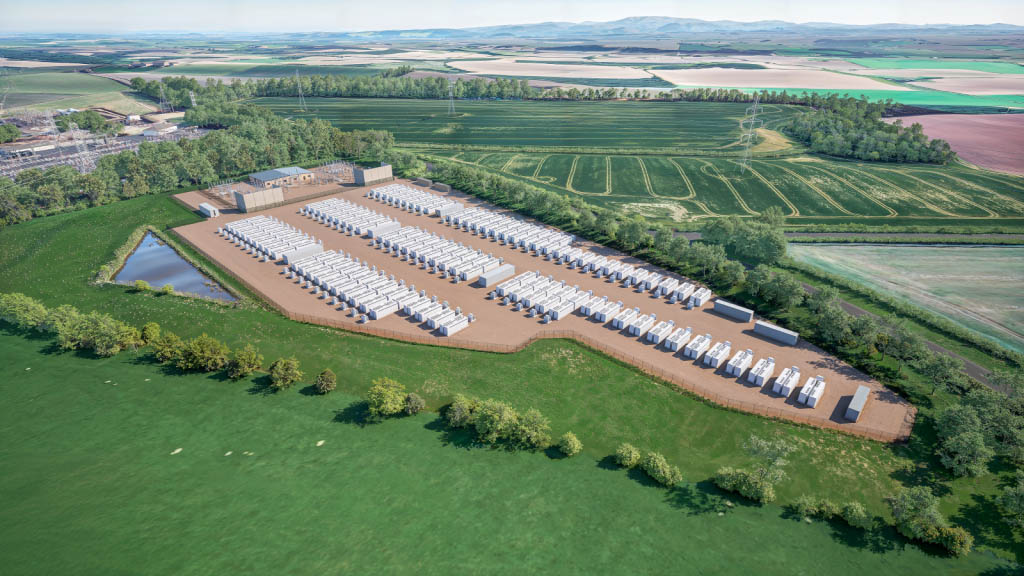
Treaty Oak Clean Energy started building two solar projects in Louisiana in 2025. Its banks arrived in January 2026 with $809 million. Its tax equity investor arrived this autumn with $430 million, by which point both plants were most of the way built. The order looks backwards. It is the reason one of the loans written in January was designed to disappear.
Key takeaways
- Treaty Oak Clean Energy raised $430 million of tax equity from RBC Capital Markets for the Beekman and Hollis Creek solar projects in Louisiana, announced on 19 November 2026, with commitments closing in September 2026 for Beekman and October 2026 for Hollis Creek.
- Beekman Solar is a 206.8 MWdc and 185 MWac project in Morehouse Parish, Louisiana, and Hollis Creek Solar is a 220 MWdc and 200 MWac project in Sabine Parish, a combined 385 MWac that began construction in 2025 with commercial operations scheduled for the first half of 2027.
- The tax equity follows $809 million of construction financing closed in January 2026, split as $410 million against Beekman and $399 million against Hollis Creek, from SMBC, ING Capital, Credit Agricole, MUFG and National Australia Bank.
- The Beekman package reached financial close on 20 November 2025 and was structured as non-recourse senior secured credit facilities comprising a construction-to-term loan, a tax credit bridge loan and letter of credit facilities.
- At $430 million against 385 MWac the tax equity prices at about $1.12 million per MWac, and it is the eighth largest disclosed tax equity investment in US solar that Enerdatics records since the start of 2024.
What does a tax equity investor actually buy?
Not electricity. Tax equity is capital contributed to a project company in exchange for an allocation of the federal tax benefits the project produces, principally the investment or production tax credit and accelerated depreciation, rather than for a share of the power revenue. The investor is buying a tax position, and it can only use that position once there is a plant.
That is why the money cannot arrive early. Federal credits attach to a project placed in service, so an investor funding at the start of construction would be paying for benefits that do not yet exist and might never exist if the build fails. RBC committed to Beekman in September 2026 and to Hollis Creek a month later, against commercial operations due in the first half of 2027. On a build that started in 2025, that is the last layer of the capital stack arriving once most of the risk it is priced against has already been retired.
Treaty Oak has assembled that stack in public. A $300 million development facility from SMBC, Nomura and ING in July 2025, the two project debt packages in January 2026, and now the tax equity: three kinds of capital for one 385 MWac buildout.
Why did the banks fund ten months before the tax equity?
Because one of the loans they wrote was standing in for the tax equity. Enerdatics' record of the $410 million Beekman package describes a tax credit bridge loan inside it, alongside the construction-to-term loan and the letters of credit. A bridge of that kind is advanced by the lenders against a tax equity investor's committed future contribution, and it is repaid out of that contribution rather than out of the project's revenue.
Someone has to pay the contractors between the first module and commercial operation. The tax equity investor will not, so the banks do it and take the credit risk on the investor's commitment in the meantime. The structure is now common enough to shape how packages are read: in Panamint Capital's $1.8 billion Texas solar debt, the bridge components accounted for just under 59 percent of everything raised.
Seen that way, January and November are not two events ten months apart. They are two halves of one arrangement, and the November half is the cash that lets the January half shrink.
Does $1.24 billion of commitments mean $1.24 billion of capital?
Add the construction financing to the tax equity and the two projects carry about $1.24 billion of commitments between them. That is the figure on the record, and it is the right figure for what has been committed. It is the wrong figure for what will sit against the projects once they operate, because the bridge is repaid by the tax equity. To the extent the January facilities included a bridge, the two numbers describe the same dollars twice.
The denominator needs the same care. A solar project carries two ratings. MWdc is the nameplate rating of the modules, and MWac is what the inverters can export to the grid. Beekman and Hollis Creek are 426.8 MWdc against 385 MWac, a ratio of about 1.11, so the choice moves any per-megawatt figure by a tenth before anything else happens.
What survives both problems is the tax equity itself, which is a single clean number against a single clean capacity. At about $1.12 million per MWac it is a large ticket for 385 MWac of solar, and the size tells you the credits being monetised are worth more than the panels. The other thing that survives is the stage. Both projects hold executed interconnection agreements with MISO, J1851 for Beekman and J1673 for Hollis Creek, which is the step that late-stage MISO portfolios wait years to reach. Treaty Oak passed it before the bank debt closed.
Enerdatics records 66 tax equity investments into US solar since the start of 2024, of which 48 disclose an amount, totalling $11.64 billion. Eight of those 48 are $430 million or larger, which puts this transaction eighth, behind ENGIE's $1 billion raise from JP Morgan, Goldman Sachs and BNP Paribas in February 2024, Copia Power's $890 million from Wells Fargo for Maricopa, and five others including Greenbacker's $440 million for Cider Solar.
What does the deal signal for US solar tax equity?
That the binding constraint on a project of this size is the tax credit market rather than the loan market. Five international banks were willing to write $809 million against two Louisiana solar projects in a single week in January, and the asset was fully permitted and interconnected when they did. The piece that took another ten months was the party monetising the credits, and that party sets the date on which the bank exposure comes down.
The second signal is about what counts as contracted revenue. Treaty Oak's long-term agreement with Meta Platforms covers the environmental attributes the two projects produce, which is what the record describes rather than a tariff for the electricity. Lenders underwrote that, and a tax equity investor has now underwritten the federal credits on top.
Frequently asked questions
How much tax equity did Treaty Oak raise and from whom?$430 million from RBC Capital Markets, announced on 19 November 2026. Commitments closed in September 2026 for Beekman Solar and in October 2026 for Hollis Creek Solar.
How large are the Beekman and Hollis Creek solar projects?Beekman is 206.8 MWdc and 185 MWac in Morehouse Parish, Louisiana. Hollis Creek is 220 MWdc and 200 MWac in Sabine Parish. Together they are 385 MWac, both in construction since 2025 and both due to operate in the first half of 2027.
What is a tax credit bridge loan?A loan advanced by construction lenders against a tax equity investor's committed future contribution. It funds the build before the investor pays in, which the investor will not do until the project is placed in service and the federal credits become usable, and it is repaid from that contribution rather than from project revenue.
Ready to get deal-ready answers in seconds? Try Enerdatics Leap AI and access verified intelligence across M&A, financings, PPAs, projects and energy market developments through natural language.