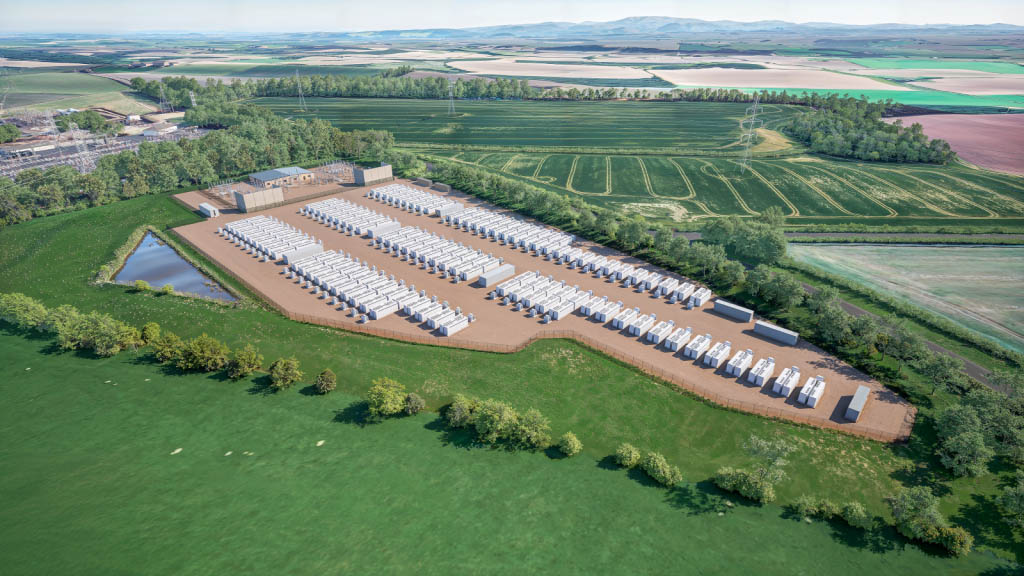
CleanCapital has bought three small solar projects in California's Central Valley. The customers are a water treatment plant and two irrigation districts. Between them the three sites hold 7.83 MWh of battery storage, and all of it sits on the smallest project of the three. Nobody announced the transaction at all.
Key takeaways
- CleanCapital acquired a portfolio of about 13 MW of solar and 7.83 MWh of battery storage in California from White Pine Renewables, announced on 12 November 2026 with no disclosed consideration.
- Enerdatics traced the assets from their power capacities, ownership structures and lifecycle stages, despite no public disclosure by the buyer or the seller.
- The portfolio is three behind-the-meter projects: a 2.7 MW array with a 2 MW and 7.83 MWh battery at the Dr Joe Waidhofer Water Treatment Plant in San Joaquin County, a 5.02 MW array at Westley in Stanislaus County, and a 5.05 MW array on Homestead Road.
- Each project supplies its host under a Solar Power Services Agreement, with the Stockton East Water District project offsetting Pacific Gas and Electric purchases under California's Net Billing Tariff, and all three received CEQA exemptions in late 2025.
- Enerdatics records 150 US distributed generation solar transactions since the start of 2024, of which 17 carry a disclosed value, at a median of about $0.93 million per MW in 2025.
Why does a water district own a solar farm instead of signing a power contract?
Because it is not buying power in the usual sense. A Solar Power Services Agreement is a contract under which a third party builds, owns and operates a generator on the customer's own site and sells the output to that customer directly, behind the meter. Behind the meter means the electricity never travels on the distribution network: it goes from the array to the load next to it, and only the surplus or the shortfall touches the utility.
For a water district, that fits the physical plant. The load at Westley is the district's pumping stations, main canal system and maintenance facility, and at Banta Carbona it is the existing pumping facilities. These are large, fixed loads on land the district already owns, which is the ideal host for a ground-mounted array of roughly 27 and 36 acres.
It also explains the sizes. None of the three projects is sized to a market; each is sized to a customer, which is why a 13 MW portfolio arrives as three arrays between 2.7 MW and 5.05 MW. The same logic produced Standard Solar's 43 MW Illinois portfolio of thirteen separate projects, where cost per MW rises as project size falls because permitting and commissioning do not scale down with capacity.
Why is all the storage on the smallest project?
The record does not say, but the economics point one way. California retired net metering for new systems and replaced it with the Net Billing Tariff, which credits exported solar at a value close to what the grid is worth at the hour of export rather than at the retail rate the customer pays. Under that regime the money is in self-consumption, not in export, and a battery is what converts midday generation into power the host uses after dark.
The storage sits at the Dr Joe Waidhofer Water Treatment Plant, paired with the 2.7 MW array, at 2 MW and 7.83 MWh. That is close to four hours of duration, which is the configuration built for shifting a full afternoon of output into the evening. Battery duration is energy capacity divided by power capacity, and it determines how long an asset can sustain its rated output.
The two irrigation district sites have no storage at all. A treatment plant runs continuously, while canal pumping is seasonal and concentrated in daylight hours, when an unassisted array already matches the load. Across the portfolio the ratio is about 0.6 MWh of storage per MW of solar, but that average describes nothing real: one project is a four hour hybrid and two are plain solar.
What is CleanCapital buying these small portfolios with?
Platform debt, on Enerdatics' reading. CleanCapital secured a $300 million HoldCo facility from Infranity in January 2026 to fund development, construction, acquisition and operation of distributed solar and storage, and Enerdatics believes proceeds from that facility may have funded this acquisition. HoldCo debt sits at the holding company rather than against individual assets, which is what makes a stream of sub-20 MW purchases practical: each one is too small to carry its own financing process.
The buying pattern supports that reading. Enerdatics records five CleanCapital portfolio acquisitions since December 2024: 22.7 MW from Kendall Sustainable Infrastructure, 27.3 MW from Pacifico Energy, 51.2 MW from Greenbacker Capital, 20.09 MW of pre-notice-to-proceed Massachusetts solar from ReWild Renewables, and now 14.7 MW from White Pine. The average is about 27 MW, and only one carries a disclosed price, the Greenbacker portfolio at $46.1 million, or about $0.90 million per MW.
The same period contains transactions in the opposite direction, an order of magnitude larger. CleanCapital sold a 340 MW portfolio to Manulife Investment Management in December 2024 for $145 million, about $0.43 million per MW, and sold a 120 MW Ohio development project to Energix Renewables in April 2026 to concentrate development resources on distributed-scale solar and storage. It buys in tens of megawatts and sells in hundreds.
Enerdatics records 150 US distributed generation solar transactions since the start of 2024 and 17 of them carry a disclosed value, barely one in nine. The median priced deal ran at about $0.83 million per MW in 2024 and about $0.93 million per MW in 2025, on five and seven observations, so those medians describe the shape of the market rather than its level. This transaction is not one of the seventeen.
What does the deal signal for US distributed solar?
That the public-sector host is now a standard counterparty in this market, and a quiet one. Water and irrigation districts have the three things a behind-the-meter developer needs: land, a steady load and a long institutional life. What they do not have is a reason to announce a change of owner, which is why this transaction reached the record only because the assets were traced to it.
The second signal is where the value sits in a deal this size. Three CEQA exemptions, three signed services agreements and three connections to PG&E's system are the product. A buyer with platform debt and an operating team can acquire that bundle repeatedly without running a financing process each time, and the price it pays stays invisible. In US distributed solar, who keeps transacting is observable. What they pay is not.
Frequently asked questions
What did CleanCapital buy from White Pine Renewables?Three behind-the-meter California projects totalling about 13 MW of solar and 7.83 MWh of storage: 2.7 MW with a 2 MW battery at the Dr Joe Waidhofer Water Treatment Plant, 5.02 MW at Westley and 5.05 MW on Homestead Road. No consideration was disclosed.
What is a Solar Power Services Agreement?A contract under which a third party builds, owns and operates a solar system on a customer's site and sells the output to that customer behind the meter. The host pays for power rather than for the equipment, and the owner keeps the asset and its tax benefits.
What is California's Net Billing Tariff?The successor to net metering for new California systems. It credits exported solar close to the value of grid power at the hour of export rather than at the retail rate, shifting the economics from export toward self-consumption, which is why storage appears alongside behind-the-meter solar.
Ready to get deal-ready answers in seconds? Try Enerdatics Leap AI and access verified intelligence across M&A, financings, PPAs, projects and energy market developments through natural language.