Sumitomo’s Belgian Offshore Wind Exit Signals a Shift Toward Operator-Led Asset Consolidation
.png)
Sumitomo’s exit from three Belgian offshore wind farms marks a clear shift in offshore wind M&A: passive minority exposure in mature assets is being recycled, while operators and local institutional capital are consolidating ownership around projects they already understand, control, or can politically anchor. The commercial significance is not simply that 600 MW of offshore wind capacity changed hands. It is that Sumitomo is using operating offshore wind assets as a source of capital rotation, while JERA Nex bp and Belgian investors are using the same assets to deepen long-term control in a proven North Sea market.
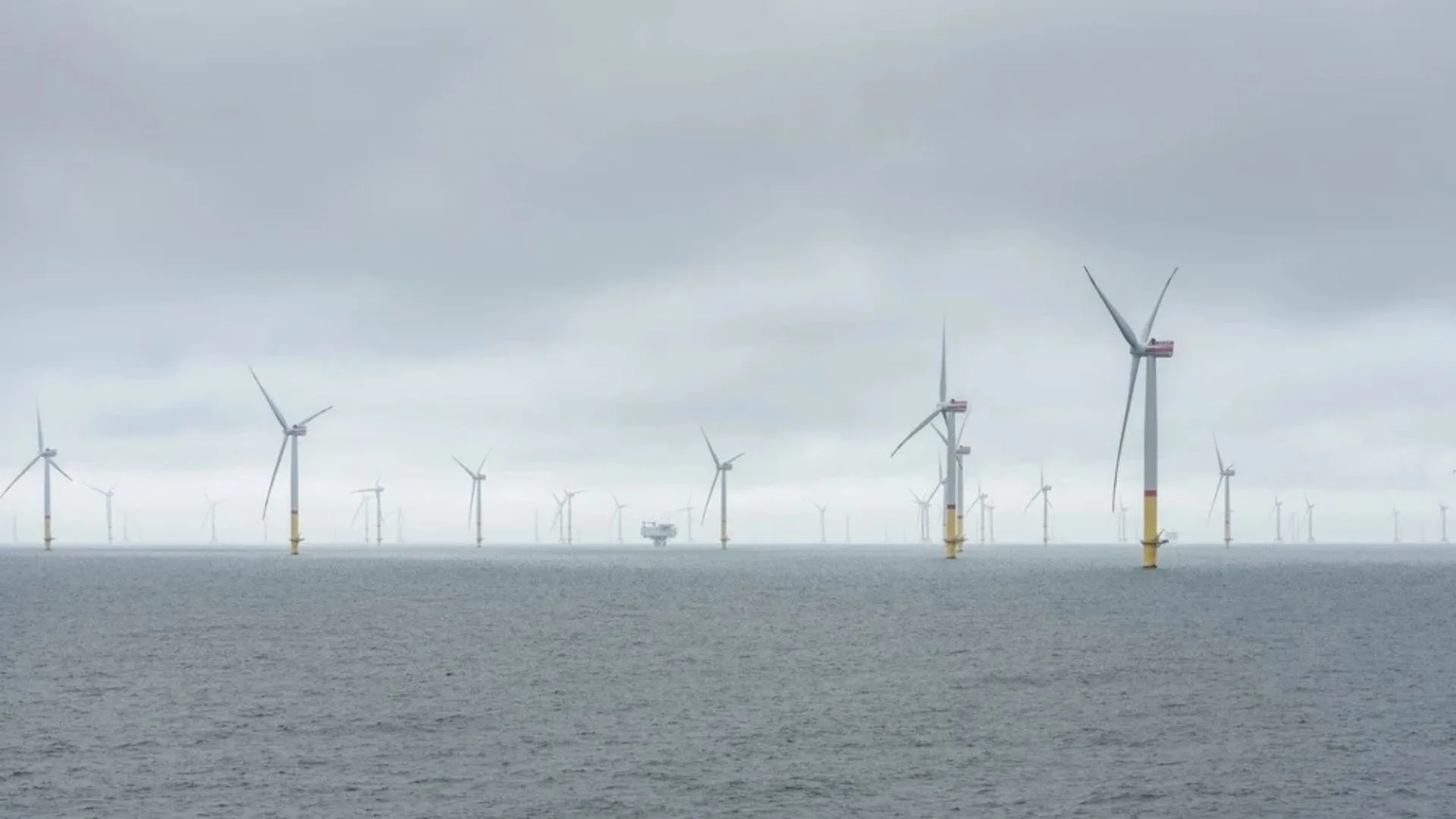
Sumitomo Corporation is selling its interests in the 216 MW Northwind, 219 MW Northwester 2, and 165 MW Nobelwind offshore wind farms off Belgium, representing 600 MW of total installed capacity. The company joined Northwind in 2013, Nobelwind in 2014, and Northwester 2 in 2018, meaning the sale is not an early-stage development exit but a monetization of long-held operational exposure. Sumitomo said the divestment forms part of portfolio transformation through strategic asset rotation, with proceeds being reallocated toward growth areas.
The buyer behavior is split across two distinct capital pools. JERA Nex bp has acquired Sumitomo’s 30% stake in Northwester 2 and 39.02% stake in Nobelwind, raising its ownership in Northwester 2 to 100% and Nobelwind to 80.1%. That matters commercially because JERA Nex bp already operates both projects from Ostend and knows the technical, operational, grid, and revenue profile of the assets. This is not a new-market entry bet; it is an operator increasing control over assets where it already has execution knowledge and operational leverage.
Northwind follows a different but equally important pattern. Sumitomo’s stake in the 216 MW project is being sold to a consortium of Belgian investment firms, with completion expected during Japan’s 2026 fiscal year, subject to regulatory clearance. That buyer profile points to another offshore wind ownership trend: mature domestic offshore assets are increasingly attractive to local institutional and quasi-institutional investors seeking stable infrastructure exposure, national energy-transition alignment, and long-duration cash flows rather than development upside.
The transaction also shows how capital rotation is becoming a more disciplined tool for offshore wind investors. Sumitomo is not exiting a distressed construction asset or abandoning a speculative pipeline. It is selling stakes in operating projects commissioned between 2014 and 2020, including Nobelwind, which came online in 2017, and Northwester 2, which was commissioned in 2020. Mature offshore wind assets are increasingly being treated as balance-sheet capital that can be harvested once the construction, commissioning, and early operational risks have passed.
For JERA Nex bp, the acquisition strengthens control in a Belgian portfolio that sits at the intersection of operational familiarity and strategic offshore wind scale. The company was formed as the offshore wind joint venture between JERA and bp, and Belgium became strategically relevant after JERA’s acquisition of Parkwind. Parkwind was part of the original development ecosystem behind Nobelwind and Northwester 2, which means the buyer is consolidating within an asset base linked to its inherited operating platform rather than adding unrelated capacity.
The pricing signal is also important, even though no transaction value was disclosed. The absence of disclosed consideration does not weaken the market signal; it shifts the interpretation from headline valuation to control value. JERA Nex bp is buying out minority stakes in assets it operates, lifting ownership to full control in Northwester 2 and a dominant 80.1% position in Nobelwind. In offshore wind, where operational availability, maintenance planning, debt structures, and route-to-market optimization are central to equity returns, control can be worth more than passive exposure.
Enerdatics’ broader European M&A data shows why this kind of transaction fits the current market. Europe recorded $7B of renewable energy M&A in Q3 2025, with buyers increasingly prioritizing grid-connected, operational, and de-risked assets. Enerdatics also observed that operational renewable assets in Europe continue to command stronger buyer attention because investors are placing premiums on tariff-backed or contracted cash flows, grid access, and reduced construction risk.
The deal sits within that wider capital discipline. Offshore wind investors have become more selective after years of cost inflation, supply-chain pressure, and project write-downs across the sector. Buyers are less willing to pay for abstract offshore wind growth and more willing to pay for assets with operating history, known turbines, existing grid connection, and a proven route to cash generation. Northwind, Nobelwind, and Northwester 2 all meet that profile.
For sellers, the implication is clear: mature minority stakes in offshore wind farms can provide liquidity without forcing a broader market exit. Sumitomo’s sale shows how diversified energy and trading groups can recycle capital from stabilized infrastructure positions into higher-growth areas while avoiding the execution risk of new offshore developments. Minority shareholders in other operational offshore wind projects may view this as evidence that exits remain available, especially where an operator, strategic shareholder, or domestic infrastructure investor has a natural reason to increase exposure.
For buyers, the implication is different. The strongest position belongs to investors with operational adjacency. JERA Nex bp’s advantage was not just appetite for offshore wind; it was existing operational control and asset-level knowledge. That reduces diligence friction and allows the buyer to underwrite value from control, operational optimization, and portfolio simplification. Local Belgian investors, meanwhile, benefit from acquiring exposure to proven domestic offshore infrastructure rather than taking construction-stage risk.
The forward-looking signal is that European offshore wind M&A is likely to become more ownership-consolidation driven than pipeline-expansion driven. Operators will continue buying out minority shareholders where they can simplify governance and capture more of the asset economics. Financial and local institutional investors will compete for operating stakes where cash-flow visibility is strong. Developers and trading houses holding non-core minority positions may use this window to recycle capital, especially as offshore wind investment shifts toward balance-sheet discipline, not just capacity growth.
Sumitomo’s Belgian offshore wind sale therefore proves a sharper market shift: offshore wind capital is moving from broad exposure to selective control. The next wave of deals will likely favor assets that are already built, already connected, and already operated by buyers that can extract more value from ownership concentration than a passive investor can from holding a minority stake.
Ready to get deal-ready answers in seconds? Try Enerdatics Leap AI and access verified intelligence across M&A, financings, PPAs, projects, and energy market developments through natural language.