OX2’s 230-MW Victoria Solar Deal Shows Australia’s Shift Toward Subsidy-Backed Hybrid Renewables M&A
.png)
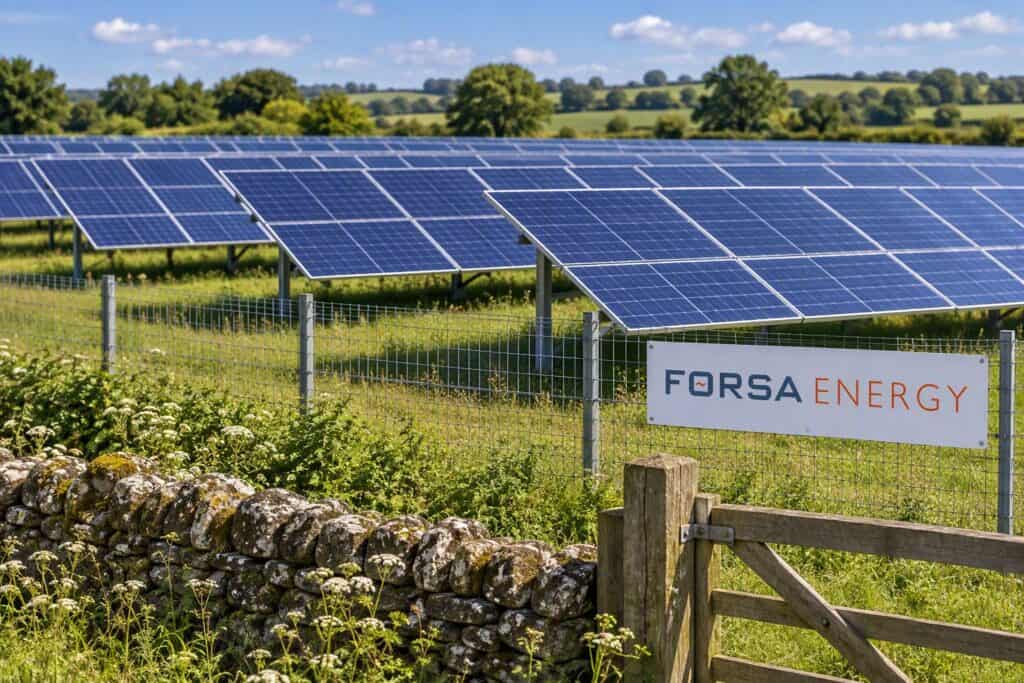
Australia’s solar M&A market is shifting toward de-risked hybrid projects where buyers can combine permitted solar capacity, battery dispatch optionality, and government-backed revenue visibility. OX2’s acquisition of the 230-MW Corop solar farm and 290-MW battery project in Victoria shows how international developers are no longer simply buying pipeline scale; they are targeting assets that already have permits, advanced grid-connection progress, and policy support under the Capacity Investment Scheme.
The Corop project, located near Rushworth and Stanhope around 157 km north of Melbourne, gives OX2 a late-stage solar-plus-storage asset in one of Australia’s most active renewable energy investment regions. The solar component is sized at 230 MW, while the co-located battery is planned at 290 MW with up to four hours of discharge duration. That storage configuration is commercially important because it shifts the asset from a pure generation project into a flexible capacity product capable of responding to evening demand, grid volatility, and system reliability needs.
The transaction value was not disclosed, but the pricing signal is visible in the asset profile. OX2 is buying a project with all development permits in place, a well-advanced grid-connection process, and successful participation in Australia’s federal Capacity Investment Scheme. In the current market, those attributes are increasingly the difference between a speculative development pipeline and a financeable infrastructure asset.
For OX2, the acquisition expands an Australian portfolio already spanning Victoria, New South Wales, and Queensland across solar and storage. The deal also follows its move in May to begin construction of the 135-MW Muswellbrook solar farm with 100 MW of battery storage in New South Wales. Together, the two projects indicate a clear execution strategy: build a portfolio of hybrid assets that can move from development into construction with stronger revenue certainty and grid relevance.
The commercial logic is straightforward. Australia’s renewable buildout is no longer being valued only on installed solar megawatts. Buyers are assigning greater strategic value to projects that can provide firming, capture price spreads, and qualify for policy-backed capacity payments or support mechanisms. A solar project with a four-hour battery is better positioned than standalone PV to manage curtailment risk, participate in flexible dispatch, and support grid reliability as coal retirements and renewable penetration reshape the National Electricity Market.
Enerdatics data has already pointed to this shift across APAC. In Q3 2025, Australia stood out as the region’s bright spot for renewable energy M&A, with investor activity concentrated across solar, wind, and storage developers while broader APAC solar activity softened. The same dataset showed BESS activity remaining consistent quarter-over-quarter, with deals targeting de-risked two-to-four-hour systems across markets such as New South Wales and Western Australia. OX2’s Corop acquisition fits directly into that pattern, but with Victoria now reinforcing its role as a core hybrid investment market.
The buyer behavior shift is also notable. International developers and infrastructure-backed platforms are using acquisition-led growth to secure late-stage hybrid projects before construction competition intensifies. Rather than waiting for assets to reach operation, buyers are stepping in once permits, grid progress, and policy support create enough visibility to underwrite the next phase. That gives acquirers earlier control over project design, procurement, financing, and route-to-market strategy.
For sellers and local developers, the implication is clear. Early-stage solar pipelines without grid clarity or storage integration will face a tougher buyer pool. Projects that can demonstrate development maturity, co-location potential, CIS eligibility, and credible construction timelines will command stronger interest. The market is rewarding execution readiness more than raw pipeline volume.
For buyers, the Corop deal shows that Australia’s most attractive renewable targets are becoming multi-revenue assets. Solar generation provides scale, storage provides flexibility, and government support improves bankability. The combination reduces dependence on merchant solar capture prices while giving the project access to capacity-style revenue opportunities.
The forward-looking signal is that Australian renewable M&A will increasingly cluster around solar-plus-storage and wind-plus-storage assets with permits, grid access, and policy-backed revenue support. OX2’s acquisition is not just another solar project purchase; it is evidence that hybrid readiness is becoming the new entry standard for serious capital in Australia’s renewables market.
Ready to get deal-ready answers in seconds? Try Enerdatics Leap AI and access verified intelligence across M&A, financings, PPAs, projects, and energy market developments through natural language.