Actis’ Klara Renewables Deal Signals a New Hybrid Platform Play in Poland’s Energy M&A Market
.png)
Poland renewable energy M&A is shifting from single-technology asset buying toward platform creation around grid-connected operating portfolios with hybridisation upside. Actis’ acquisition of Klara Renewables from CVC DIF shows that infrastructure investors are no longer simply buying installed wind capacity; they are buying contracted operating assets, existing grid access, and the option to layer solar PV and BESS onto proven sites. The commercial importance is clear: in a market still reliant on coal for more than half of power generation, control over operating renewable capacity and expandable grid connections is becoming a platform-scale advantage.
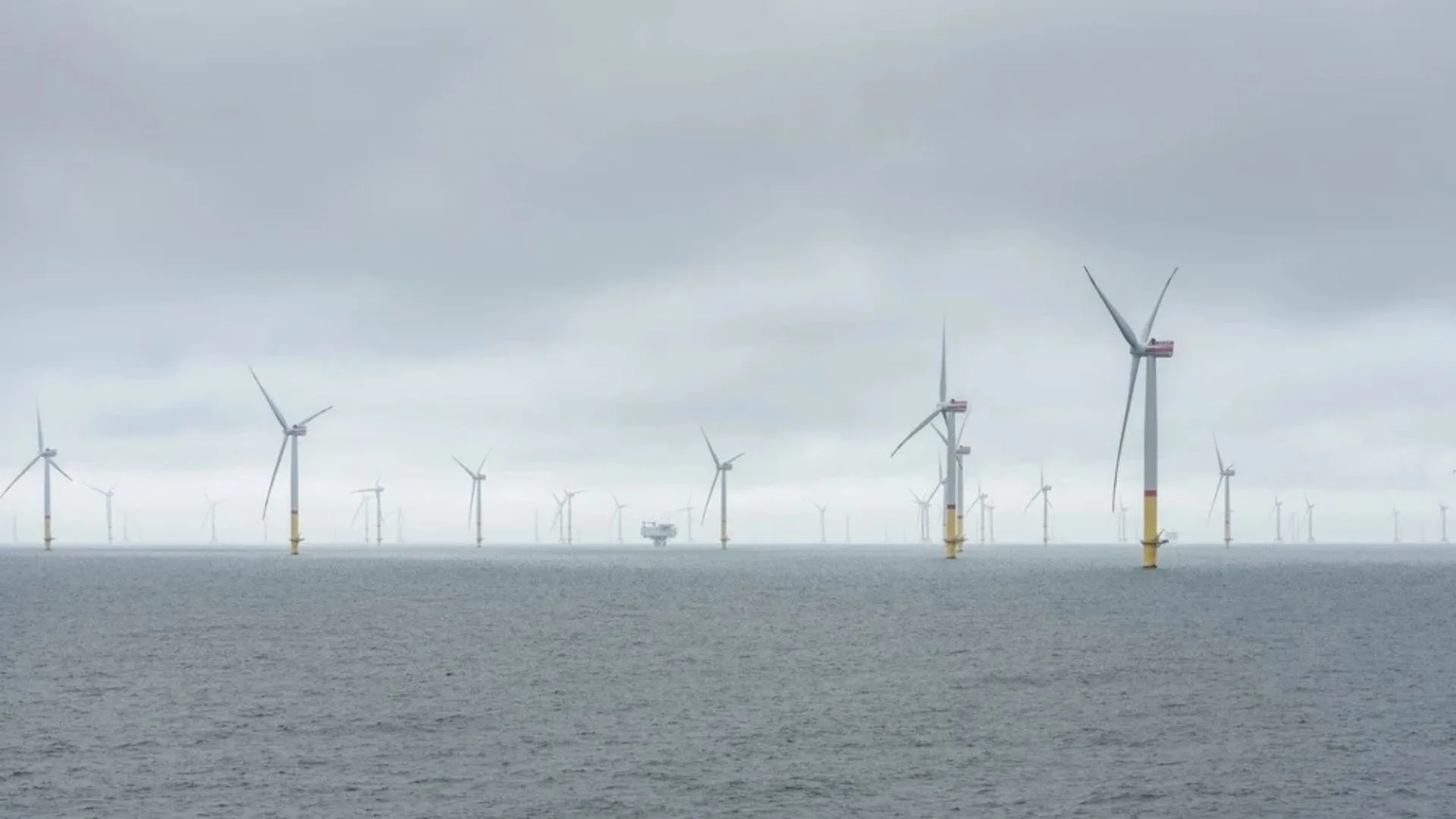
The seed asset is a 171MW operating onshore wind portfolio spread across Poland, including three projects in Wielkopolska, two in Kujawy-Pomorze, and one in Podlasie. The assets are backed by Contracts for Difference running to 2038–39 and use Vestas turbine technology, giving Actis long-term contracted revenue visibility rather than pure merchant exposure. That revenue structure matters because it lowers the risk profile of the initial acquisition while creating a base from which Actis can scale into a 1.5GW platform across onshore wind, solar PV, and battery storage.
The more important number in the deal is not only the 171MW of operating wind capacity. It is the approximately 275MW of hybridisation potential through co-located solar PV and BESS. That is the part of the transaction that signals the market shift. Actis is acquiring a live cash-flowing portfolio, but the upside sits in using existing grid connections to add flexible and complementary generation capacity. In grid-constrained European markets, that turns old-style operating wind ownership into a broader land, grid, and route-to-market strategy.
This follows a wider European M&A pattern identified by Enerdatics: investors are moving toward BESS and hybrid renewable platforms in markets where policy frameworks can pair merchant upside with long-term revenue stability. Enerdatics expects strong BESS M&A momentum across Europe in 2026, with Poland, Italy, Germany, and Greece combining spot-price volatility, negative-pricing exposure, and policy support to make storage more investable. Poland’s €1B storage programme is specifically highlighted as a mechanism that can support capex subsidies and grid-connection upgrades for stand-alone BESS, helping create bankable, grid-ready storage assets.
Actis’ approach also mirrors the investor behaviour seen across Europe in 2025 and 2026: capital is favouring assets with grid access, contracted cash flows, and a credible path to storage or hybrid expansion. Enerdatics notes that Europe’s 2026 M&A momentum is being shaped by energy-market reforms and storage incentives, with policy frameworks in Poland, Germany, and Italy driving the next wave of BESS and hybrid investments. For Actis, Klara provides exactly that combination: operating generation, long-dated CfD support, regional diversification, and expansion potential through co-location.
The deal also extends Actis’ Central and Eastern Europe strategy beyond Rezolv Energy, which it launched in 2022 and has scaled to 2.3GW across Romania and Bulgaria. That track record matters commercially because Actis is not entering Poland as a passive asset owner. It is entering as a platform builder with experience aggregating large-scale clean power capacity in CEE markets. Klara becomes the Polish anchor for a second regional platform, with Actis targeting up to 1.5GW in total capacity.
For CVC DIF, the transaction represents a classic infrastructure exit from an operational renewables portfolio at a point where strategic buyers can underwrite both contracted cash flows and future grid-led expansion. Sellers holding operating wind portfolios in Poland may find a deeper buyer pool if their assets come with long-dated support schemes, proven equipment, and grid capacity that can support co-located solar or storage. Portfolios without hybridisation potential or clear grid expansion pathways may face weaker pricing tension.
The valuation signal is embedded in the asset profile rather than a disclosed transaction multiple. Long-dated CfDs through 2038–39 reduce revenue risk, while the 275MW of co-location potential gives Actis an embedded development option that would not be available in a plain operating wind acquisition. Enerdatics’ European valuation work shows that contracted wind assets and projects with revenue visibility command stronger pricing, while hybridisation through BESS co-location is attracting intense competition because it improves revenue capture, reduces curtailment risk, and increases grid utilisation.
For buyers, the implication is that Poland is becoming less of a pure greenfield development market and more of a grid-access consolidation market. The most attractive targets will be operational or late-stage assets with CfD, PPA, or capacity-backed revenue visibility, especially where existing grid connections can support battery storage or solar additions. For lenders, this creates a more financeable asset class: a contracted operating base with incremental capex tied to assets that can improve dispatch flexibility and hedge price volatility.
For developers and sellers, the pressure is different. Early-stage pipelines without grid certainty will be harder to monetise at premium levels, while portfolios with secured interconnection, hybrid-ready layouts, and established offtake will attract institutional capital. The Klara deal shows that buyers are willing to use operating wind as the foundation for multi-technology platforms, but only where the assets can be scaled, optimised, and integrated into a broader power-market strategy.
The forward signal is that Poland could see more platform-led M&A as infrastructure funds and strategic IPPs compete for scarce grid-connected assets. Actis has set a 1.5GW ambition from a 171MW operating base, which means follow-on acquisitions and late-stage development deals are likely to form the next phase of the strategy. In commercial terms, the winners in Poland will not simply be the owners of renewable MW. They will be the owners of grid positions that can convert operating wind portfolios into hybrid generation and storage platforms.
Ready to get deal-ready answers in seconds? Try Enerdatics Leap AI and access verified intelligence across M&A, financings, PPAs, projects, and energy market developments through natural language.