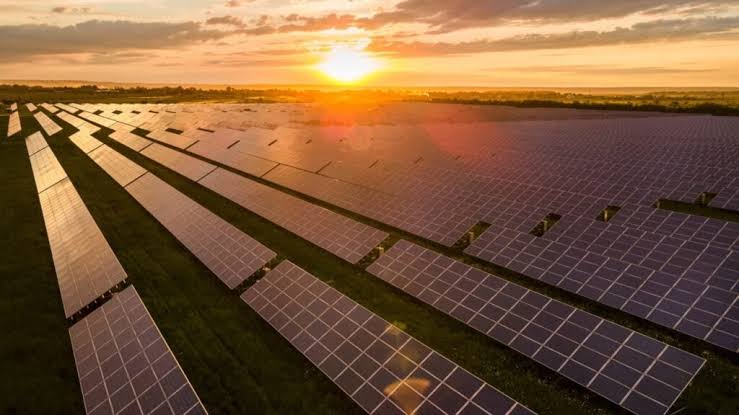
Portland General Electric has agreed to take ownership of two solar and battery projects in Oregon, eight days apart, for about $1.75 billion of its own capital. Together they add 399 MW of solar and 449 MW of four-hour storage. Neither project needs a new grid connection. That, rather than the land or the panels, is what the utility has been buying.
Key takeaways
- Portland General Electric entered a build-transfer agreement on 21 October 2026 for Salmonfly, a 199 MW solar facility with a co-located 199 MW and 796 MWh battery on the Confederated Tribes of Warm Springs Reservation in Jefferson County, Oregon, carrying about $853 million of expected investment.
- A second build-transfer agreement, surfaced on 29 October 2026, covers Biglow Optimization Phase 2, a 200 MWac solar facility with a 250 MW and 1,000 MWh battery in Sherman County, Oregon, carrying about $900 million of expected investment.
- Enerdatics identified both transactions from regulatory and reporting documents rather than company announcements, and names BrightNight as the seller of Salmonfly from an Oregon Public Utility Commission filing dated 21 October 2026.
- Salmonfly connects through an existing bay at the Round Butte 230 kV substation, avoiding a new interconnection substation, and Biglow Phase 2 uses spare capacity at Portland General's operating Biglow Canyon wind farm through a 2.7 mile 230 kV generation-tie line.
- Both batteries run exactly four hours, matching the 200 MW and 800 MWh Seaside project Portland General bought from Eolian in April 2023 for $360 million, which Enerdatics records at $1.8 million per MW.
Why would a utility pay for projects it could have queued itself?
Because the queue is the part it cannot buy its way through. Connecting a new generator requires a position in an interconnection queue, a study process that establishes what network upgrades the connection triggers and who pays for them. In most US markets that takes years, and a large share of applications are withdrawn before they finish. A project that already holds a connection, or can share one, holds the scarce item.
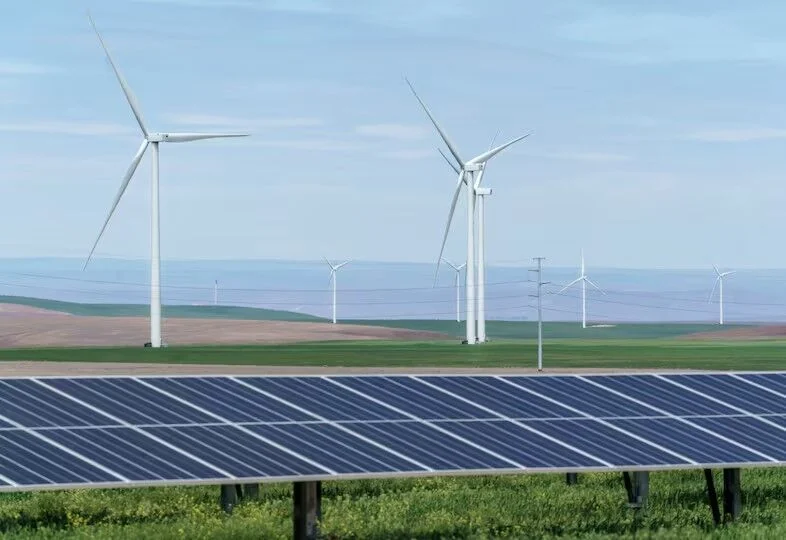
Both of these do. Biglow Canyon is an operating Portland General wind farm, and wind arrives in gusts rather than steadily, leaving the transmission behind it idle much of the year. Putting solar and a battery behind the same connection raises the utilisation of a line the utility already owns, which is why the record calls the project an optimisation rather than an expansion. Salmonfly does the same through a different door, using a bay the Confederated Tribes of Warm Springs already control at Round Butte, where the utility and the Tribes jointly own the Pelton Round Butte hydroelectric complex.
Read that way, these are not solar purchases with batteries attached. They are two interconnection positions with generation attached.
What does a build-transfer agreement give each side?
It splits the project's life where the risk changes character. Under a build-transfer agreement a developer builds a project and a pre-agreed buyer, usually a regulated utility, takes the finished asset at a price fixed before construction starts. The utility avoids development risk and owns a plant it can place in its rate base. The developer books a return on development and construction instead of on decades of operation. Enerdatics recorded the same structure from the developer's side when Deriva Energy borrowed $280 million to build an Oklahoma battery it hands to the local utility at completion.
Salmonfly's spending follows that logic, running at $78 million in 2026, $459 million in 2027, $222 million in 2028 and $94 million in 2029, concentrating almost two thirds of the cost in one construction year. BIGL 2, LLC, the entity developing Biglow Phase 2, may also construct and temporarily operate that facility on the utility's behalf before transfer. BIGL 2 is a BrightNight subsidiary, which is why Enerdatics assesses BrightNight as the likely seller of Biglow Phase 2 rather than a confirmed one. BrightNight appears in Enerdatics' records mainly as a recipient of capital, including $500 million from Global Infrastructure Partners in 2022, and it bought out Cordelio Power's share of their joint venture in April 2026, a transaction in which Biglow 1 was one of four assets the two still held together.
What is unusual about who ends up owning Salmonfly?
The ownership has an end date written into it. Portland General would own and operate the completed project through the term of the Tribal land lease, after which the Confederated Tribes of Warm Springs retain an option to acquire the facilities. A regulated utility normally rate-bases an asset expecting to hold it for its full economic life, and recovery of the investment is spread accordingly. An asset carrying a handover option is a different proposition, and the Oregon Public Utility Commission process the deal still has to clear is where that gets tested, alongside outstanding Tribal approvals.
The revenue side is mixed too. Both projects will serve Oregon retail customers, but Salmonfly also carries merchant exposure through the utility's participation in the Energy Imbalance Market and the Extended Day-Ahead Market, with its solar, battery and the jointly owned hydro operated together to capture price differentials. A four-hour battery next to dispatchable hydro behind a shared connection is a more flexible machine than either alone.
Enerdatics records five Portland General transactions since 2022, and the consistency across them is specification rather than technology. Seaside in 2023, Salmonfly and Biglow Phase 2 in 2026: three storage procurements, all four hours, two of them build transfers. Both new projects are expected to qualify for federal investment tax credits and to reach commercial operation by the end of 2029.
What does the deal signal for US utility procurement?
That competitive solicitations are no longer the only route in. Biglow Phase 2 came through the utility's 2025 All-Source request for proposals, and the record notes it was the only shortlisted project for which an agreement had been executed. Salmonfly did not come through that process at all. Warm Springs Power and Water Enterprises brought it alongside BrightNight, outside the solicitation, because it offered capacity inside the window Portland General had identified as its need period. One executed agreement from a competitive process, next to a bilateral deal of similar size, says something about how thin the field of deliverable projects has become.
The second signal is where utilities look next. Every operating wind farm with spare transmission behind it is a candidate for the Biglow treatment, and every utility with a long joint ownership relationship has a Round Butte somewhere in its system. Neither project had to win a queue position, which is precisely why both could promise a 2029 operating date.
Frequently asked questions
How much is Portland General paying BrightNight for these projects?Neither transaction carries a disclosed consideration. The figures of about $853 million and $900 million are Portland General's own expected total project investment excluding allowance for funds used during construction, not a price paid to the seller.
How did Enerdatics identify these transactions?Both were sourced from documents rather than announcements. Biglow Phase 2 was identified through Portland General's third quarter 2026 report and Salmonfly through a regulatory filing, with BrightNight named as the Salmonfly seller in an Oregon Public Utility Commission filing dated 21 October 2026.
Why do both projects avoid new interconnection infrastructure?Each attaches to a connection that already exists. Biglow Phase 2 shares the grid capacity at the operating Biglow Canyon wind farm, and Salmonfly uses an existing bay at the Round Butte 230 kV substation controlled by the Confederated Tribes of Warm Springs.
Enerdatics tracks US utility build-transfer agreements and the interconnection positions behind them, including all five Portland General transactions logged since 2022. Explore Enerdatics for the full comparables set behind this analysis.