KKR’s $4.2B EDF North America Deal Signals Private Equity’s Shift Toward Integrated Power Platforms
.png)
KKR’s $4.2 billion acquisition of EDF power solutions’ North American operations signals a clear shift in renewable energy M&A: private equity capital is moving beyond selective project acquisitions and toward full-scale power platforms with operating assets, development pipelines, construction capability, and long-term asset management control. The buyer behavior has changed because U.S. power demand is no longer being underwritten only through clean energy targets; it is increasingly being priced through data center growth, manufacturing reshoring, electrification, and the need for reliable, affordable capacity.
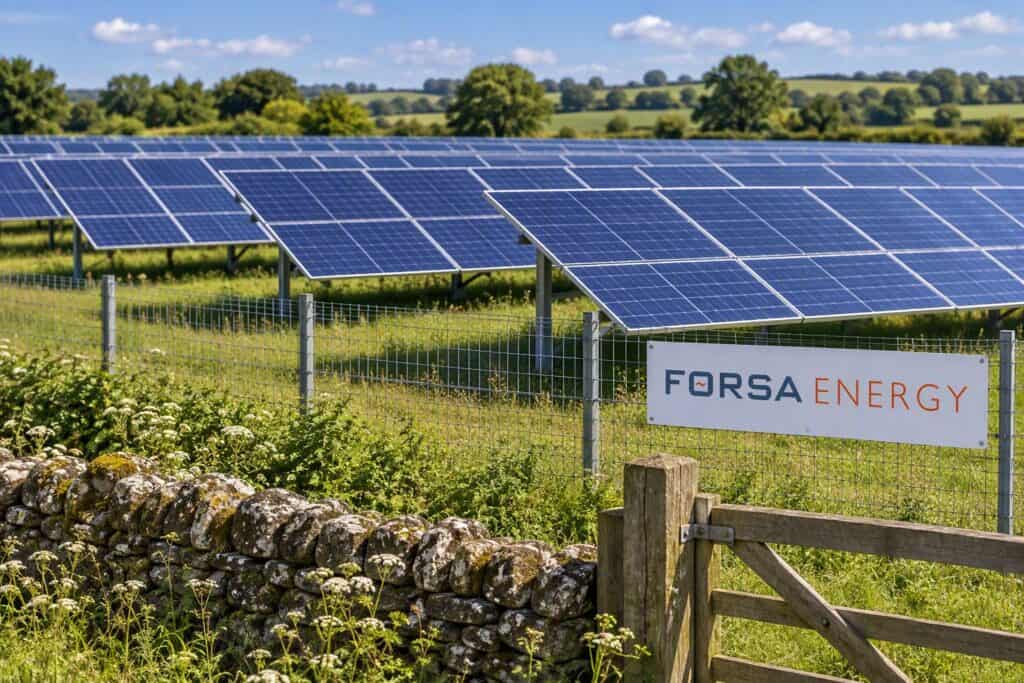
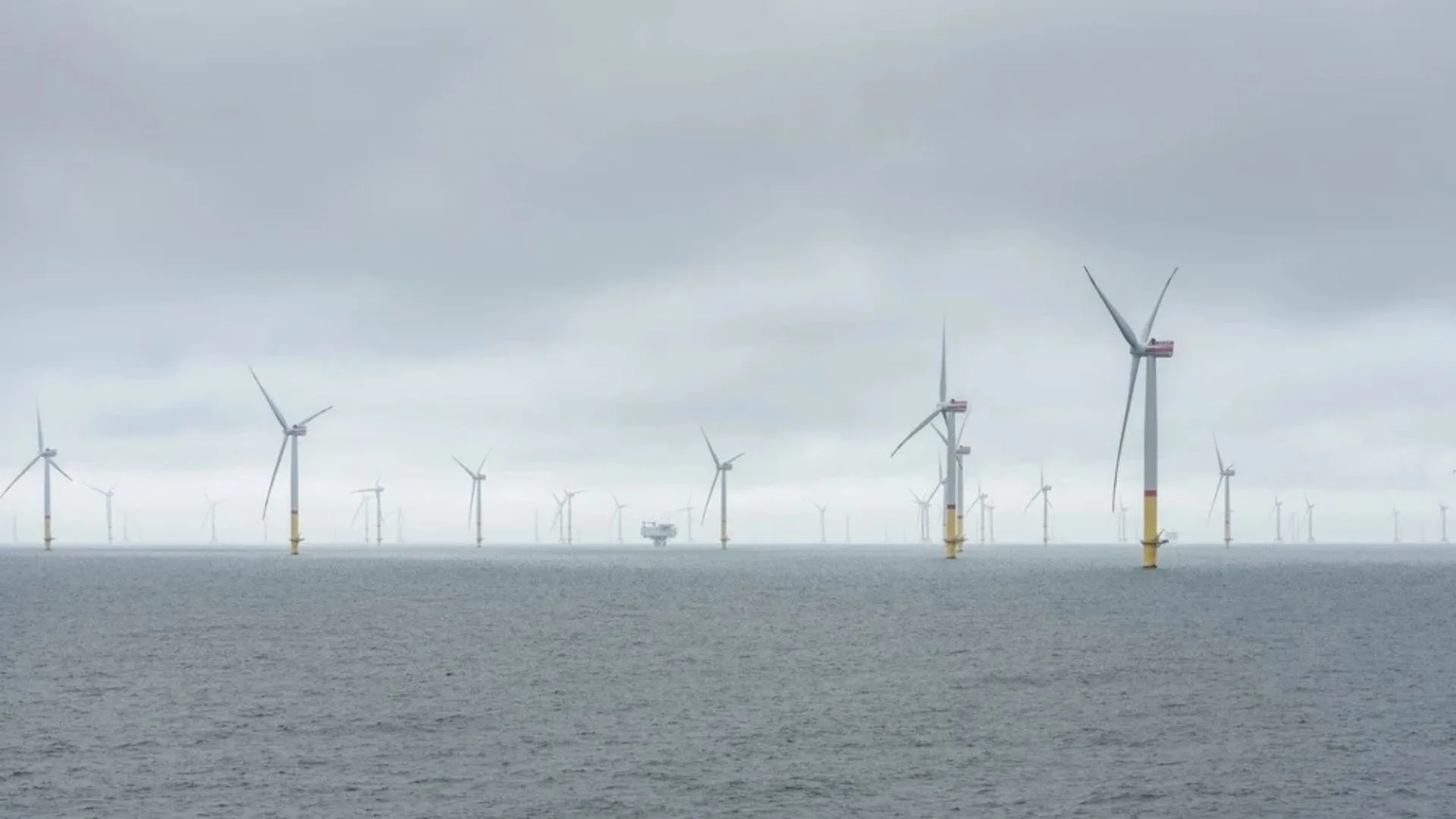
The transaction gives KKR control of EDF power solutions’ U.S. and Canadian renewable operations, including a diversified solar, wind, and battery storage platform with nearly 40 years of operating history. The deal values the equity interest in EDF power solutions Inc. and EDF power solutions Canada Inc. at approximately $4.2 billion, with potential additional payments of up to $390 million. For KKR, this is not a simple capacity acquisition. It is a platform acquisition that combines operating assets, development capability, construction oversight, O&M, asset management, and customer relationships across utilities, corporates, and institutional buyers.
That matters commercially because the North American renewables market is rewarding buyers that can control more of the value chain. Enerdatics’ U.S. M&A market signals show that private equity capital dominated solar M&A in 2025, with firms such as TPG, Brookfield, and KKR deploying more than $6 billion across IPPs and operating portfolios. The same data shows investor focus shifting toward advanced-stage, in-construction, and operational portfolios as buyers prioritize interconnection progress, FEOC-compliant supply chains, secure offtake, and near-term construction visibility over early-stage pipeline exposure.
KKR’s EDF deal sits directly inside that shift. The asset stage is not limited to operating renewables; the target also includes an integrated development and execution platform. That distinction is important. In a market where permitting, interconnection, tax credit eligibility, EPC risk, and offtake structures are creating valuation dispersion, investors are paying for execution capability as much as megawatts. A platform that can originate, build, operate, and optimize assets reduces dependence on third-party developers and gives the buyer more control over timing, capital deployment, and risk allocation.
The deal also extends a pattern already visible in 2025 North American M&A. Enerdatics’ Q3 2025 analysis shows that private equity dominated North American dealmaking, including ArcLight’s $1 billion acquisition of Advanced Power and KKR’s $625 million investment in TotalEnergies’ 1.4 GW solar portfolio. These deals show that PE buyers are not only buying renewables exposure; they are targeting platforms and portfolios with operational visibility, scale, and the ability to serve rising power demand.
The valuation signal is equally important. At $4.2 billion in equity value, with additional payments of up to $390 million, the EDF North America acquisition reflects a premium for platform control rather than a simple project-level valuation. Enerdatics data for Q1 2024 to Q3 2025 shows operating utility-scale solar assets trading at roughly $0.8 million to $1.7 million per MW, while under-construction projects were valued at $0.8 million to $1.35 million per MW. Solar-plus-storage operating assets averaged around $1.2 million per MW, while BESS assets nearing COD reached around $1.3 million per MW and up to $2.3 million per MW under build-transfer agreements. Against that backdrop, KKR’s transaction points to the added value of platform integration, development pipeline control, and long-term customer access.
The commercial reason behind the acquisition is also different from the renewable platform deals of 2021–2023. Those transactions were often underwritten around tax credit monetization, pipeline growth, and public-market valuation gaps. The KKR-EDF deal is being underwritten around power market scarcity. KKR’s own rationale highlights rising U.S. demand from data centers, manufacturing reshoring, and electrification. That demand profile changes how investors view renewables platforms: capacity is valuable, but capacity attached to execution infrastructure and customer channels is more valuable.
For sellers, the transaction shows why large strategic developers with mature platforms can still command strong buyer interest even as early-stage project sales face pressure. EDF group is monetizing a high-quality North American platform at a time when buyers are more disciplined, but the platform’s operating history, diversified technology mix, and integrated capabilities help reduce buyer concerns around delivery risk. Smaller developers without construction financing, interconnection certainty, or post-sale delivery capability are in a weaker position. Enerdatics’ market work shows that smaller developers with early- to mid-stage portfolios are facing weaker demand, while integrated developers with EPC, O&M, or asset management capabilities are securing higher valuations.
For buyers, the implication is clear: the most competitive assets are no longer just shovel-ready solar or standalone BESS projects. They are platforms that can serve load growth across multiple technologies and geographies. KKR’s acquisition gives it exposure to utility-scale renewables, storage optionality, corporate and utility offtakers, and a pipeline that can be accelerated with infrastructure capital. That combination is especially valuable in markets where power demand is growing faster than transmission, permitting, and interconnection processes can adapt.
The transaction also raises pressure on other large infrastructure funds and strategic IPPs. If power demand from hyperscalers and industrial loads continues to reshape procurement behavior, buyers may need to secure operating platforms rather than wait for individual asset auctions. This could increase competition for integrated IPPs, hybrid renewable platforms, storage-heavy developers, and utilities willing to recycle capital through minority stake sales or carve-outs.
The forward-looking signal is that North American renewable M&A is entering a platform-control phase. Capital providers are not simply backing capacity; they are backing companies that can move projects through development, construction, operations, and optimization while serving a power market increasingly defined by load growth and reliability constraints. KKR’s $4.2 billion EDF North America acquisition proves that premium capital is moving toward scaled, integrated platforms that can convert renewable development pipelines into dispatchable, financeable, and commercially relevant power supply.
Ready to get deal-ready answers in seconds? Try Enerdatics Leap AI and access verified intelligence across M&A, financings, PPAs, projects, and energy market developments through natural language.