Boralex has spent two years buying British wind projects one at a time, four of them since October 2024. This week it bought the developer instead. Wind2 brings more than 350 MW across Scotland, England and Wales, plus the teams who assembled it. On the two largest projects named in the record, Wind2 does not own the whole thing.
Key takeaways
- Boralex has acquired Wind 2 Limited, a UK renewable energy developer founded in 2016, announced on 27 October 2026. The consideration was not disclosed, and Knight Frank Capital Advisory advised the seller.
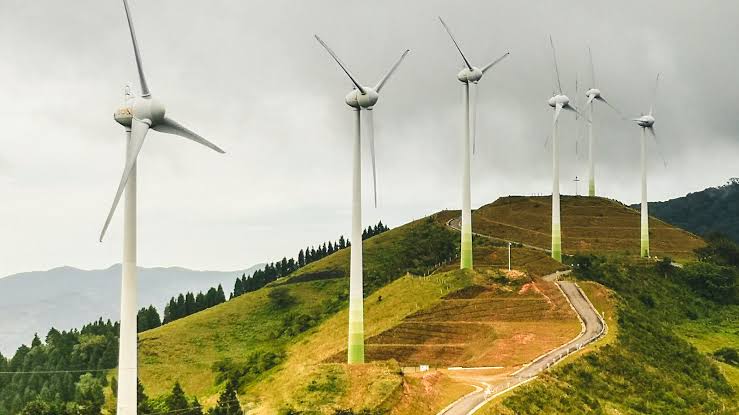
- Wind2 has developed more than 350 MW of wind projects across Scotland, England and Wales, some of it already ready to build, and the deal brings across its teams in two UK offices.
- Two of the three projects named in the record are 75 percent owned by Wind2 and 25 percent by Octopus Renewables Infrastructure Trust: the 53 MW Kirkton project in Sutherland and the 100 MW Lairdmannoch Energy Park in Dumfries and Galloway.
- The third, the 45 MW Moorshield project on the Isle of Skye, secured a Contract for Difference in February 2026 under the UK's seventh allocation round at a 2024 strike price of £72.24 per MWh, about $96.48 per MWh, with a delivery year of 2028 to 2029.
- Of the 69 UK wind transactions Enerdatics records since the start of January 2024, only four are corporate deals rather than asset purchases, and only one of those four carries a disclosed value.
Why buy the developer after buying four of its projects one at a time?
Because the constraint stopped being capital and became origination. A corporate acquisition buys the company, its people and everything in its pipeline. An asset acquisition buys one project and leaves the next to be sourced in competition with everybody else. Boralex has done the second four times in Britain since late 2024: the 43 MW Sallachy project from PNE, half of the 145 MW Clashindarroch extension that December, the 26 MW Upper Ogmore wind farm from Marubeni in March 2026, and a quarter of Tom na Clach.
That is a working strategy with a ceiling on it. Each of those deals needed a willing seller holding a consented Scottish or Welsh project, and the supply is finite. Buying Wind2 converts a purchasing programme into a development capability, which is the stated logic: Boralex describes the deal as strengthening its UK workforce and diversifying beyond North America and France.
The timing sits inside a larger change of ownership. Brookfield and La Caisse agreed in March 2026 to take Boralex private at an enterprise value of about $6.5 billion, a transaction whose appeal rested on roughly 3,800 MW of contracted operating assets plus a visible pipeline. A company bought for its pipeline has a reason to buy pipeline.
What does Boralex actually own of the named projects?
Less than the headline capacity suggests, on two of the three. The record names 198 MW of specific projects inside the portfolio, and on 153 MW of that 198 MW Wind2 holds 75 percent, with Octopus Renewables Infrastructure Trust holding the other quarter. At those stated shares, Boralex's economic interest across the named projects is roughly 160 MW rather than 198 MW.
This is not a defect in the deal, and a co-investor at the development stage is ordinary. It matters because a developer's portfolio figure is almost always quoted gross. Capacity developed and capacity owned are different measures, and dividing a price by the wrong one puts the answer out by a quarter on these assets. Octopus Renewables Infrastructure Trust is an active buyer in its own right, having agreed in October to pay about £34.6 million for a half-built Yorkshire solar farm, so those minority positions sit with a partner holding its own view on when to buy and sell.
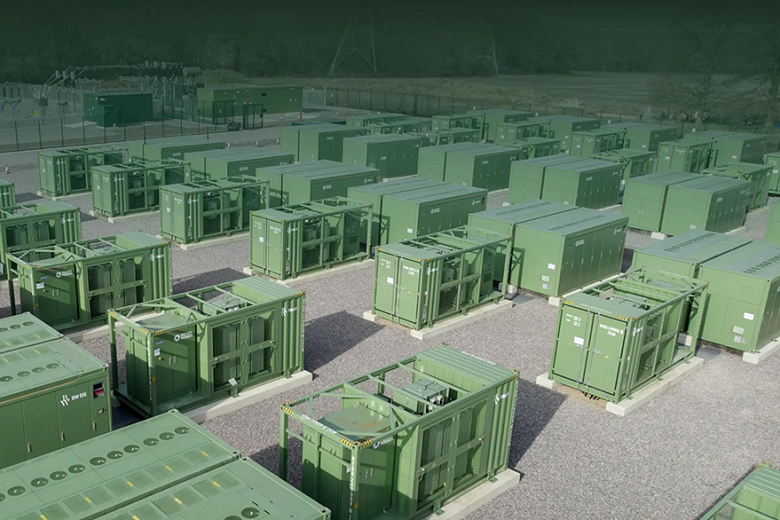
Lairdmannoch is also the only one of the three that is an energy park rather than a wind farm, putting 60 MW of wind, 20 MW of solar and 20 MW of storage behind one consent and one connection.
What does the Moorshield contract add that the rest of the portfolio lacks?
A fixed price, and a deadline. A Contract for Difference guarantees a generator a strike price for its output, with the counterparty paying the shortfall when market prices fall below that level and reclaiming the excess when they rise above, removing wholesale price risk for the term. Moorshield won one in February 2026 in the seventh allocation round at £72.24 per MWh in 2024 prices, with a delivery year of 2028 to 2029. One project therefore has contracted revenue and a date it must be ready by, and the rest do not.
Moorshield also shows what development work is worth. Enerdatics records EDP Renewables selling Moorshield to Wind 2 Limited in August 2025 as a 15 MW scheme, a transaction Enerdatics identified despite no public disclosure by either party. Fourteen months later it appears at 45 MW with a subsidy contract attached. Tripling a consented rating and winning an allocation round is the capability Boralex has just bought.
Enerdatics records 69 UK wind transactions since the start of January 2024, of which 22 carry a disclosed value, so roughly two thirds of the market prices in private. Only four of the 69 are corporate deals: this one, Royal London's purchase of Dalmore Capital, Cubico's buyout of Peel Cubico Renewables, and Copenhagen Infrastructure Partners' $758.69 million equity investment in Bute Energy in February 2025, the only one of the four with a value, implying $0.58 million per MW across a 1,310.6 MW pipeline. Boralex's own two priced British prints sit far below that, at about $0.23 million per MW for Sallachy and $0.28 million per MW for Clashindarroch grossed up, though both are Enerdatics assessments rather than published prices and both bought projects rather than a company.
What does the deal signal for UK onshore wind?
That the scarce asset in British onshore wind is now the consenting team, not the consented project. Scotland and Wales still have sites, and the planning and grid work that turns them into buildable projects is specialised, slow and relationship-heavy. A buyer that wants a pipeline for the 2030s can wait for sellers to appear or acquire the people who generate them. Boralex spent two years doing the first and has now done the second.
The second signal is familiar. Only Bute Energy among the four corporate UK wind deals on record since 2024 disclosed a price, and the development-stage end is quieter still, with 18 development-stage UK offshore wind transactions since the start of 2024 and not one of them priced. Anyone valuing a British developer today works from four data points, one of which is a number.
Frequently asked questions
How much did Boralex pay for Wind2?The consideration was not disclosed. Only one of the four corporate UK wind transactions Enerdatics records since January 2024 carries a value, so there is no close comparable for a developer of this size.
What is in Wind2's portfolio?More than 350 MW across Scotland, England and Wales, some of it ready to build. The record names the 45 MW Moorshield project, the 53 MW Kirkton project and the 100 MW Lairdmannoch Energy Park, the last two 75 percent owned by Wind2.
What is a Contract for Difference?It guarantees a generator a fixed strike price, with the counterparty paying the difference when market prices fall below it and reclaiming the excess when they rise above. Moorshield's was awarded in February 2026 in the UK's seventh allocation round at £72.24 per MWh in 2024 prices.
Ready to get deal-ready answers in seconds? Try Enerdatics Leap AI and access verified intelligence across M&A, financings, PPAs, projects and energy market developments through natural language.