BW ESS has bought two battery projects in France that it cannot start building yet. The seller, Recurrent Energy, is staying on to finish the development work it has already been doing for years. No price was given, which in the French battery market is almost the only outcome. The interesting number is the one that was.
Key takeaways
- BW ESS, a subsidiary of BW Group, has acquired a 200 MW and 800 MWh battery storage portfolio in France from Recurrent Energy, a subsidiary of Canadian Solar, announced on 29 October 2026. The consideration was not disclosed.
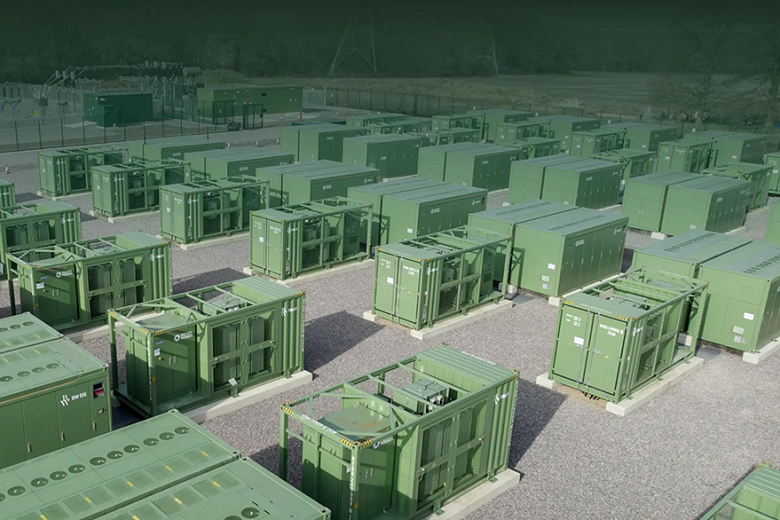
- The portfolio comprises two standalone projects of equal size, the 100 MW and 400 MWh Baixas project in the Pyrenees-Orientales department and the 100 MW and 400 MWh Coquainvilliers project in Calvados, both in advanced development with transmission-level grid connections.
- Recurrent Energy will continue to lead both projects through their remaining development milestones until they reach ready-to-build status, after which BW ESS takes over construction and commercial operations and intends to hold the assets long term.
- 800 MWh across a 200 MW rating gives the portfolio a four-hour duration. Of the five French battery transactions Enerdatics records since the start of January 2024, the three others that state an energy capacity are all two-hour systems.
- Exactly one of those five French transactions carries a disclosed value, Alpiq's purchase of the 100 MW and 200 MWh Marronniers project from Harmony Energy at $6.56 million in November 2024, a figure Enerdatics identified rather than one either party published.
What is BW ESS paying the seller to keep doing?
Finish the work that turns a permitted project into a buildable one. Ready-to-build status is the point at which every consent, grid agreement and land right a project needs is signed and construction can begin on a known date. Reaching it is slow, local and largely administrative, and the people who can do it are the people already doing it on that site.
Recurrent Energy originated both projects, secured the land rights, advanced the grid connections, ran the permitting and handled the local stakeholder work. It keeps leading that effort until both reach ready-to-build, and only then does BW ESS step in to build and operate. Ownership and execution have been split at the moment the work changes character, from consenting to construction.
BW ESS has used this arrangement before. In Germany it took full ownership of the 1,000 MW Klostermansfeld project while the original developer stayed involved in local site matters until construction got under way. The seller is also acting in character. Recurrent sells at or before the handover point as a matter of routine, including a 49.2 MW British solar project it sold with the subsidy contract won and construction already started. What is traded in both cases is not a finished asset but a position in a queue, with the originator retained to defend it.
Why does 800 MWh across 200 MW make this portfolio unusual in France?
Because duration decides which revenue an owner expects to live on, and this portfolio is built for a different one from its French predecessors. Duration is a battery's energy capacity divided by its power rating, and it measures how many hours the asset can sustain full output. Reserve products pay mainly for the ability to respond fast, which a two-hour battery does as well as a four-hour one. Moving electricity from cheap hours into expensive hours is the service that needs stored energy, and the only one that scales with duration.
The three other French battery transactions on Enerdatics' record that state an energy capacity are all two-hour assets: the 94 MW and 188 MWh Claudia repowering project, bought by Caisse des Depots from Amarenco in February 2026, and the 100 MW and 200 MWh Chevire and Marronniers projects, both bought by Alpiq from Harmony Energy. Against that set, 800 MWh is not an increment. It is more energy capacity in one transaction than the other three carry between them, which total 588 MWh.
Leap records no contracted offtake for either project. Both are expected to provide rapid-response flexibility to the French system, storing surplus electricity and discharging into higher demand. A four-hour configuration with no contract attached is a view on the spread between hours rather than on payment for standing ready, and it is the same choice reshaping Nordic storage, where a four-hour Finnish battery changed hands in October into a market with almost no disclosed prices.
What can anyone actually tell about the price?
Very little, and the gap is structural rather than accidental. Across the five French battery transactions Enerdatics records since the start of January 2024, covering 994 MW in total, one carries a value in the structured deal value field. That is Alpiq's $6.56 million for Marronniers, which works out at about $0.07 million per MW of a development-stage two-hour project. Enerdatics identified that figure despite no public disclosure by either party, so it is an assessment rather than a published price.
One assessed mark on a two-hour project from two years ago is not a curve, and it cannot be stretched across a four-hour portfolio at a later stage of development, because duration, stage and grid position all move the number. A buyer arriving in French storage today is pricing off its own model of spreads and build costs rather than off the market.
Enerdatics records five French battery storage transactions since the start of January 2024, all of them asset deals, and this is the fourth in which the buyer is taking a project before it can be built. Only Alpiq's Chevire purchase in January 2026 involved an operational battery. The French market is trading development risk, repeatedly, and reporting almost nothing about what it costs.
What does the deal signal for France's battery market?
It signals that the specification argument has moved on while the disclosure habit has not. The assets French buyers were taking in 2024 and early 2026 were two-hour systems sized for reserve income. The portfolio changing hands now holds four hours and no contract, so the buyer is underwriting price spreads across a day rather than payment for availability. If that view spreads, the few comparables that exist become less useful rather than more, because they describe a different machine.
The second signal is about who is buying. BW ESS is a shipping group's storage arm on its seventh international market, holding for the long term and taking construction risk on projects it did not originate. France is being entered by owner-operators rather than by funds looking for a near-term exit. Expect the next French battery trade to be undisclosed as well.
Frequently asked questions
How much did BW ESS pay Recurrent Energy for the French batteries?The consideration was not disclosed. Of the five French battery transactions Enerdatics records since January 2024, only one carries a disclosed value, and that figure was identified by Enerdatics rather than published, so there is no reliable French comparable.
What does ready-to-build status mean, and who gets the projects there?Ready-to-build means every consent, grid agreement and land right needed to start construction is in place. Recurrent Energy continues to lead both projects to that point, and BW ESS takes over construction and operations afterwards.
Why does the four-hour duration matter?Duration is energy capacity divided by power rating. A four-hour battery can shift more electricity between cheap and expensive hours than a two-hour one, so it is built for price arbitrage rather than for fast-response reserve income. The three other French battery deals on record that state an energy capacity are all two-hour systems.
Ready to get deal-ready answers in seconds? Try Enerdatics Leap AI and access verified intelligence across M&A, financings, PPAs, projects and energy market developments through natural language.