ZE Energy has bought a 59 MW battery in Piedmont with 472 MWh of storage behind it. That is eight hours of discharge at full power, in a market where the typical battery holds four. The company now owns two of the three longest-duration batteries Enerdatics records in Italy. The power rating is the least interesting number in the deal.
Key takeaways
- ZE Energy acquired the 59 MW and 472 MWh Magliano Alpi standalone battery project in Cuneo province, Piedmont, from ReFeel New Energy, announced on 23 November 2026 with no disclosed consideration.
- ReFeel New Energy is a 50:50 joint venture between ReFeel and the SUSI Energy Transition Fund, managed by Gresham House Europe, and has now sold Italian battery projects to four separate buyers in the Enerdatics record.
- The project holds 472 MWh against a 59 MW power rating, a duration of eight hours, against a median of four hours across the 13 Italian battery transactions since the start of 2024 that state an energy capacity.
- Magliano Alpi is at ready-to-build stage with an estimated 18 month construction period, holds a single authorisation granted to project company RNE12 S.r.l. by Italy's Ministry of the Environment and Energy Security in April 2026, and received Terna technical approval in October 2024 for a 132 kV connection to a planned extension of the Magliano 380/132 kV substation.
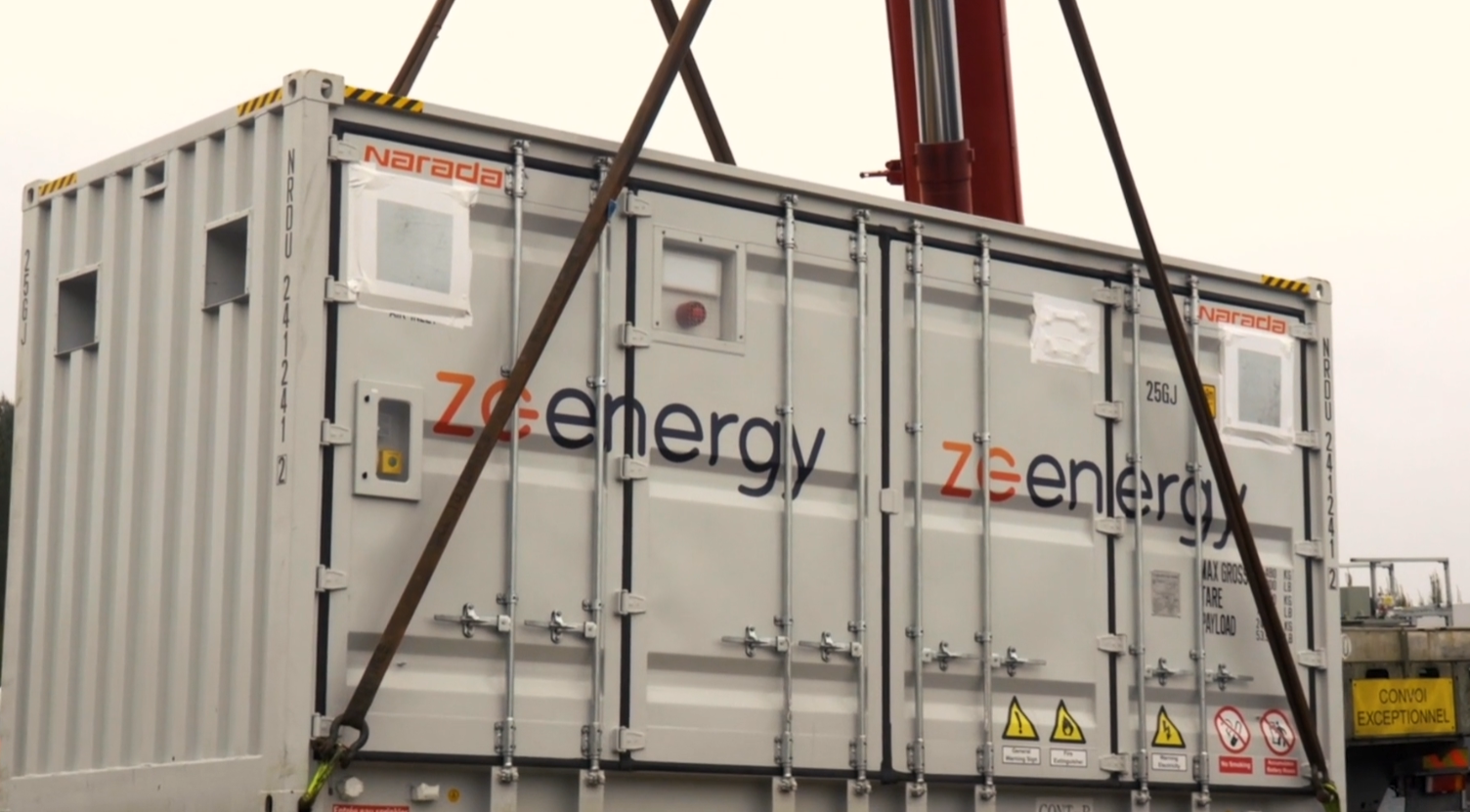
- The plant comprises 15 battery units of 3.91 MW each, housing 120 containers of lithium iron phosphate modules, on agricultural land in the municipality of Magliano Alpi.
What does eight hours of duration actually buy?
Energy rather than power, and in Italy energy is the scarcer product. A battery's duration is its energy capacity divided by its power rating, so 472 MWh across 59 MW gives eight hours. A four-hour battery of the same power rating would hold 236 MWh. Both can inject 59 MW into the grid at any instant. Only one can keep doing it through an evening.
That distinction decides what the asset is for. A short-duration battery earns from frequency services and from the sharpest few hours of price spread. A long-duration battery can absorb a full afternoon of surplus solar and release it across the evening peak, which is the shape of the problem in northern Italy. The record sets out the context: Italian electricity demand passed 300 TWh in 2025, 15 percent of it met through net imports, while solar generation grew 25 percent year on year to more than 44 TWh. Surplus midday solar and imported evening power are two halves of one gap.
Why does the 59 MW rating understate the asset?
Because the grid connection is sized for power while the revenue is earned on energy. Terna approved a 132 kV connection for this project in October 2024, and that connection caps what the battery can push out at any moment. It does not cap how much the battery can store. A developer that has secured a 59 MW connection point and then builds 472 MWh behind it is choosing to maximise the energy sitting behind a fixed power limit.
Read the deal as 59 MW and it looks small, well below the 150 MW to 300 MW portfolios that dominate Italian battery transactions. Read it as 472 MWh and it stands comparison with assets twice its power rating. The 15 units of 3.91 MW each, holding 120 containers of lithium iron phosphate modules, are what that trade-off looks like physically: a modest inverter array in front of an unusually large stack of cells. Lithium iron phosphate is the chemistry for this profile because it tolerates deep daily cycling better than nickel-based alternatives, at a cost in energy density that matters far less on a greenfield site than it would in a vehicle.
What is ZE Energy assembling in Italy?
A long-duration portfolio bought at ready-to-build stage. This is the company's third large standalone Italian battery acquisition inside fourteen months, after Sessa Aurunca in October 2025 and the 200 MW and 1,000 MWh Elena project in September 2026. Ready-to-build means consents and grid approvals are final and construction can begin, so the buyer takes construction and market risk but not permitting risk, and pays for that certainty.
The durations across the portfolio are the pattern. Sessa Aurunca holds 895 MWh against 98.5 MW, just over nine hours. Elena holds 1,000 MWh against 200 MW, which is five. Magliano Alpi is eight. Of the 13 Italian battery deals since the start of 2024 that disclose an energy capacity, only three reach eight hours or more, and ZE Energy owns two of them. The company also sold half of Sessa Aurunca to Octopus Energy in June 2026, a transaction that rested on that project's contracted capacity revenue, which points to a strategy of originating and de-risking long-duration assets and then bringing institutional capital in alongside.
Enerdatics records 31 Italian battery storage transactions since the start of January 2024, of which only five disclose a consideration. Grossing minority stakes up to a whole-asset basis, the four development-stage deals among those five price between $0.018 million and $0.119 million per MW. The top of that range is ZE Energy's own purchase of Sessa Aurunca for $11.74 million in October 2025. Magliano Alpi discloses no price, so the nearest marker for what a ready-to-build Italian battery costs is the same buyer's previous trade.
What does the deal signal for Italian storage?
That duration is becoming the axis of differentiation in a market that has competed on megawatts. Italy has no shortage of consented battery power, with 31 transactions in under three years and portfolios running past 2 GW. What is scarce is energy capacity positioned where surplus solar needs absorbing, and a developer optimising for that will build tall rather than wide behind whatever connection it can secure.
The second signal concerns price discovery, and it is unflattering. Twenty-six of the 31 Italian battery transactions since 2024 disclose nothing about consideration, so the market is being priced off a handful of points, one of which is this buyer's own earlier deal. The same opacity runs through Italian renewables more broadly, where Enerdatics has a disclosed value on only 33 of 107 Italian solar transactions since 2024. Until more prices are published, a valuation on an Italian battery will rest more on the energy it can hold and the contracts it can win than on any observable comparable.
Frequently asked questions
What did ZE Energy buy in Piedmont?The 59 MW and 472 MWh Magliano Alpi standalone battery project in Cuneo province, from ReFeel New Energy, announced on 23 November 2026. No consideration was disclosed. The project is at ready-to-build stage with an estimated 18 month construction period.
What does eight hours of battery duration mean in context?Duration is energy capacity divided by power rating, so 472 MWh over 59 MW is eight hours. Across the 13 Italian battery transactions since the start of 2024 that state an energy capacity, the median is four hours and only three reach eight or more.
Does the Magliano Alpi project have a contracted revenue stream?The record does not describe an offtake or capacity contract for this project. It states that the plant will provide long-duration flexibility in northern Italy by storing surplus electricity and discharging it at peak demand or during grid stress.
Ready to get deal-ready answers in seconds? Try Enerdatics Leap AI and access verified intelligence across M&A, financings, PPAs, projects and energy market developments through natural language.