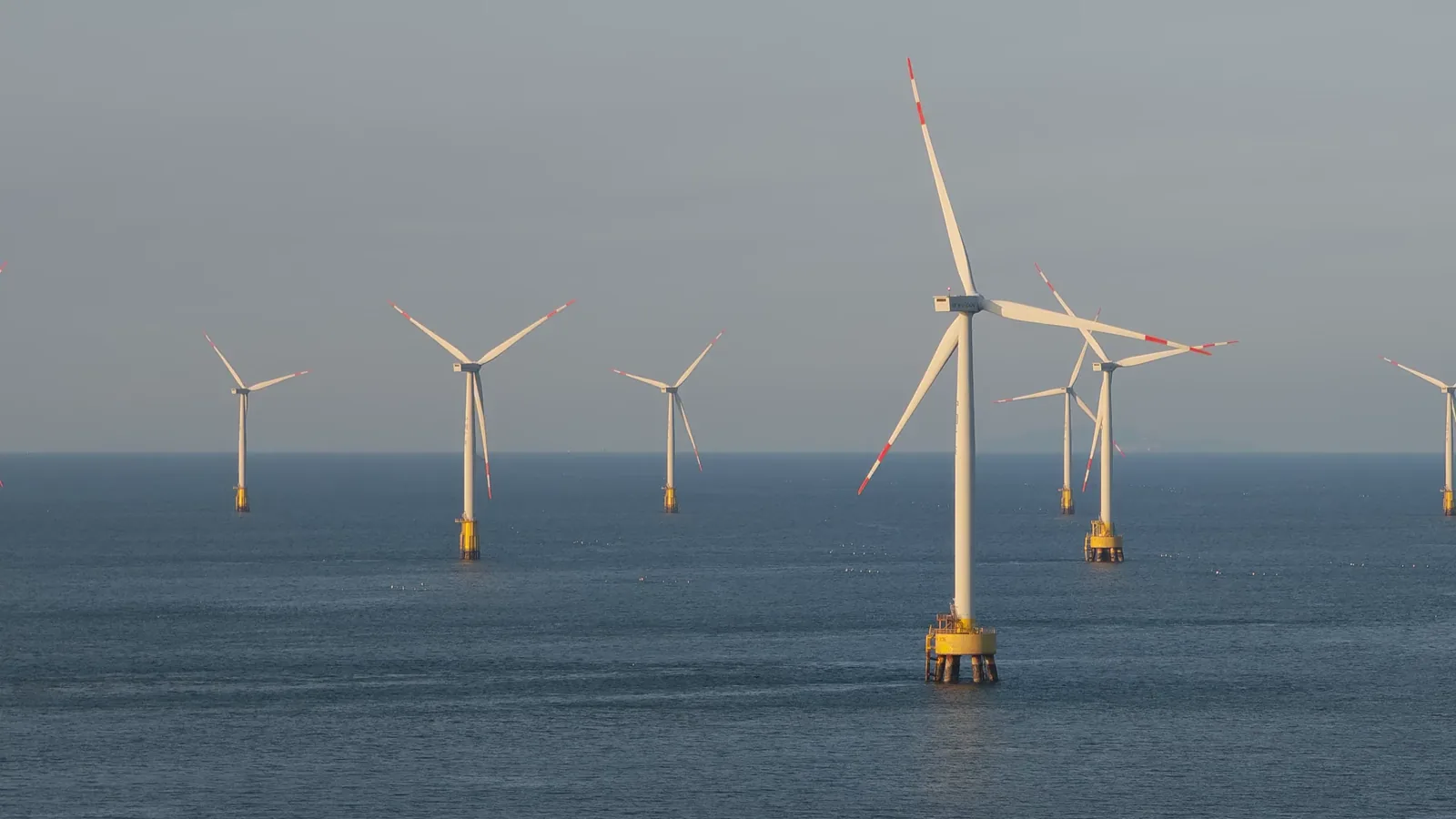
Borealis, the chemicals and plastics group, has two new ten-year wind power contracts with Axpo, one in Sweden and one in Belgium. Neither wind farm belongs to Axpo. One is owned by an infrastructure fund. The other has turbines standing around a Borealis plant, and Borealis still buys that power through a third party.
Key takeaways
- Axpo signed two 10-year power purchase agreements with Borealis, announced on 15 February 2024, covering onshore wind power in Sweden and Belgium; Leap records them as the fourth and fifth PPAs between Axpo and Borealis.
- The Swedish Axpo contract supplies about 125 GWh a year to Borealis facilities in Stenungsund from the Lake Wind AB wind farm in Habo, which is owned by an infrastructure fund managed by Vauban Infrastructure Partners.
- The Belgian Axpo contract supplies about 70 GWh a year from 32 MW of the Antwerpen Haven Linkeroever 3 wind farm, owned by Wind aan de Stroom, whose turbines stand on the left bank of the Port of Antwerp around the Borealis Kallo site.
- Both Axpo and Borealis agreements were signed in 2023 and Axpo began supplying power under them in January 2024, before the contracts were announced.
- Enerdatics records 15 wind PPAs in Sweden announced between January 2023 and June 2024; 11 disclose a term, 10 of those run for ten years, and none discloses a tariff.
What role does Axpo play if it owns neither wind farm?
Axpo sits in the middle. It takes power from generators that belong to someone else and sells it on to Borealis under its own contract. A power purchase agreement, or PPA, is a long-term contract under which a buyer agrees to take electricity from a named source on terms set in advance. In most corporate PPAs the seller is the owner of the plant. Here the seller is a supplier that has lined up output from other owners.
That arrangement explains the shape of the deal. The Swedish volume comes from a fund-owned wind farm in Habo. The Belgian volume comes from a project owned by Wind aan de Stroom. Borealis signs once with Axpo instead of negotiating separately with a fund manager in one country and a local wind company in another.
The record does not say how Axpo contracts with the two owners upstream. What it does show is that Axpo is now Borealis' counterparty in three countries. The earlier agreements covered 100 GWh in Belgium in 2021, 130 GWh in Sweden in 2022 and 100 GWh in Finland in 2023.
Why buy through a supplier when the turbines surround your own site?
Because being next to a wind farm and owning its output are different things. The Linkeroever 3 turbines are on the left bank of the Port of Antwerp around the Borealis Kallo site. The power still belongs to Wind aan de Stroom, and Leap classifies the Belgian contract as offsite rather than onsite. In other words, the electricity is bought through the grid under a contract, not wired straight into the plant.
Proximity can still matter for how the deal is presented. A buyer can point to turbines it can see from its own fence. But the commercial mechanics are the same as for the Swedish wind farm in Habo, which supplies Borealis' Stenungsund facilities under an offsite contract. In both cases the value to Borealis is a fixed source of renewable supply for ten years.
The Belgian contract also gives one of the few hard yield figures in the pair. Seventy gigawatt hours from 32 MW works out to about 2,190 MWh per MW a year. The Swedish record gives a volume but no capacity, so the same calculation cannot be made for Lake Wind.
How much power do the five Axpo contracts deliver?
Together, the two new contracts add about 195 GWh a year, or roughly 1,950 GWh over their ten-year terms. Added to the three earlier agreements, the five Axpo contracts described in the record cover about 525 GWh a year across Belgium, Sweden and Finland.
The timing is unusual. The two agreements were signed in 2023, power began to flow in January 2024, and the announcement came on 15 February 2024. The usual sequence for a corporate PPA is announcement first and delivery years later, once a new plant is built. Here the plants were already running and the deal was disclosed after the fact. For readers tracking contracted demand, that means these volumes were already in the market before anyone published them.
How does Borealis spread its power buying across Europe?
Widely, and with more than one supplier. Enerdatics records 16 PPAs signed by Borealis since 2020: seven in Belgium, four in Finland, three in Sweden and two in Austria. Axpo appears on six of them, including a further announcement in October 2024 covering two PPAs for 900 GWh of wind power in Belgium. Eneco appears on three, all Belgian offshore wind, including a 487 MW contract in December 2022.
The remaining seven come from seven different suppliers: Fortum, Ilmatar Energy and Alpiq in Finland, Vattenfall for 175 GWh a year of hydropower in Sweden, Verbund and Burgenland Energie in Austria, and Aspiravi in Belgium. The technology mix includes onshore wind, offshore wind, hydro and, in Austria, a hybrid park recorded under solar.
Enerdatics' data shows that the Swedish half of this deal fits a very uniform market. Of the 15 Swedish wind PPAs announced between January 2023 and June 2024, 11 disclose a term, and ten of those run for exactly ten years. The only exception is EnBW's 8.5-year contract with Rottneros. Eight of the 15 have industrial buyers, the largest single category, and none of the 15 discloses a price.
What does the deal signal for industrial power buying in Europe?
It shows how a large industrial buyer can build a renewable supply book without becoming a power company. Borealis does not own the turbines and does not appear to manage a separate contract with every owner. It spreads volume across countries and technologies, and leans on a small number of suppliers to package the output.
It also shows how little of that market is visible on price. Ten-year terms are the norm and tariffs are almost never disclosed. In Belgium, the other market in this deal, contracts tend to come in small pieces, as Google's Belgian wind contracts show. A 32 MW slice of a port wind farm is typical rather than small in that setting.
For suppliers such as Axpo, the model rests on repeat business. Five contracts in four years with one buyer, and a sixth announcement later in 2024, suggest that once an intermediary has a buyer's trust, the next contract follows more easily than the first.
Frequently asked questions
Who owns the wind farms supplying Borealis under the new Axpo contracts? The Swedish Lake Wind AB wind farm in Habo is owned by an infrastructure fund managed by Vauban Infrastructure Partners. The Belgian Antwerpen Haven Linkeroever 3 wind farm is owned by Wind aan de Stroom. Axpo owns neither and acts as the supplier.
How much electricity does Borealis receive under the two contracts? About 125 GWh a year in Sweden, delivered to its Stenungsund facilities, and about 70 GWh a year in Belgium from 32 MW of capacity, around 195 GWh a year in total for ten years.
When did supply start? Both agreements were signed in 2023 and Axpo began supplying power in January 2024, before the deal was announced on 15 February 2024.
Ready to get deal-ready answers in seconds? Try Enerdatics Leap AI and access verified intelligence across M&A, financings, PPAs, projects, and energy market developments through natural language.