Axium Infrastructure has bought half of the second phase of Edwards Sanborn, the solar and storage complex in California's Kern County. It already owned most of the first phase, bought from the same seller fifteen months earlier. Neither price was disclosed. What Axium chose to buy this time, and how much of it, says more than either number would.
Key takeaways
- Axium Infrastructure announced on 11 January 2024 that it had acquired a 50 percent stake in Edwards Sanborn 1B (ES1B), the second phase of the Edwards Sanborn solar and storage facility in Kern County, California, from Terra-Gen.
- Edwards Sanborn 1B comprises 412.5 MW of solar capacity and 1,497 MWh of battery storage, and the first two phases of Edwards Sanborn together total 807 MWac of solar and 3,002 MWh of storage.
- Axium had previously acquired an 80 percent interest in Terra-Gen's Edwards Sanborn 1A phase, announced on 26 October 2022; neither the 2022 nor the 2024 deal value was disclosed.
- Terra-Gen closed $959 million of senior secured credit facilities for Edwards Sanborn 1B on 15 September 2022: a $460 million construction and term loan, a $403 million tax equity bridge and a $96 million letter of credit facility.
- Enerdatics records 39 operational US solar transactions announced in 2023 and 2024; the 17 with a disclosed price have a median of $1.25 million per MW.
What exactly did Axium buy in phase two?
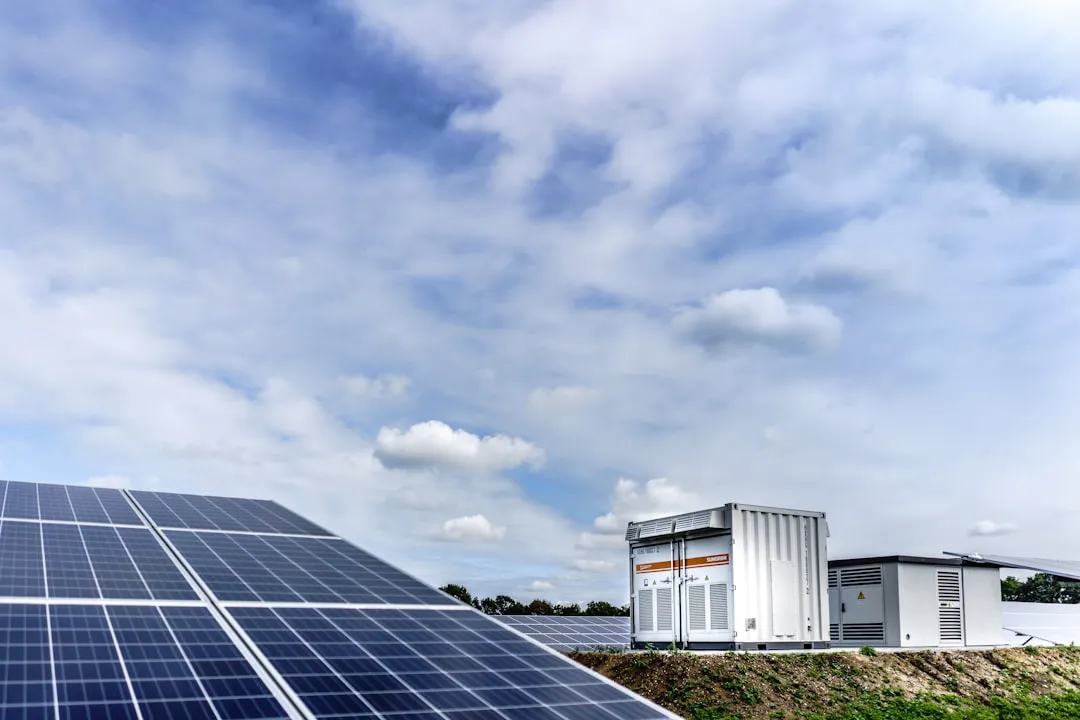
It bought half of an operating hybrid plant rather than a solar farm with a battery attached as an afterthought. Leap's record describes Edwards Sanborn as a facility built in multiple phases on about 6,000 acres, partly on land leased from the Edwards Air Force Base and partly on adjacent private land. Construction began in the first quarter of 2021 and reached substantial completion in 2023.
The storage is the part that stands out. Phase two carries about 3.6 MWh of storage for every MW of solar. A hybrid plant of this kind can store midday output and sell it into the evening, when prices in California are usually higher and solar output has fallen away. That gives an owner some control over when it sells.
Leap describes the whole site as expected to be the largest integrated solar power and battery storage project in the world, with development work underway to connect a further 2,000 MW of solar and storage to the CAISO grid and a potential total of up to 3.35 GW.
Why take 50 percent this time when it took 80 percent before?
Leap does not give a reason, so the answer has to be read from the structure. Phase one was recorded at 397 MW of solar and 1,505 MWh of storage. Phase two is slightly larger on solar and almost identical on storage. A 50 percent stake adds meaningful exposure without doubling Axium's concentration in one site.
It also leaves Terra-Gen with a larger share of phase two. Leap's record of the first deal notes that Terra-Gen would keep an interest in phase one and manage its day to day operations. Holding half of phase two keeps the developer more fully invested in a site it is still expanding. For a buyer like Axium, which owns rather than develops, a seller with real money left in the asset is a form of alignment.
Leap's record of the 2022 deal adds one more data point. Enerdatics estimates that the first acquisition was funded through Axium Infrastructure NA IV, an evergreen fund with a size of $1.35 billion. Leap does not attribute the 2024 stake to a specific fund.
How much contracted revenue sits behind phase two?
Most of it, on the contracts Leap itemises. Digital Realty buys 158 MW of output under a 12-year agreement. San Jose Clean Energy buys 100 MW under a 15-year agreement and a further 62 MW under a 12-year agreement. Leap also lists a long-term virtual PPA with Starbucks, arranged through LevelTen Energy, for 24 MW of solar and 5.5 MW of battery storage. A virtual PPA is a financial contract that settles the difference between a fixed price and the market price, rather than delivering physical power to the buyer's sites.
Added together, those itemised contracts cover 344 MW of solar, or about 83 percent of the 412.5 MW of phase two capacity. Contract terms of 12 to 15 years are short for a solar asset that may run for 30 years or more, which means an owner is buying a decade of visibility followed by a long tail of merchant or recontracted revenue. The battery is what gives that tail some value.
The debt package confirms how much of the build was financed on those contracts. The $959 million of facilities closed in September 2022 included a $460 million construction and term loan led by BNP Paribas, CoBank, ING and Nomura, and a $403 million tax equity bridge, with U.S. Bank providing the tax equity commitment. A tax equity bridge is a short-term loan repaid when the tax equity investor funds its commitment at completion. The term loan alone works out at about $1.12 million per MW of phase two solar capacity.
Enerdatics' data shows how rarely transactions like this one carry a price. Enerdatics records 264 US solar transactions announced in 2023 and 2024. Of the 39 involving operational assets, 17 carry a disclosed price that converts to a value per MW, with a median of $1.25 million per MW and an interquartile range of $1.01 million to $1.34 million. Axium's stake in phase two sits among the 22 that do not. Neither of Axium's Edwards Sanborn deals contributes to the benchmark, which leaves the largest hybrid plant in the slice unpriced.
What does the deal signal for US hybrid solar and storage?
It signals that long-term infrastructure owners are willing to come back to the same site in instalments. Axium has now bought into the same complex twice, from the same seller, with the same advisers on both sides: Citi and King & Spalding for Axium, BofA Securities and Latham & Watkins for Terra-Gen. Repeat transactions on a known asset carry less diligence risk.
It also shows how a developer can recycle capital phase by phase. Terra-Gen builds a phase, finances it, sells a stake to a long-term holder and keeps operating it. With 2,000 MW more under development at Edwards Sanborn, the model has room to run.
The same layered approach to financing a single large site shows up elsewhere in the US. Excelsior's financing for the Faraday solar project in Utah combined bank debt and tax equity on one plant, and Arevon's Condor battery in California shows how storage projects in the same market have been funded since the Inflation Reduction Act widened the options.
Frequently asked questions
What did Axium Infrastructure acquire in January 2024? A 50 percent stake in Edwards Sanborn 1B, the second phase of the Edwards Sanborn solar and storage facility in Kern County, California, from Terra-Gen. The phase comprises 412.5 MW of solar and 1,497 MWh of storage.
How much did Axium pay for the Edwards Sanborn 1B stake? The deal value was not disclosed. Axium's earlier acquisition of 80 percent of Edwards Sanborn 1A, announced in October 2022, was also undisclosed.
Who buys the power from Edwards Sanborn 1B? Leap lists Digital Realty (158 MW, 12 years), San Jose Clean Energy (100 MW for 15 years and 62 MW for 12 years) and a virtual PPA with Starbucks for 24 MW of solar and 5.5 MW of storage.
Ready to get deal-ready answers in seconds? Try Enerdatics Leap AI and access verified intelligence across M&A, financings, PPAs, projects, and energy market developments through natural language.