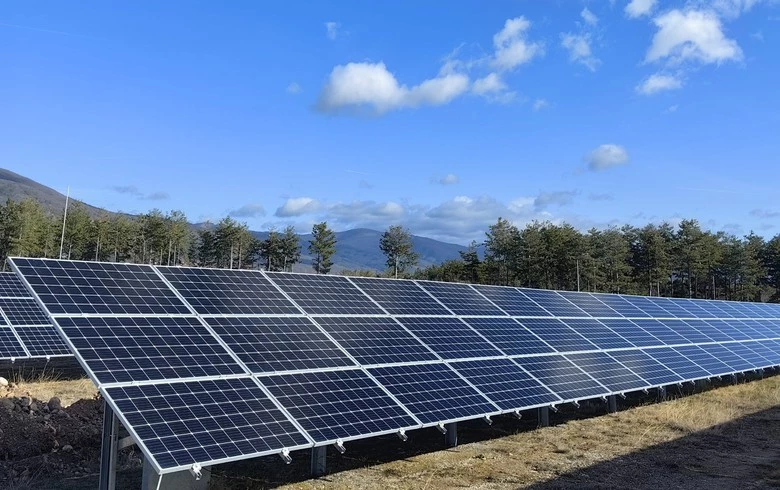
Zenith Energy has agreed to pay €1.078 million for land in the Province of Pavia, where it plans to build a 10 MW solar farm. Eleven hectares, within 300 metres of a motorway, and nothing is payable until the project is ready to build. Measured against the capacity that land is meant to carry, it works out at $0.12 million per megawatt. In Italian solar, whole development projects change hands at about that figure.
Key takeaways
- Zenith Energy agreed on 19 October 2026 to acquire a 10 MWp ground-mounted solar development site in the Province of Pavia, Lombardy, Italy, for a land consideration of €1.078 million, equivalent to $1.21 million.
- The consideration covers about 11 hectares at €98,000 per hectare, equivalent to about $110,094 per hectare, and is payable only once the project reaches ready-to-build status, which Zenith Energy expects within 10 to 12 months of the announcement.
- The site is classified as an area idonea under Article 11-bis of Italian Legislative Decree 190/2024 and, at under 12 MW, qualifies for the Simplified Authorisation Procedure: a municipal review of 30 to 60 days, approval by silent consent if the municipality does not respond, and exemption from environmental impact assessment.
- The purchase takes Zenith Energy to about 30 MWp across four projects in the Province of Pavia inside just over a month, and lifts its total solar development pipeline to about 233 MWp against a stated year-end 2026 target of 240 MWp.
- Enerdatics records 79 Italian solar transactions involving development-stage assets since the start of January 2024, carrying $186 million of disclosed consideration between them. Twenty-six of the 79 yield a development premium per MW, at a median of $0.12 million per MW and a range of $0.04 million to $0.23 million.
Why does bare land price like a finished development?
Because the payment is not due yet, and what it attaches to will have changed by the time it falls. Ready-to-build is the point at which a project holds its grid connection, its final design and its permits, so construction can start without further consent. Zenith Energy pays nothing until the site reaches it. The seller therefore carries the risk that permitting fails, and the buyer carries the cost and the work of getting there.
That structure explains where the headline number sits. A development premium is what a buyer pays per MW for a project's development work rather than for built plant, and in Italy it moves sharply with stage. Across 19 priced early-stage Italian solar deals since the start of 2024 the median is $0.11 million per MW. Across the seven priced ready-to-build ones it is $0.20 million per MW, close to double. The $0.12 million per MW here is an early-stage price on a ready-to-build trigger, which is a different bargain from either end of that range.
What does Italy's 12 MW line actually change?
The calendar, not the capacity. An area idonea is land Italy has designated as legally suitable for renewable generation, which settles much of the siting argument before it starts. A project below 12 MW on such land can use the Simplified Authorisation Procedure instead of full regional authorisation. The municipality has 30 to 60 days to respond, silence counts as approval, and no environmental impact assessment is required.
That is why this project is 10 MWp rather than 15. The threshold is a design constraint, and a developer working towards a year-end pipeline target has an obvious reason to respect it. A site that clears consent in two months is worth more to a seller of development assets than a larger one that clears in two years. The motorway within 300 metres works the same way, reducing the access and connection questions a reviewer would otherwise raise.
Lombardy is the place to do it. The region is Italy's largest electricity consumer, with annual demand of about 70 billion kWh, which is the demand-side case for building there rather than in the sunnier south.
What makes Italian solar prices visible at all?
One buyer, mostly. Enerdatics records 24 Italian solar transactions since the start of January 2024 in which Zenith Energy is the buyer, and 22 of those 24 carry a disclosed consideration. Across the whole development-stage Italian solar market in the same period, 26 transactions yield a priced development premium. The overlap accounts for most of the series.
Zenith Energy is listed and reports its acquisitions one by one with the consideration attached, which almost nobody else buying Italian development assets does. The practical consequence is that the Italian development premium benchmark is close to being one company's disclosure policy. It is a real series and the best one available, but it describes small single-site purchases rather than the portfolio transactions carrying most of the capacity. flyRen Energy Group's purchase of 656 MWp from Ignis Group in October 2026 closed without a price, and so did Saint Louis Energy's ready-to-build agrivoltaic purchase in Basilicata and Lazio.
Enerdatics records 79 Italian solar transactions involving development-stage assets since the start of January 2024, and the disclosed consideration across all 79 comes to $186 million. Deal counts in that slice have risen from 16 in 2024 to 29 in 2025 and 34 so far in 2026, while the money attached has gone the other way, from $53 million to $107 million and then to $26 million this year. More Italian development assets are changing hands, and less is being said about what they cost.
What does the deal signal for the Italian solar market?
That Italian solar development has become a volume business organised around a permitting rule. Four projects in one province in just over a month, each sized to clear a 30 to 60 day review, is not opportunistic buying. It is a pipeline assembled to a specification, and the specification is written in Legislative Decree 190/2024 rather than in a resource map. Capacity targets stated in MWp, as Zenith Energy's 240 MWp year-end figure is, are the natural unit for that kind of business, because the constraint is consent throughput rather than land or sunlight.
It also shows what the exit is meant to look like. Zenith Energy says it is advancing negotiations to sell selected development assets and that, if those conclude, they could generate significant revenue around the turn of the year. Leap carries that as the company's own expectation rather than a completed sale, so the proceeds remain unconfirmed. The structure of the bet is clear enough regardless. The $0.09 million per MW between the early-stage and ready-to-build medians is the margin this model runs on, and the Pavia site is built to be sold into it rather than held.
Frequently asked questions
What did Zenith Energy buy in Pavia?Land for a 10 MWp ground-mounted solar project, about 11 hectares in the Province of Pavia, Lombardy, for €1.078 million or $1.21 million, payable once the project reaches ready-to-build status.
Why is the project 10 MW rather than larger?Projects below 12 MW on land designated as an area idonea qualify for Italy's Simplified Authorisation Procedure, which carries a municipal review of 30 to 60 days, approval by silent consent and no environmental impact assessment.
Is $0.12 million per MW a normal price for Italian solar development?It sits close to the market. Enerdatics records a median development premium of $0.12 million per MW across 26 priced Italian development-stage solar transactions since the start of 2024, with early-stage deals at a median of $0.11 million and ready-to-build deals at $0.20 million.
Enerdatics tracks Italian solar development deals, including the permitting route and the development premium behind each one. Explore Enerdatics to see where a site prices against its comparables.