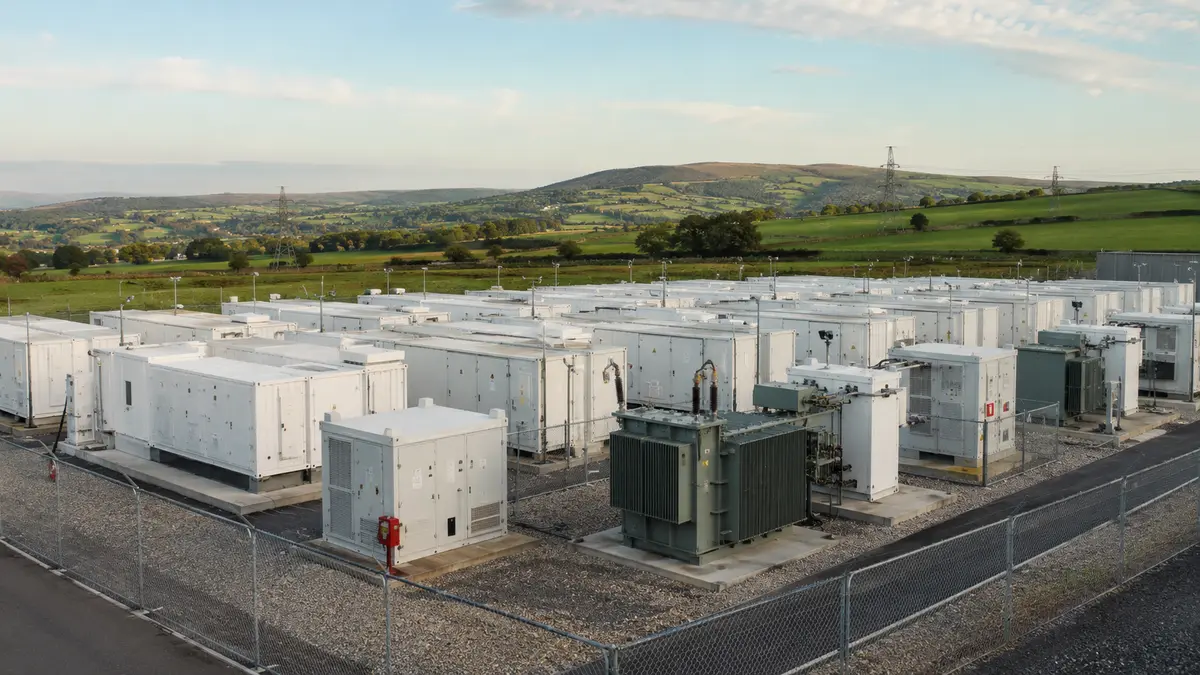
Qualitas Energy has agreed to buy Cero Generation's core European platform from Macquarie Group. The headline figure is 5.8 GW of solar and battery capacity across the UK, Italy and Spain, which would place it among the larger European solar deals of the year. Then you read the portfolio breakdown. Most of what is being bought has not been built, and much of it has not been consented either.
Key takeaways
- Qualitas Energy has signed a definitive agreement to acquire Cero Generation's core European renewable platform across the UK, Italy and Spain from Macquarie Group, through Qualitas Energy Fund VI. The consideration was not disclosed.
- The platform comprises 5.8 GW of solar PV and battery storage, of which more than 2 GW is operational, under construction or ready to build, and 3.8 GW sits at development stage.
- Four UK solar projects in the portfolio, Adur Valley, Rayleigh Fobbing, Bramley and Gunthorpe Road, hold a 15-year Contract for Difference awarded in September 2024 at a strike price of £50.07 per MWh, equal to $67.66 per MWh.
- Cero Generation holds corporate power purchase agreements with Microsoft for the 50 MW Larks Green solar project in the UK and with HEINEKEN and Philips for the 70 MW Pontinia agrivoltaic project in Italy.
- Enerdatics records 59 European solar corporate and platform transactions since the start of 2024, of which only 21 carry a disclosed value.
What is actually changing hands at 5.8 GW?
A platform capacity figure counts every project a developer controls, at whatever stage. A site with planning consent, a grid connection and a signed offtake contract counts the same as a field where the developer holds an option on the land and nothing else.
Split the Cero portfolio along that line and the proportions are stark. Just over 2 GW is operational, under construction or ready to build. The remaining 3.8 GW is in development. Roughly two thirds of the capacity being acquired is therefore pipeline rather than plant, and the buyer is paying for the probability those projects reach construction rather than for output it can meter today.
The built end is concrete enough. Larks Green in South Gloucestershire pairs 50 MW of solar with a 49.5 MW battery and has run since April 2023, and the 70 MW Pontinia agrivoltaic project covers 135 hectares in Lazio. Under construction, the Bumble Bee scheme in the East Midlands combines 78 MW of solar with a 120 MW battery, both due to commission in June 2027. That is the part a valuer can model. The 3.8 GW behind it is an argument about attrition rates.
Why do so many of the UK projects stop at 49.9 MW?
Because English planning has long treated 50 MW as the line between a locally determined project and a nationally determined one. A solar scheme below the threshold is decided by the local planning authority. Above it, the project has historically been handled as nationally significant infrastructure, a slower route running through central government.
Developers design to that line. Three of the four UK development projects named in this portfolio sit at 49.9 MW each: Gunthorpe Road in Lincolnshire, Bramley in Hampshire and Rayleigh Fobbing in Essex, with Adur Valley in West Sussex smaller at 14.25 MW. The clustering just beneath 50 MW is a planning decision expressed as a capacity figure, and it is why a UK solar pipeline is usually built from many similar-sized projects rather than a few large ones. It also shapes what a buyer inherits: many small consents and grid connections, but no single approval the portfolio depends on.
What is Qualitas buying that it could not build itself?
Contracted revenue and the teams that arranged it. Qualitas is already an active developer, so the pipeline alone is replicable. The offtake book sitting on top of it is not.
Cero holds corporate power purchase agreements with Microsoft at Larks Green and with HEINEKEN and Philips at Pontinia, plus a utility power purchase agreement with Centrica Energy Trading on the 48 MW Italian project. The Bumble Bee battery, developed with Enso Energy, carries a tolling agreement with ENGIE, in which the counterparty pays a fixed fee for the right to control how the battery charges and discharges, leaving the owner with contracted income rather than merchant trading risk. Cero built that UK storage position over several years, including its acquisition of the 99.9 MW Lower Larks Farm battery project in Gloucestershire.
The Contract for Difference is the firmest revenue in the portfolio. It guarantees a generator a fixed price per unit of output for the contract term, with the counterparty paying the difference when market prices fall below the strike and the generator paying back when they rise above it. Four of the UK development projects secured one in September 2024 at £50.07 per MWh for fifteen years. Those projects are not built, but their revenue is already priced, which is a different proposition from an unconsented field. The teams in London, Milan and Madrid transfer with the platform, and Cero will continue under its own brand as an independent portfolio company of Qualitas.
Enerdatics records 59 European solar corporate and platform transactions since the start of 2024, of which only 21 carry a disclosed value. This one does not, which is the ordinary outcome rather than the exception, and the absence of a figure is not evidence of a strong or a weak result for Macquarie. Any per-megawatt number circulating for this deal is inferred rather than reported.
What does the deal signal for European solar platform M&A?
The deal signals that the platform trade in European solar has become a trade in development capability rather than installed capacity. Macquarie established Cero in 2021 and built it into an integrated developer covering the full project lifecycle, and what it is selling is that machine plus the contracts it has produced. Enerdatics' earlier coverage of Macquarie's decision to put Cero Generation up for sale described a business spread across eight European countries. What is changing hands now is the core platform in three of them, which is worth noting for anyone comparing this transaction to the process that launched it.
For buyers, the pattern is that funds will underwrite large development pipelines when a contracted operating base sits underneath them. Qualitas is deploying through Fund VI, the same vehicle behind its acquisition of a fully permitted 164 MWp Illinois solar project, and both follow one logic on different continents: pay for projects that have cleared the hardest approvals, and treat the rest as optionality. Expect more European platform sales to be marketed on total gigawatts and priced on the far smaller share with a consent, a grid connection and a buyer for the power.
Frequently asked questions
How much is Qualitas Energy paying for Cero Generation? The consideration was not disclosed. The transaction runs through Qualitas Energy Fund VI and is expected to close in the coming months.
How much of the 5.8 GW portfolio is built? More than 2 GW is operational, under construction or ready to build, and 3.8 GW is at development stage. Operational assets include the 50 MW Larks Green solar project with a 49.5 MW battery in the UK and the 70 MW Pontinia agrivoltaic project in Italy.
What is a Contract for Difference? It is a long-term contract fixing the price a generator receives per unit of output. When the market price falls below the strike price the counterparty pays the difference, and when it rises above it the generator pays back. Four UK solar projects here hold a 15-year Contract for Difference awarded in September 2024 at £50.07 per MWh.
Ready to get deal-ready answers in seconds? Try Enerdatics Leap AI and access verified intelligence across M&A, financings, PPAs, projects, and energy market developments through natural language.
.jpeg)