Why Germany's First Offshore Wind Farm Changed Hands the Year Its Tariff Fell by Three Quarters
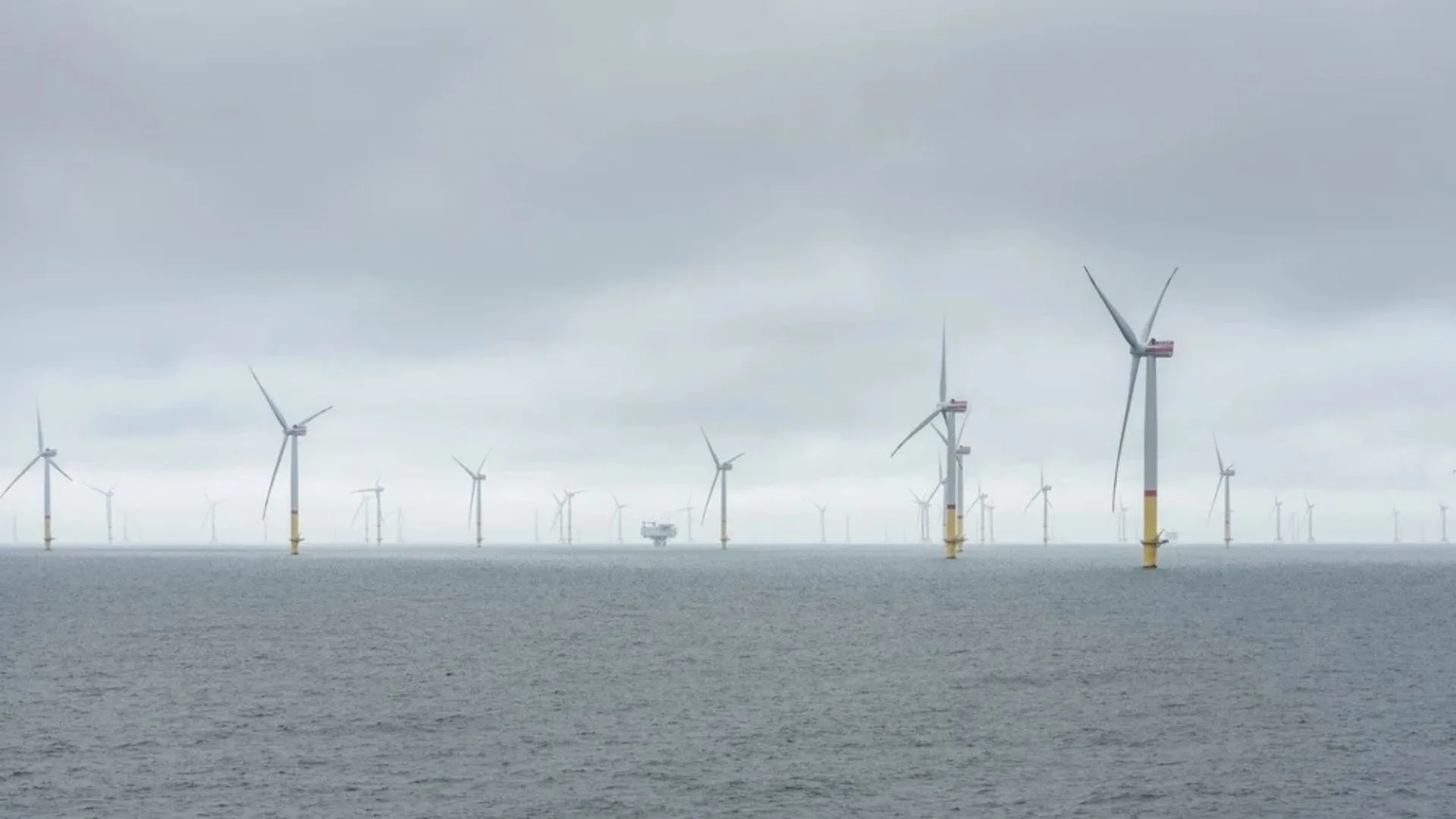
Macquarie's Ocean Breeze Energy has agreed to buy alpha ventus, the 60 MW wind farm that opened Germany's offshore industry, from EWE, RWE and Vattenfall. Twelve turbines, 45 km north of Borkum, running since April 2010. The sellers have held it through its entire supported life. They are leaving in the year that support ran out.
Key takeaways
- Macquarie Group's Ocean Breeze Energy has agreed to acquire the 60 MW alpha ventus offshore wind project in Germany from EWE, RWE and Vattenfall, which held 47.5 percent, 26.25 percent and 26.25 percent of it. The consideration was not disclosed and completion is expected in Q4 2026.
- alpha ventus was supported under the German EEG compression model at EUR 154 per MWh, equal to $174.67 per MWh, for its first 12 years plus an average extension of roughly 1.5 years per turbine. By 2026 that period had elapsed and the project receives the residual tariff of EUR 39 per MWh, equal to $44.23 per MWh.
- The project comprises 12 turbines of two designs on two foundation types: six 5 MW Adwen AD 5-116 machines, originally the Multibrid M5000, on tripods, and six 5 MW Senvion 5M machines on jackets.
- Between 2010 and 2019 alpha ventus generated an average of about 201 GWh a year, a capacity factor of about 38 percent against 60 MW of nameplate.
- Enerdatics records 11 German offshore wind transactions since the start of 2024, of which five carry a disclosed value, and every one of those five is a minority or half stake rather than the purchase of a whole wind farm.
What happens to an offshore wind farm when its tariff falls by three quarters?
It stops being an income asset and becomes an engineering asset. The EEG compression model paid German offshore projects a high tariff over a short front-loaded window rather than a moderate one across the full contract life, concentrating returns into the first dozen years. For alpha ventus that window closed in 2026, and three large utilities have little reason to keep offshore operations staffed around a 60 MW demonstration project once it has.
The arithmetic is unforgiving. Run the recorded average output of 201 GWh a year against the initial tariff and the project was earning in the region of EUR 31 million a year. Run the same output against the residual EUR 39 per MWh and it earns closer to EUR 7.8 million. Nothing about the turbines changed. The thing that paid for them did.
Why does the buyer want turbines that nobody builds any more?
Because it already runs them. Ocean Breeze Energy operates BARD Offshore 1, and its stated plan is to extend alpha ventus beyond the originally planned 20-year term using its experience with comparable turbine technology, operational synergies and proprietary technical solutions. Operating-life extension means keeping existing turbines generating past their design life through inspection, component replacement and recertification rather than building anything new.
The two turbine models are the point. The Adwen AD 5-116 and the Senvion 5M were both discontinued, and the companies behind them no longer exist in the form that built them. Blades, gearboxes and main bearings for machines like these are not catalogue items. Whoever holds the spares, the service records and crews who have taken one apart offshore can run the fleet years longer than a buyer starting from a data room. The 20-year term from first operation in April 2010 ends in 2030, which is why this moves now: recertification has to start before the term expires, not after.
What is being bought if it is not the output?
A consented, built and connected position in the German North Sea. The German Offshore Wind Energy Foundation acquired the permitting rights in 2005, when the project was called Borkum West, and remains the permit holder, leasing the site to DOTI, the vehicle EWE, E.ON and Vattenfall formed in 2006 to build and run the wind farm. alpha ventus was the first offshore project to receive a construction permit from Germany's Federal Maritime and Hydrographic Agency.
That leaves a site with grid connection, foundations, an offshore substation and sixteen years of performance data, inside a consent framework that took five years to establish. Macquarie states the acquisition is intended to support continued use of that infrastructure over the long term. The wording leaves room for more, but what Enerdatics records is continued use rather than a committed repowering.
Enerdatics records 11 German offshore wind transactions since the start of 2024. Five carry a disclosed value, and all five are minority or half stakes, so comparing them means grossing the consideration up to a 100 percent basis before dividing by nameplate. Done that way, Equitix's 15.2 percent of the operational 330 MW Gode Wind 1 implies about $2.15 million per MW and Kansai Electric Power's 49 percent of the 315 MW Windanker project in construction about $4.27 million per MW, while at the development end the numbers collapse to $0.07 million per MW for TotalEnergies' half of a 4 GW RWE portfolio. None of the five is an operating asset past the end of its support period, which is why the ladder describes the market but does not price this deal.
What does the deal signal for German offshore wind?
The deal signals that Germany now has a second-hand market in offshore wind, and that the natural buyer in it is an operator rather than a fund. The first generation of German projects is reaching the end of the support regimes that financed them, and the owners who took the construction risk are least suited to running the long tail. Expect more of these assets to move toward whoever already has vessels, spares and crews in the same water.
The contrast is sharp. Institutional capital is going in at the other end, into construction-stage projects with contracted revenue, as when Stadtwerke Munchen took a 25 percent stake in the 976.5 MW Gennaker project behind a corporate power purchase agreement with Amazon, while trading houses release producing capacity to fund earlier positions, as in Sumitomo's disposal of 600 MW of operating Belgian offshore wind inside three months. Macquarie is doing something simpler: buying a small, fully built wind farm outright because it can run it more cheaply than anyone else. Taking the whole of it out of a three-utility consortium matters too, because the next decision is whether to extend or rebuild and a committee is slow at both. Enerdatics has tracked buyers elsewhere moving from joint venture partner to sole owner ahead of a value inflection point rather than after it.
Frequently asked questions
How much is Macquarie paying for alpha ventus?The consideration was not disclosed. Enerdatics records 11 German offshore wind transactions since the start of 2024 with only five carrying a disclosed value, and all five are minority or half stakes at a different lifecycle stage, so there is no close priced comparable.
What was the alpha ventus tariff and what is it now?It was supported under the EEG compression model at EUR 154 per MWh, equal to $174.67 per MWh, for 12 years plus an average extension of about 1.5 years per turbine. That period had elapsed by 2026 and it now receives the residual tariff of EUR 39 per MWh, equal to $44.23 per MWh.
Why is a 60 MW wind farm significant?Because of what it was rather than what it produces. alpha ventus was the first project to receive a German offshore construction permit, and ran as a demonstration and testing platform whose data informed the modern German offshore fleet.
Ready to get deal-ready answers in seconds? Try Enerdatics Leap AI and access verified intelligence across M&A, financings, PPAs, projects, and energy market developments through natural language.