Rezolv Energy has sold Ahold Delhaize 370 GWh a year from two Romanian projects. Both already hold state contracts-for-difference from an auction last year. The capacity figure attached to the contract, 229.45 MW, is not a capacity at all, and working out where it came from explains what the retailer has actually bought.
Key takeaways
- Rezolv Energy signed a 10-year virtual power purchase agreement with Ahold Delhaize covering 370 GWh a year and the associated guarantees of origin from a Romanian renewable portfolio, announced on 5 November 2026, with no tariff disclosed.
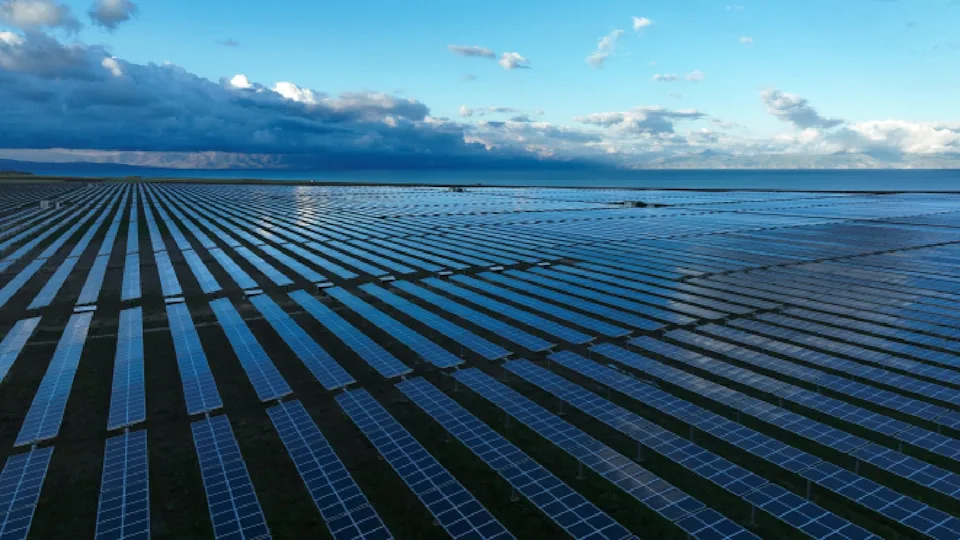
- The portfolio is the 1.3 GW Dama solar project in Arad County, expected to generate about 1,800 GWh a year, and the 300 MWdc and 288 MWac Dunarea East wind project in Constanta County, expected to generate about 780 GWh a year, giving a combined expected output of about 2,580 GWh.
- The contracted 370 GWh is about 14 percent of that combined output, and this is the first virtual power purchase agreement signed for either project.
- Both projects secured contracts-for-difference in Romania's second CfD auction in 2025, where three successful bids covered a combined 731.2 MW against roughly 1.6 GW of nameplate capacity across the two sites.
- Enerdatics records 24 Romanian power purchase agreements since the start of 2024, and not one of them discloses a tariff.
What does 229.45 MW of contracted capacity actually mean?
It is arithmetic, not a contract term.
Divide the contracted 370 GWh by the portfolio's expected 2,580 GWh and the result is 14.34 percent. Apply that to the roughly 1,600 MW of combined nameplate and it gives 229.46 MW. The capacity figure is the pro-rata share of nameplate implied by the energy volume, not a block of plant set aside for the buyer.
That matters because a virtual power purchase agreement does not reserve capacity at all. The project sells its output into the wholesale market as normal, and the buyer and seller settle the difference between an agreed strike price and the market price in cash. The buyer receives the guarantees of origin, the European certificates that evidence one megawatt-hour of renewable generation and let a company claim its consumption is matched by clean supply. No electricity travels from Arad County to a supermarket. Enerdatics has set out how the same structure works on a US project where the buyer took attributes rather than power. So Ahold Delhaize holds a 10-year financial position referenced to 370 GWh a year, plus the certificates, not rights over a quarter of a gigawatt of Romanian plant.
How does a corporate contract sit alongside a state CfD?
Carefully, because the two instruments do the same thing.
A contract-for-difference is a two-way contract with the state. If the market reference price falls below the strike price the state pays the generator the difference; if it rises above, the generator pays the difference back. A virtual power purchase agreement settles the same way against the same market price, with a corporate counterparty instead of a government. The same megawatt-hour cannot carry both without selling one price exposure twice.
The numbers leave room for both. The CfDs cover 731.2 MW across three successful bids, against roughly 1,600 MW of nameplate across Dama and Dunarea East, so about 46 percent of the capacity is state-contracted and the rest is not. Ahold Delhaize's 370 GWh is 14 percent of expected output. What the record does not state is which megawatt-hours the virtual agreement attaches to, and that is the first question a lender would ask. Treat the overlap as unresolved rather than netted.
Gaps between an auction award and installed capacity are becoming the standard shape of European offtake. Enerdatics recently covered an Italian agrivoltaic purchase where FER X contracts covered 210.65 MW of a 250.71 MWp authorised capacity.
Why does Rezolv keep selling its projects in slices?
Because that is its established method, and this is the largest slice it has sold.
Enerdatics records six Romanian power purchase agreements with Rezolv Energy as supplier since the start of 2024, a quarter of everything recorded in the market over that period. Five of the six sit on one asset, the Vifor wind farm, co-supplied with Low Carbon: A2A at 55.32 MW, Bekaert at 36.88 MW, T-Mobile Czech Republic at 18.44 MW, Slovak Telekom at 14.75 MW and CE Colo at 3.68 MW. That is 129.07 MW across five contracts signed between June and September 2024, three of them cross-border agreements with Deutsche Telekom subsidiaries.
Slicing a project across several buyers spreads counterparty credit risk and lets a developer contract a large asset without waiting for a single buyer big enough to take it whole. The trade-off is five negotiations and five sets of documentation for one wind farm. On implied share, Ahold Delhaize's 229.45 MW exceeds all five Vifor contracts put together, which makes it a departure from the pattern rather than a repeat.
Enerdatics records a Romanian offtake market that is active and almost entirely unpriced. Across 24 agreements since the start of 2024, not one discloses a tariff and only 16 disclose a contract length. By offtaker type, technology and telecoms buyers lead with seven agreements, independent power producers and utilities follow with six, industrial buyers with five, and retail and consumer goods with just two, both of them Ahold Delhaize. The first was a 12-year contract with HELLENiQ ENERGY for 48 MW of the Ansthall wind project in August 2025, so the retailer has gone from 48 MW over 12 years to an implied 229.45 MW over 10 in the space of 15 months.
What does the deal signal for Romanian corporate offtake?
It signals that Romania has become a market where a project can hold a state contract and a corporate contract at once, with the two covering different parts of the same asset rather than competing. A CfD gives lenders a floor on part of the output; a corporate agreement monetises another part at negotiated terms. A developer that assembles both carries less merchant exposure than one relying on either.
For buyers the signal is about duration. Ten years is short against the 12-year contracts that dominate the recent Romanian set. A retailer contracting 14 percent of a portfolio for a decade is buying a hedge and a certificate supply, not underwriting a project to the end of its life. With no tariff disclosed across any of the 24 agreements, nobody outside the negotiation knows whether the shorter term came at a premium or a discount, and that opacity is the market's most durable feature. Enerdatics has shown how much reconstruction Romanian records can need, including a Medgidia battery whose power rating had to be estimated from its energy capacity.
Frequently asked questions
What did Ahold Delhaize agree with Rezolv Energy?A 10-year virtual power purchase agreement covering 370 GWh a year and the associated guarantees of origin from the Dama solar and Dunarea East wind projects in Romania, announced on 5 November 2026. No tariff was disclosed.
What is a guarantee of origin?It is the European certificate evidencing that one megawatt-hour of electricity was generated from a renewable source. A company buys them to claim its consumption is matched by renewable generation, and they transfer separately from the physical electricity.
Does the 229.45 MW figure mean Ahold Delhaize has rights to that capacity?No. It is the pro-rata share of the portfolio's roughly 1,600 MW of nameplate implied by the 370 GWh contracted, which is 14.34 percent. A virtual agreement settles financially and reserves no capacity.
Enerdatics records the auction awards, the certificates and the contracted volumes behind every European offtake agreement, which is how a 229 MW headline turns out to be a percentage. Browse more analysis in the Enerdatics insights archive.