Why a 2 GW Swedish Solar Pipeline Changed Hands for $1.4 Million
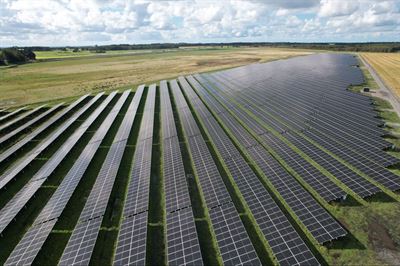
Alight Energy is buying 40 Swedish solar projects with roughly 2 GW of planned capacity. The guaranteed purchase price is SEK 14 million, about $1.4 million, or around $700 per megawatt. Nobody gives away 2 GW of land positions for the price of a suburban house. The disclosed number is not the number that matters.
Key takeaways
- Alight Energy is acquiring a solar and battery development pipeline from Soltech Energy Solutions, a subsidiary of Soltech Energy Sweden AB, for a guaranteed purchase price of SEK 14 million, about $1.4 million. SEK 8 million is payable on signing and the remaining SEK 6 million during 2027 and 2028.
- Soltech Energy Solutions may also receive future earn-out payments linked to how the projects develop, so Enerdatics records the transaction's deal value as undisclosed: the guaranteed price is a floor, not the total consideration.
- The portfolio comprises 40 large-scale solar projects totalling roughly 2 GW of planned capacity, with options for co-located battery storage at most sites, across Swedish electricity price areas SE3 and SE4. Projects representing more than 700 MWp already hold the necessary regulatory approvals.
- The transfer can complete now that the Swedish Inspectorate of Strategic Products has approved it. The acquisition takes Alight's Nordic solar and storage pipeline above 5 GW, and the projects are intended for long-term fixed-price PPAs with commercial and industrial buyers.
- Enerdatics records 10 Swedish solar transactions since the start of 2024, of which two carry a disclosed value, and both are stake purchases rather than asset sales: Nordic Capital's $46.92 million for 30 percent of Soltech Energy Sweden AB in July 2025, and Eiffel Investment Group's $32.3 million for 50 percent of a 1.8 GW Landinfra Energy portfolio in April 2024.
What does $700 per megawatt actually buy?
A planning position, and only part of one. What transfers is land identified and leased, permitting under way or granted, and engineering done. No panels, no grid connection agreements, no construction contracts. Alight carries the projects towards ready-to-build, the stage at which every permit and the grid agreement are in place so construction can start.
The way to test whether $700 per megawatt is cheap is against another development portfolio, grossed up to a full ownership basis. Eiffel Investment Group's April 2024 deal bought 50 percent of a 1.8 GW Landinfra Energy portfolio for $32.3 million. On a 100 percent basis that is $64.6 million against 1,790 MW, or $0.036 million per megawatt. Measuring that stake against the full nameplate without grossing it up would halve the price and produce a comparable that does not exist.
So Landinfra priced at roughly 50 times the Soltech guaranteed figure. Two development portfolios in the same country two years apart should not sit 50 times apart. The gap is not telling you Swedish pipeline has collapsed in value. It is telling you that one of these two numbers is not a price.
Why would a seller accept a guaranteed price this small?
Because Soltech is not trying to realise the value of the pipeline today. It is trying to stop paying for it.
A development pipeline consumes cash for years before it produces any. Land options, studies, permitting, grid applications and engineering all have to be funded ahead of revenue, and a developer financing that from its own balance sheet carries the full risk of projects that may never be built. Leap's record is explicit that the transaction supports a shift towards a model focused on EPC contracting and long-term operations and maintenance services, while reducing future capital commitments and the risk tied to self-financed development.
That is a decision to sell fees rather than own assets. An EPC contractor earns on construction and service work without putting development capital at risk, and the earn-out keeps a claim on the upside if Alight takes the projects forward. The guaranteed SEK 14 million is the price of exiting the commitment, not the value of what is being exited. Nor is this a distressed seller: Nordic Capital paid $46.92 million for 30 percent of Soltech Energy Sweden AB in July 2025, implying around $156 million for the whole company, a figure derived from a minority stake rather than disclosed.
Why does the 700 MWp with permits matter more than the 2 GW headline?
Because permitted capacity is the part that can actually be built, and it is roughly a third of the headline.
More than 700 MWp already holds the necessary regulatory approvals. The rest is land with leases and engineering behind it and permitting still ahead, and the two are not interchangeable. A permitted project has cleared the step that most often kills Nordic solar outright and faces one remaining gate in grid connection. An unpermitted site faces both.
Alight plans to operate the parks itself, a model that needs grid connection dates far more than land. On that reading, the 700 MWp is the part with a visible route to revenue and the 2 GW is the option attached to it.
Enerdatics records 10 Swedish solar transactions since the start of 2024, and only two carry a disclosed value. Both are stakes in development platforms, so Sweden has produced no clean operating-asset solar price in almost three years of deal flow. Alight appears as buyer in three of the 10, two of them from Soltech: the 11 MW Ramsjoholm park in November 2024 and this pipeline. It has run the same play elsewhere in the Nordics, where it bought a 255 MW Finnish solar and battery pipeline and advanced it jointly with the original developer towards ready-to-build rather than buying finished assets.
What does the deal signal for the Swedish solar market?
It signals that Swedish development risk is now priced as an option rather than an asset. A guaranteed floor with an open-ended earn-out transfers almost no capital at signing and ties the payout to permitting and grid outcomes neither party controls. For a buyer it cheaply adds 2 GW of optionality to a pipeline already above 5 GW. For a seller it stops the funding without writing the business off. Expect more Nordic pipeline to trade on this shape, and expect the headline figures to keep understating it.
The second signal is about who is left holding Swedish projects. Deal flow there has run one way for two years, with international owners withdrawing and regional specialists aggregating, a pattern visible when EnBW sold its entire Swedish platform and 2.85 GW pipeline to a Nordic buyer. Soltech's retreat is a variation on the same theme from a domestic seller, trading ownership for contracting work. Alight is on the accumulating side of both trades. Swedish solar is being sorted by who will own it for twenty years, and the sorting is not finished.
Frequently asked questions
How much is Alight Energy paying for the Soltech solar pipeline?The guaranteed purchase price is SEK 14 million, about $1.4 million, with SEK 8 million payable on signing and SEK 6 million during 2027 and 2028. Soltech may also receive earn-out payments linked to the projects' development, so Enerdatics records the deal value as undisclosed.
What does ready-to-build mean for a solar project?It is the stage at which all permits and the grid connection agreement are in place, so construction can begin. The Soltech portfolio is not there yet: more than 700 MWp holds regulatory approvals, and grid connection is still ahead.
How large is Alight Energy's Nordic pipeline after this deal?More than 5 GW of solar and storage development projects. Enerdatics records Alight as buyer in three of the 10 Swedish solar transactions since the start of 2024, two of them from Soltech.
Ready to get deal-ready answers in seconds? Try Enerdatics Leap AI and access verified intelligence across M&A, financings, PPAs, projects, and energy market developments through natural language.